

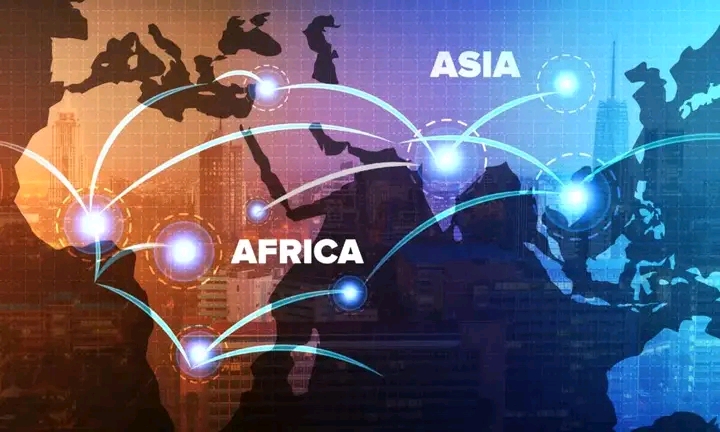
Recent growth projections suggest that parts of Africa are poised to outpace segments of Asia, with East Africa in particular approaching economic expansion rates close to 6 percent. The shift reflects changing global dynamics, stronger domestic reforms in several African economies and continued demographic momentum across the continent.
According to the latest regional outlooks from the International Monetary Fund and the World Bank, sub Saharan Africa is expected to see a gradual acceleration in growth after several years of external shocks, including pandemic disruptions, commodity price volatility and tightening global financial conditions. East Africa stands out as one of the most resilient sub regions, supported by infrastructure investment, services sector expansion and relatively diversified growth drivers.
Countries such as Kenya, Tanzania, Uganda and Rwanda have consistently posted solid medium term projections, often ranging between 5 and 6 percent annually. These economies benefit from expanding telecommunications sectors, financial innovation, rising urbanization and sustained public investment in transport and energy infrastructure.

In contrast, parts of Asia are experiencing more moderate growth compared to their pre pandemic peaks. Structural slowdowns in major economies, property market corrections and weaker external demand have tempered regional expansion rates. While Asia remains a dominant global growth engine, the relative gap between certain Asian and African sub regions has narrowed.
Africa’s improving outlook is also linked to reform momentum in fiscal management and digital transformation. Several governments have prioritized debt restructuring, tax base expansion and regulatory reforms aimed at improving the business climate. The push toward regional integration under the African Continental Free Trade Area framework is expected to further stimulate intra African trade and investment flows over the medium term.
East Africa’s near 6 percent growth projection reflects both cyclical recovery and structural factors. Public infrastructure projects, including railway corridors, port expansions and cross border energy interconnections, are enhancing productivity and trade competitiveness. At the same time, mobile money penetration and digital financial services have accelerated financial inclusion, boosting small business activity and consumer spending.

Demographics also play a central role. Africa has the youngest population globally, providing a potential demographic dividend if employment opportunities expand in parallel with labor force growth. Urbanization trends are fueling demand for housing, services and consumer goods, supporting domestic markets even amid global uncertainty.
However, analysts caution that strong headline growth does not automatically translate into broad based prosperity. Challenges remain, including high public debt levels in some countries, vulnerability to climate shocks and infrastructure financing gaps. Sustained reforms and prudent macroeconomic management will be critical to maintaining momentum.
Commodity exporters across the continent may benefit from stable or rising demand for critical minerals linked to the global energy transition. East Africa, while less commodity dependent than some other regions, could gain from agricultural modernization and increased investment in renewable energy projects.

The narrative of Africa surpassing Asia is therefore nuanced. It does not suggest that the continent as a whole has overtaken Asia’s economic scale or aggregate output. Rather, it highlights that certain African sub regions, particularly East Africa, are projected to grow faster in percentage terms than some Asian economies during the current forecast period.
For investors and policymakers, the message is clear. Africa’s growth story is becoming more differentiated and more competitive globally. As structural reforms deepen and regional integration strengthens, East Africa’s near 6 percent expansion could position it as one of the most dynamic growth corridors in the developing world over the coming years.