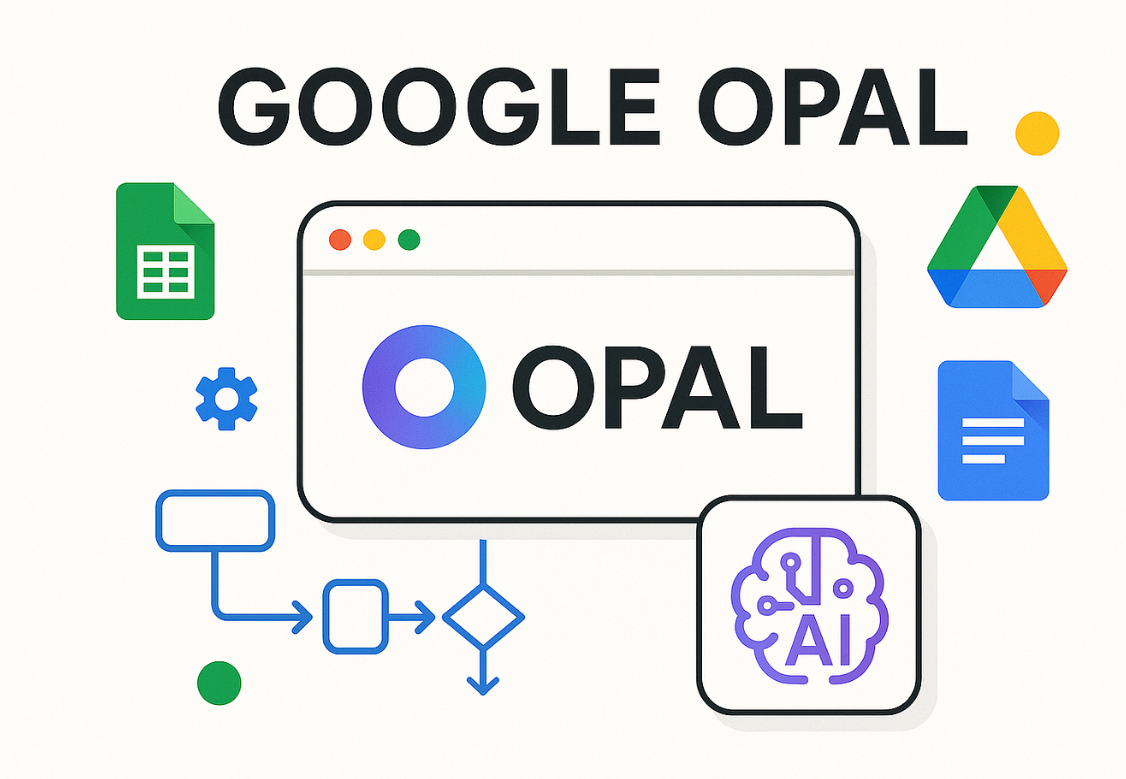
Google adds automated workflow creation feature to Opal

0
219

Google has introduced a new feature to its Opal platform that enables users to build automated workflows, marking another step in the company’s broader push to embed artificial intelligence more deeply into enterprise and productivity tools.

The update allows users to design structured, repeatable processes within Opal, automating tasks that would otherwise require manual coordination across multiple systems. By integrating workflow creation directly into the platform, Google aims to make it easier for teams to connect data, trigger actions and streamline operations without relying heavily on external automation software.

Opal, positioned as part of Google’s expanding AI and enterprise toolkit, is designed to help organizations manage and deploy advanced AI driven capabilities. The addition of automated workflows strengthens its appeal to businesses seeking efficiency gains, particularly as companies increasingly look to consolidate tools and reduce operational friction.

Automated workflows typically function by setting predefined triggers and actions. For example, when a specific data point changes or a form is submitted, the system can automatically initiate follow up tasks such as sending notifications, updating records or generating reports. By embedding this functionality natively within Opal, Google reduces the need for third party integrations and custom scripting.

Google adds automated workflow creation feature to Opal

The move reflects a wider industry trend in which major technology firms are blending artificial intelligence with business process automation. Competitors including Microsoft and Salesforce have been expanding their own automation ecosystems, integrating AI agents and workflow engines into productivity and customer relationship platforms.

For Google, the update is also strategic in the context of intensifying competition in enterprise AI. As organizations experiment with generative AI and intelligent agents, the ability to orchestrate automated sequences of tasks becomes critical. Businesses increasingly expect AI systems not only to generate insights but also to act on them.

Industry analysts suggest that integrating automation directly into AI platforms can accelerate enterprise adoption. Instead of treating AI as a standalone tool, companies can embed it into everyday processes such as onboarding, procurement, marketing campaigns and compliance monitoring. This integration enhances measurable return on investment, a key consideration for large scale deployments.

google

The new workflow feature in Opal is expected to support both technical and non technical users. Simplified interfaces and visual builders are becoming standard in modern automation platforms, enabling managers and operational teams to configure processes without advanced coding expertise. At the same time, developers can extend functionality through APIs and custom integrations.

Google has been steadily expanding its enterprise AI portfolio, positioning itself as a full stack provider of cloud infrastructure, data analytics and intelligent automation. The addition of workflow creation capabilities underscores its ambition to compete aggressively in the growing market for AI powered enterprise solutions.

As organizations continue to digitize operations and pursue efficiency gains, workflow automation is likely to become a baseline expectation rather than a premium feature. Google’s latest enhancement to Opal signals recognition that AI’s value lies not only in generating content or predictions but in executing coordinated, automated action across business systems.

google

Google Releases Tech to Watermark AI-Generated Text

Author

  • Daniel Ablordey

    Daniel Ablordey is a Business Analytics student at the University of Ghana Business School and an emerging strategist at the intersection of data, markets, and narrative. With a keen analytical mind and a passion for African business and economic trends, he is building a career focused on translating complex data-driven insights into accessible, decision-relevant stories that matter.

    As a writer and editor with Insight Ghana, African Business Insight, and The African Journal, Daniel delivers sharp, high-impact analysis on current affairs, business developments, and emerging trends across the continent. His work is defined by precision, clarity, and a deep commitment to responsible journalism — ensuring that every story he tells is not only accurate but meaningful to the audiences it serves.

    Beyond his editorial work, Daniel serves as an Ecobank Youth Ambassador, where he actively promotes financial inclusion, digital banking, and financial literacy among young Ghanaians. His leadership experience spans academic, professional, and faith-based institutions, where he has consistently driven initiatives centered on growth, structure, and long-term impact.

    Grounded in the principles of Pan-Africanism and service, Daniel brings a rare combination of analytical rigour and storytelling depth to his work. Whether unpacking market behavior, profiling emerging business leaders, or covering cultural shifts shaping the continent, he approaches every assignment with strategic intent and editorial integrity.

    His broader ambition is to contribute to Africa's transformation by shaping how data, business, and storytelling intersect — not just locally, but on a global stage.

Previous articleCourtois defends Vinicius Jr after alleged racism incident in Benfica clash
Next articleGhana introduces bill to establish independent value for money office to strengthen public spending oversight
Daniel Amenyo Ablordey
Daniel Ablordey is a Business Analytics student at the University of Ghana Business School and an emerging strategist at the intersection of data, markets, and narrative. With a keen analytical mind and a passion for African business and economic trends, he is building a career focused on translating complex data-driven insights into accessible, decision-relevant stories that matter.

As a writer and editor with Insight Ghana, African Business Insight, and The African Journal, Daniel delivers sharp, high-impact analysis on current affairs, business developments, and emerging trends across the continent. His work is defined by precision, clarity, and a deep commitment to responsible journalism — ensuring that every story he tells is not only accurate but meaningful to the audiences it serves.

Beyond his editorial work, Daniel serves as an Ecobank Youth Ambassador, where he actively promotes financial inclusion, digital banking, and financial literacy among young Ghanaians. His leadership experience spans academic, professional, and faith-based institutions, where he has consistently driven initiatives centered on growth, structure, and long-term impact.

Grounded in the principles of Pan-Africanism and service, Daniel brings a rare combination of analytical rigour and storytelling depth to his work. Whether unpacking market behavior, profiling emerging business leaders, or covering cultural shifts shaping the continent, he approaches every assignment with strategic intent and editorial integrity.

His broader ambition is to contribute to Africa's transformation by shaping how data, business, and storytelling intersect — not just locally, but on a global stage.