

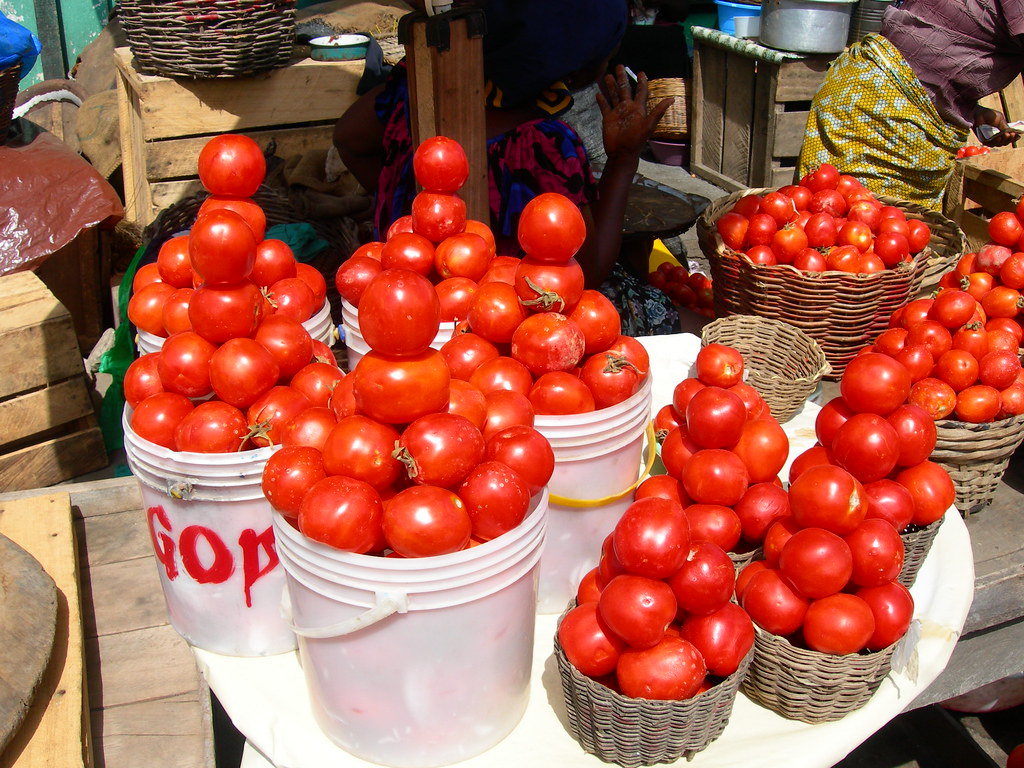
Ghana Tomato Self-Sufficiency Gap is widening despite years of investment in greenhouse technology and controlled-environment farming. According to the Peasant Farmers Association of Ghana, the country remains unable to produce enough tomatoes year-round to meet domestic demand. This shortfall has become more visible following supply disruptions from neighbouring Burkina Faso, which triggered sharp price increases in Accra markets.
The Ghana Tomato Self-Sufficiency Gap highlights a deeper issue within the agricultural value chain. While greenhouse projects were intended to ensure consistent production regardless of weather patterns, structural constraints continue to prevent farmers from scaling operations sustainably. The result is a cycle of seasonal abundance followed by scarcity, forcing the country to rely on imports during lean periods.
Why the Ghana Tomato Self-Sufficiency Gap Matters
Tomatoes are a staple ingredient in Ghanaian households and food businesses. When prices surge, the impact is felt immediately by consumers, market traders, and food vendors. The recent cross-border disruption revealed how vulnerable the domestic supply chain remains.
The Ghana Tomato Self-Sufficiency Gap matters because food security is closely tied to economic stability. When local production cannot meet demand, dependence on imports increases exposure to geopolitical risks, transport disruptions, and currency fluctuations. Any external shock can quickly translate into higher prices for households already managing tight budgets.
For policymakers, the gap signals that greenhouse infrastructure alone is insufficient. Agricultural transformation requires an integrated approach that links production, processing, storage, and distribution. Without these complementary systems, investments in modern farming technology may fail to deliver lasting results.
Processing Deficit and the Ghana Tomato Self-Sufficiency Gap
One of the most critical bottlenecks contributing to the Ghana Tomato Self-Sufficiency Gap is the absence of large-scale processing facilities. During peak harvest periods, farmers often face oversupply without adequate industrial buyers. This leads to post-harvest losses and discourages year-round cultivation.
Without reliable processing factories to absorb excess tomatoes, farmers lack incentives to expand greenhouse output beyond seasonal cycles. Processing plants would create steady demand, stabilize farm incomes, and reduce waste. In turn, this would support continuous production and narrow the Ghana Tomato Self-Sufficiency Gap over time.
Cold storage facilities and improved logistics are equally essential. Even when production increases, limited storage capacity means perishable crops cannot be preserved for extended periods. Strengthening these systems would smooth supply fluctuations and protect farmers from income volatility.
Impact on Businesses
The Ghana Tomato Self-Sufficiency Gap directly affects businesses across the food supply chain. Restaurants, caterers, and small food vendors face unpredictable input costs when tomato prices spike. For many small enterprises operating on thin margins, sudden price increases reduce profitability or force price hikes that may alienate customers.
Retailers and market traders also bear the burden of supply uncertainty. Import reliance exposes them to currency risk and higher transportation costs. This instability complicates inventory planning and pricing strategies.
For agro-processing entrepreneurs, however, the gap represents an opportunity. Investment in tomato processing facilities could fill a critical market void. By creating a structured off-take system for farmers, private investors could help stabilize production and generate value-added products such as paste and puree for both domestic and export markets.
Impact on Households
Households experience the Ghana Tomato Self-Sufficiency Gap most visibly through rising food prices. Tomatoes are central to daily meals, and sustained price increases strain household budgets, particularly among low-income families.
When staple ingredients become expensive, households may reduce portion sizes or substitute with lower-quality alternatives. This can affect nutritional outcomes over time. The volatility also complicates budgeting, making it harder for families to manage monthly expenses.
If structural reforms reduce reliance on imports and strengthen domestic supply chains, households could benefit from more stable pricing. Consistent local production supported by processing and storage would cushion consumers against external shocks.
A Path Toward Closing the Ghana Tomato Self-Sufficiency Gap
Closing the Ghana Tomato Self-Sufficiency Gap requires coordinated investment beyond greenhouse technology. Irrigation expansion, improved seed development, storage infrastructure, and industrial processing must work together within a unified agricultural strategy.
A comprehensive approach would encourage farmers to produce throughout the year, knowing there is a reliable market for their harvests. This would not only improve food security but also create jobs across farming, logistics, and processing sectors.
Ultimately, the Ghana Tomato Self-Sufficiency Gap is not just an agricultural issue; it is an economic and social challenge. Strengthening the entire value chain can reduce price volatility, protect household purchasing power, and enhance business stability. Until these systemic bottlenecks are addressed, Ghana will remain vulnerable to external supply disruptions and recurring food price pressures.
Old Mutual Ghana celebrates top performers at the 2025 annual sales gala