


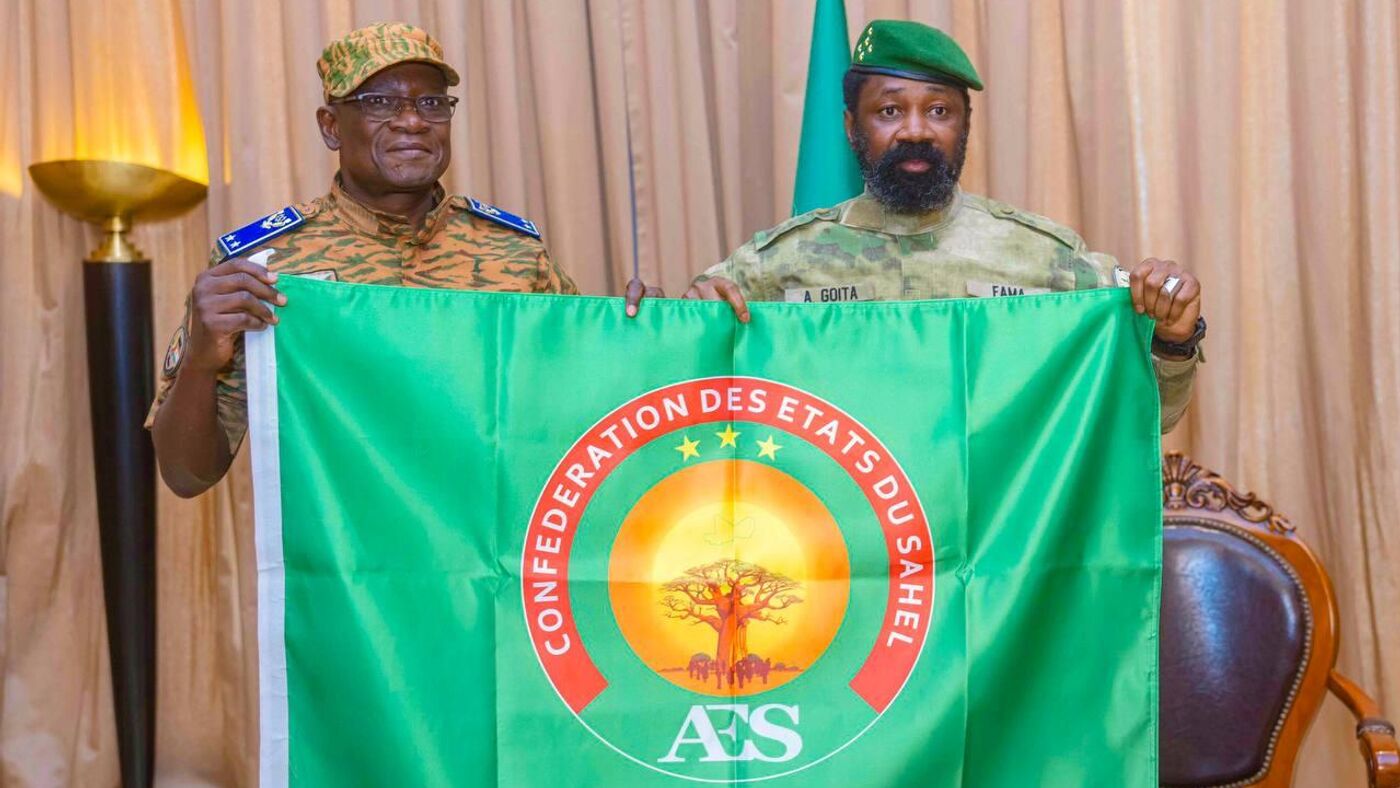
France is repositioning itself closer to the Alliance of Sahel States (AES) by reactivating high-level security cooperation with Algeria, signaling a calculated attempt to regain strategic relevance in a region where its military footprint has sharply declined.
The reset follows high-level talks in Algiers between French Interior Minister Laurent Nuñez and Algerian President Abdelmadjid Tebboune, during which both governments agreed to “reactivate a high-level security cooperation mechanism.” According to French officials, the agreement will restore intelligence sharing, judicial coordination, and policing collaboration after months of diplomatic strain.
The development comes at a critical moment for France. Over the past three years, Paris has been forced to withdraw troops from Mali, Niger, and Burkina Faso, the three military-led governments that now form the Alliance of Sahel States. Those governments expelled French forces amid accusations of failed counterterrorism outcomes, rising insecurity, and growing nationalist sentiment against former colonial powers.
Algeria’s geographic position makes it central to France’s recalibrated Sahel strategy. Sharing long and porous borders with Mali and Niger, Algeria sits at the gateway to AES territory. That proximity gives Paris an opportunity to maintain intelligence visibility and regional influence without deploying troops directly inside countries that have turned hostile to French military presence.

Security cooperation between France and Algeria had cooled in recent years, particularly after diplomatic tensions flared in 2024 when Paris backed Moroccan sovereignty over Western Sahara, a position strongly opposed by Algiers. The latest engagement signals a mutual willingness to compartmentalize political disagreements in favor of security coordination.
Under the renewed mechanism, cooperation will reportedly cover counterterrorism intelligence, organized crime tracking, migration enforcement, and judicial collaboration. French officials described the restoration of ties as urgent and “at a very high level,” reflecting the strategic importance Paris now places on indirect engagement.
Rather than returning to large-scale troop deployments, a model that proved politically unsustainable in the Sahel, France appears to be pivoting toward intelligence-led partnerships and regional alliances. Analysts say this shift represents a pragmatic recalibration: maintaining operational relevance while minimizing the domestic and diplomatic backlash that accompanied previous interventions.
The broader geopolitical environment adds urgency to France’s repositioning. Russia has expanded its security footprint in parts of the Sahel, while China continues to deepen economic and infrastructure partnerships across Africa. The United States has also increased military cooperation with select African governments, underscoring the continent’s growing strategic importance in global power competition.
Against that backdrop, Algeria becomes more than just a neighbor to AES states; it becomes a strategic buffer and intelligence conduit. By strengthening ties with Algiers, France can monitor extremist movements, arms trafficking, and migration routes that flow across Sahelian corridors without needing boots on the ground inside AES territory.

Images released by Algerian authorities showed senior security officials from both countries in attendance during the talks, including France’s domestic intelligence chief and Algeria’s internal security leadership. The symbolism is clear: this is not a minor diplomatic courtesy call, but a structured attempt to rebuild institutional cooperation.
For France, the stakes are high. Its influence in West Africa has diminished rapidly since 2022, reshaping decades of security architecture built around French military bases and bilateral defense agreements. The renewed partnership with Algeria suggests Paris is embracing a quieter, intelligence-driven approach rather than overt military projection.
Whether this strategy restores France’s leverage in the Sahel remains uncertain. Much will depend on how Algeria balances its own regional ambitions and how AES governments respond to indirect French engagement through neighboring states. What is clear, however, is that Paris is adapting. The era of large French troop deployments in the Sahel may be ending, but France is not exiting the strategic chessboard — it is simply changing how it plays the game.
Burkina Faso Criminalizes Homosexuality Under Sweeping Junta Reforms