

A startup founded by former SpaceX engineers has raised $50 million in a Series A funding round to develop high-performance optical interconnects aimed at solving one of artificial intelligence’s fastest-growing bottlenecks: data center bandwidth.
The company, Mesh, plans to mass-produce advanced optical transceivers designed specifically for AI data centers, where surging demand for model training and inference is pushing networking infrastructure to its limits. The funding round underscores investor confidence in hardware solutions that can keep pace with the explosive growth of generative AI workloads.
As large language models and multimodal systems scale in size and complexity, the infrastructure required to train and deploy them has expanded dramatically. Modern AI clusters rely on thousands of graphics processing units (GPUs) operating in parallel, with massive volumes of data moving between servers. Traditional electrical interconnects are increasingly strained by these performance demands.
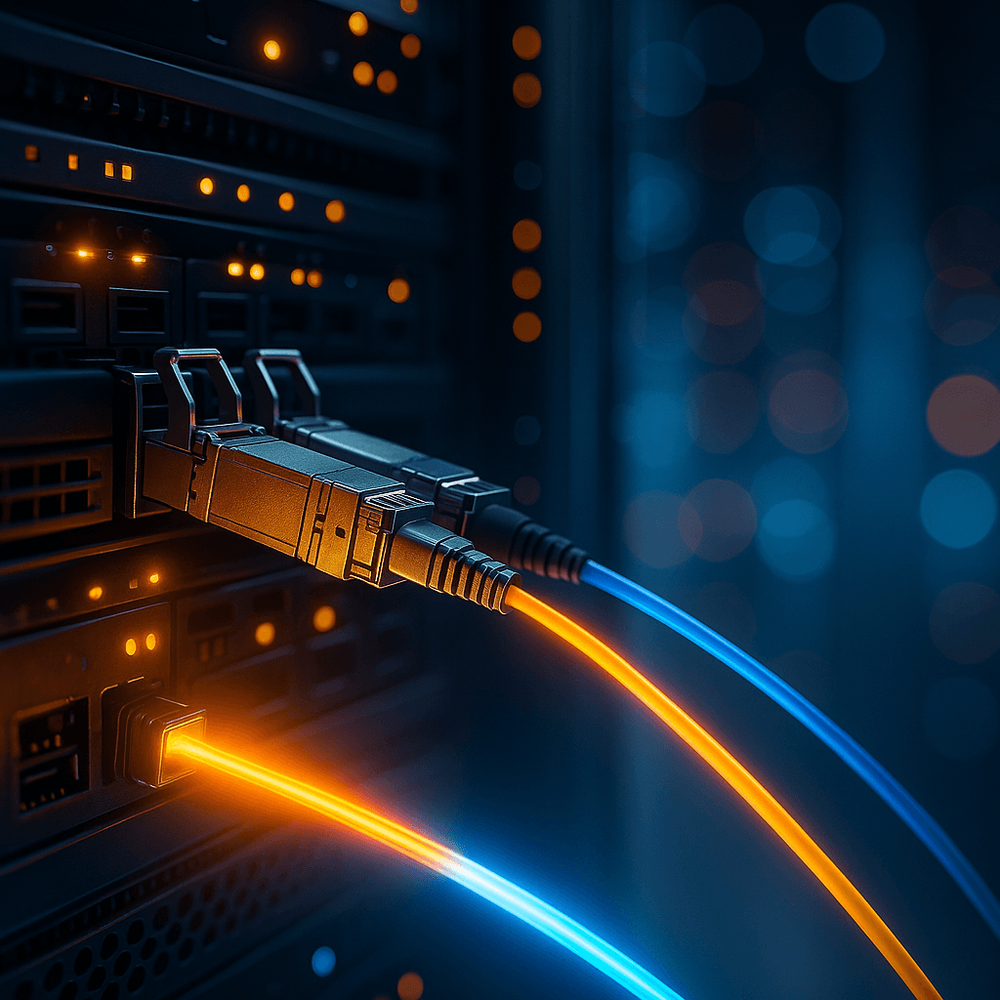
Optical transceivers convert electrical signals into optical signals, enabling faster data transmission over fiber with lower latency and improved energy efficiency. In AI-focused data centers, these components are critical to maintaining high-speed communication between compute nodes.

Mesh’s founding team brings aerospace engineering experience from SpaceX, where designing high-reliability systems for extreme conditions is standard practice. That background is now being applied to the data center environment, where thermal management, power efficiency, and system resilience are equally crucial at scale.
Industry analysts say networking is emerging as a key competitive frontier in AI infrastructure. While chipmakers such as Nvidia dominate headlines with advanced GPUs, bottlenecks in data movement between chips can significantly limit overall performance. Companies developing high-bandwidth optical solutions are increasingly viewed as essential enablers of next-generation AI systems.
The demand surge is being driven by hyperscale cloud providers and enterprise operators expanding AI capacity. Firms such as Microsoft, Amazon, and Google continue to invest billions in AI-ready infrastructure, including purpose-built data centers optimized for high-density compute clusters.
Optical interconnects are particularly critical in “east-west” traffic within data centers — the high-volume communication that occurs between servers rather than between servers and end users. As AI models grow, east-west traffic expands exponentially, increasing pressure on network hardware to deliver ultra-low latency and minimal signal degradation.
Mesh’s strategy centers on designing optical transceivers that are not only high-performance but also cost-efficient at scale. Manufacturing reliability and supply chain resilience will be essential if the company aims to serve hyperscale operators.

Energy efficiency is another driving factor. AI data centers consume significant electricity, both for computation and cooling. Optical solutions can reduce power consumption compared to traditional copper-based connections, potentially lowering operational costs and improving sustainability metrics.
The $50 million Series A funding will likely support product development, scaling manufacturing capabilities, and securing customer partnerships. While the company’s customer base has not been publicly disclosed, early-stage hardware startups in this space typically work closely with cloud providers or specialized AI infrastructure firms.
Investors are increasingly looking beyond AI software into the foundational hardware stack that supports it. From advanced semiconductors to networking components and cooling systems, infrastructure innovation is becoming a defining theme of the AI boom.
If Mesh succeeds in delivering high-performance optical transceivers tailored for AI workloads, it could position itself as a key player in the rapidly expanding ecosystem of AI-native hardware providers.