

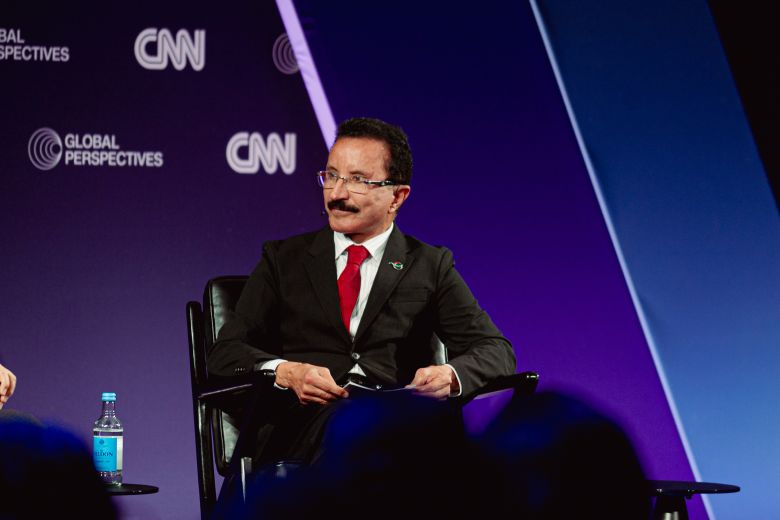
A sweeping disclosure from the US Justice Department has thrust Dubai tycoon Epstein emails into the global spotlight, prompting leadership upheaval at one of the world’s largest port operators. The removal of Sultan Ahmed bin Sulayem from his role at DP World follows renewed scrutiny over his documented communications with the late financier Jeffrey Epstein.
The Dubai tycoon Epstein emails, revealed in newly unredacted government files, show years of correspondence between the Emirati business leader and Jeffrey Epstein. While bin Sulayem has not been charged with wrongdoing, the reputational impact has been swift, culminating in his replacement at the helm of DP World, a logistics giant operating in more than 80 countries.
Dubai Tycoon Epstein Emails Trigger Corporate Fallout
The Dubai tycoon Epstein emails underscore how associations alone can destabilize corporate leadership, even absent formal charges. DP World confirmed the appointment of new leadership after the documents resurfaced in Washington, reigniting political and media attention.
For multinational corporations, reputation is capital. In industries such as shipping and port management, trust underpins billion-dollar infrastructure deals, government concessions, and pension fund partnerships. The Dubai tycoon Epstein emails have already led at least two institutional investors to pause future engagements, highlighting how governance concerns can ripple through global supply chains.

Quebec-based pension fund La Caisse signaled it would reassess cooperation before resuming collaboration under new management. This reaction illustrates how institutional investors weigh environmental, social, and governance risks as heavily as financial metrics. The Dubai tycoon Epstein emails thus became more than a personal controversy; they evolved into a corporate governance issue with tangible economic consequences.
Why the Dubai Tycoon Epstein Emails Matter Globally
The significance of the Dubai tycoon Epstein emails extends beyond one executive. DP World plays a pivotal role in international trade, overseeing ports that facilitate billions of dollars in goods annually. Any instability at the top can unsettle markets, partners, and host governments.
Global logistics networks are sensitive to political and reputational shocks. If stakeholders perceive governance weaknesses, financing costs can rise and partnerships may stall. In this sense, the Dubai tycoon Epstein emails highlight the fragility of corporate credibility in an era of instant information and intense regulatory oversight.
Moreover, the files reveal how Epstein cultivated ties with influential figures worldwide, positioning himself as a connector among elites. References to outreach involving leaders such as Donald Trump and former Israeli defense minister Ehud Barak illustrate the breadth of Epstein’s network. Though inclusion in the documents does not imply criminal conduct, the optics alone can affect public perception and corporate standing.
Business Implications of the Dubai Tycoon Epstein Emails
For businesses, the Dubai tycoon Epstein emails serve as a cautionary tale about executive exposure. Senior leaders increasingly operate in a transparent digital environment where private correspondence can become public years later. Boards are now expected to monitor reputational risk as rigorously as financial performance.
The fallout also underscores how quickly investor sentiment can shift. Large pension funds and sovereign wealth investors often apply strict ethical screens. If a company appears linked to controversy, even indirectly, it may face capital withdrawal or heightened scrutiny. That can influence stock valuations, debt ratings, and future expansion plans.
DP World’s rapid leadership transition signals an attempt to contain damage and reassure stakeholders. In competitive sectors such as global logistics, even temporary uncertainty can disrupt bidding processes for major infrastructure projects. The Dubai tycoon Epstein emails therefore demonstrate how reputational risk can translate into operational risk.
Household Impact and Broader Trust
While the Dubai tycoon Epstein emails may seem distant from everyday households, the effects are interconnected. Pension funds, including public retirement systems, often invest in global infrastructure firms like DP World. If controversy affects returns, retirees and workers could feel indirect consequences.
Additionally, disruptions in port operations or financing could influence shipping costs. In a globalized economy, logistics companies form the backbone of supply chains that determine the prices consumers pay for goods. Although DP World has continued operations without interruption, leadership instability can raise concerns about long-term stability.
The Dubai tycoon Epstein emails reveal the growing intersection between personal conduct, corporate governance, and global commerce. In an age where transparency is enforced by document releases and digital archives, leaders face intensified accountability not only for financial decisions but for their associations.
For businesses, the episode reinforces the need for proactive governance frameworks and crisis management strategies. For households, it is a reminder that corporate reputations influence everything from pension performance to the resilience of supply chains.
Ultimately, the Dubai tycoon Epstein emails are less about a single correspondence trail and more about how modern institutions respond to reputational shock. The swift leadership change at DP World suggests that in today’s environment, perception can be as consequential as prosecution.