

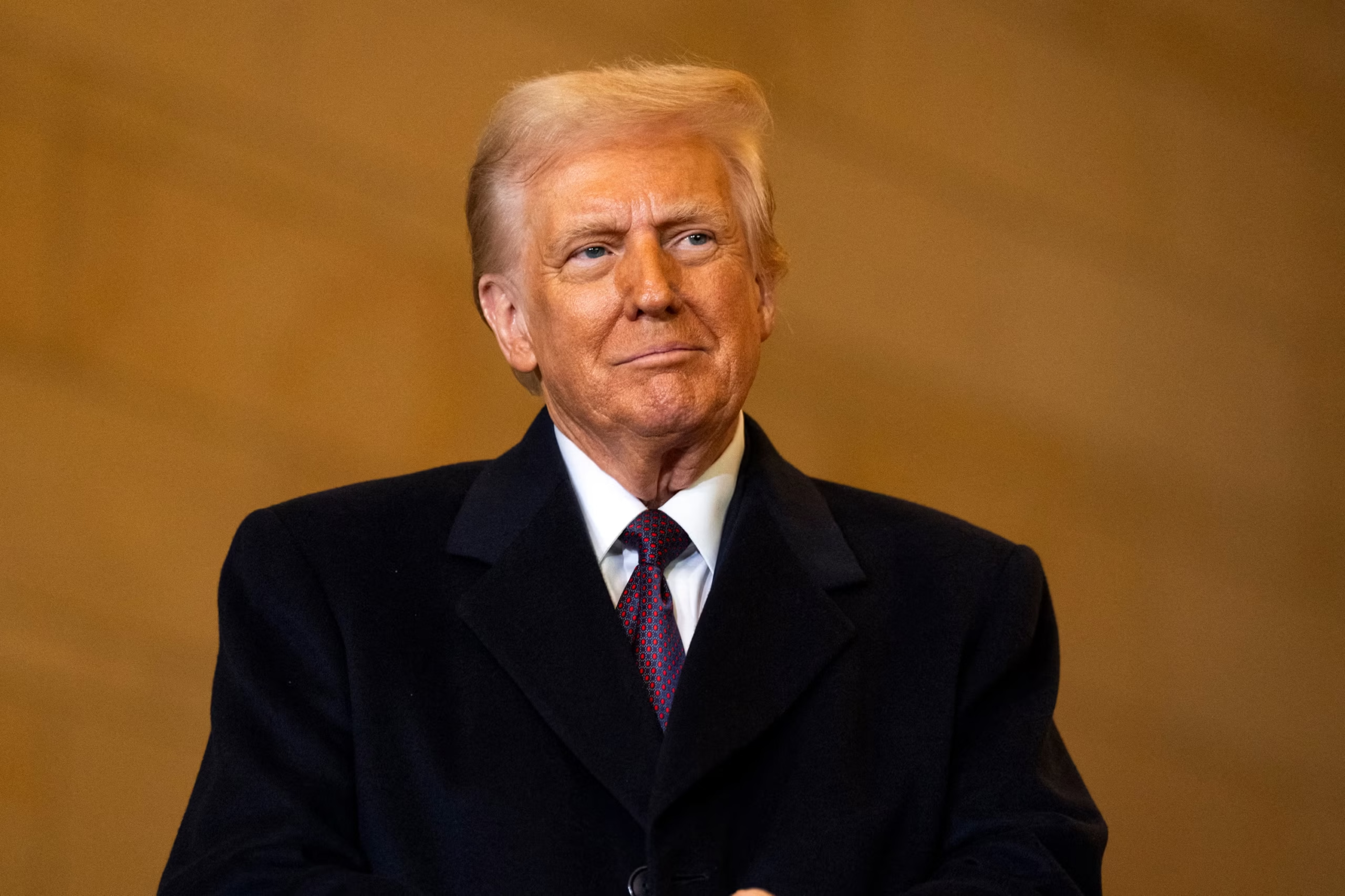
In one of the most dramatic rollbacks of U.S. climate policy in decades, President Donald Trump and the Environmental Protection Agency (EPA) have formally repealed the 2009 greenhouse gas “endangerment finding”, a scientific and legal determination that underpinned nearly all federal efforts to regulate climate-warming emissions. The repeal removes the legal foundation that classified greenhouse gases such as carbon dioxide and methane as threats to public health and welfare, reshaping U.S. climate regulation and igniting intense controversy across environmental, legal, political, and scientific communities.
The action was finalized on February 12, 2026, when the Trump administration published a rule rescinding the endangerment finding a legal cornerstone that had empowered the EPA to regulate greenhouse gas emissions under the Clean Air Act for motor vehicles, power plants, industrial sources, and more. By reversing this rule, the administration effectively dismantles the federal government’s regulatory authority to curb planet-heating pollution, marking a watershed moment in U.S. environmental policy.
What Is the endangerment finding and why it mattered
The endangerment finding was first adopted by the EPA in 2009 during the presidency of Barack Obama after a 2007 U.S. Supreme Court decision in Massachusetts v. EPA determined that greenhouse gases qualify as air pollutants under the Clean Air Act. Based on extensive scientific evidence, the EPA concluded that six key greenhouse gases including carbon dioxide, methane, nitrous oxide, and fluorinated gases posed a danger to public health and welfare by contributing to climate change.

That scientific determination became the basis for dozens of climate policies and regulations over the following decade and a half. It enabled emissions standards for vehicles, rules for industrial and power plant pollution, and regulatory frameworks that aimed to reduce carbon and other pollutants tied to global warming. Without the endangerment finding, these federal climate protections had a weak legal foundation, leaving future regulatory efforts far more vulnerable to challenge.
In repealing the rule, the Trump administration is not merely altering a technical detail it has dismantled the legal justification that empowered the federal government for 16 years to limit greenhouse gas emissions with enforceable standards.
Administration’s justifications and statements
At a White House event announcing the repeal, President Trump called the endangerment finding “a disastrous Obama-era policy” that, in his view, “severely damaged the American auto industry” and drove up consumer costs. According to Trump, repealing the scientific finding would reduce regulatory burdens and lower costs for manufacturers and consumers, particularly in the automotive sector.
Trump also described the action as “the single largest deregulatory action in American history,” asserting that it would save Americans roughly $1.3 trillion in regulatory costs and cut average vehicle prices by several thousand dollars. EPA Administrator Lee Zeldin echoed that sentiment, labeling the endangerment finding “the Holy Grail of federal regulatory overreach” and asserting that the Clean Air Act was being restored to its original intent.
These arguments have been a consistent theme from the Trump administration, which has framed the repeal as a necessary step to protect industries deemed vital to the U.S. economy, such as automobiles, energy, and manufacturing.
Reactions from scientific, environmental, and political leaders
The repeal has drawn immediate and severe criticism from environmental scientists, public health experts, former officials, and climate advocates who argue that the administration’s action disregards decades of scientific research linking climate change to severe health, environmental, and economic risks. They contend that rising global temperatures contribute to more frequent and intense heat waves, wildfires, floods, droughts, and respiratory illnesses, and that weakening regulatory authority undermines protections that had begun to mitigate those threats.

Gina McCarthy, EPA administrator under the Obama administration and now a leading public advocate for climate action, called the Trump EPA’s decision “reckless,” saying the agency appears more focused on defending fossil fuel interests than safeguarding public health and environmental quality. David Doniger, a climate expert at the Natural Resources Defense Council, warned that the repeal could “raise more havoc” than any previous environmental rollback.
Former President Barack Obama publicly condemned the move, saying that without the endangerment finding “we’ll be less safe, less healthy and less able to fight climate change,” and accusing the administration of benefiting fossil fuel industries at the expense of the broader public. Multiple state leaders, including California’s governor, have pledged legal challenges aimed at blocking the repeal.
Democratic lawmakers and climate advocates also criticized the repeal as politically motivated and scientifically unfounded, noting that federal courts have repeatedly upheld the original endangerment finding and that the underlying science has only grown stronger over time.
Legal and regulatory impacts of the repeal
The immediate practical effect of revoking the endangerment finding is the elimination of greenhouse gas emissions standards for vehicles, power plants, and other major polluting sources that were based on that determination. This includes federal vehicle tailpipe standards covering model years from 2012 through 2027 and beyond, which are now defunct without the legal authority to enforce them.
Additionally, the repeal could pave the way for similar rollbacks of other climate-related regulations, including methane emission rules and potential future protections targeting industrial sources. Without a legally affirmed scientific finding that greenhouse gases are harmful, future administrations would have to restart the process of establishing new scientific and legal bases for climate regulation a task likely to take years and face extensive litigation.
Legal challenges from states, environmental groups, and public health organizations are expected almost immediately. These lawsuits will likely argue that the EPA’s action contradicts established science and defies legal precedent, particularly because the Supreme Court in Massachusetts v. EPA already determined greenhouse gases should be regulated as air pollutants.
Broader implications for public health and climate policy
Critics point out that repealing the endangerment finding undermines protections that were linked to real health outcomes, such as reductions in respiratory disease, cardiovascular illness, and premature deaths related to air pollution exposure. Scientific assessments from bodies such as the National Academies of Sciences, Engineering, and Medicine have repeatedly affirmed that greenhouse gas emissions and associated pollutants are harmful to human health and welfare.
Without federal regulatory authority, states and local governments may take their own measures, potentially leading to patchwork standards that vary widely across the country. This could increase compliance costs for industry and create regulatory uncertainty, even as some states strengthen their own climate regulations.
Economically, while supporters claim immediate savings from reduced regulatory costs, opponents argue that the long-term costs of increased pollution including healthcare expenditures, infrastructure damage from climate disasters, and lost productivity could vastly outweigh any short-term benefits.
The Trump administration’s repeal of the greenhouse gas endangerment finding represents a major turning point in U.S. climate policy, dismantling a foundational tool for federal climate action and setting the stage for intense legal, political, and environmental battles over the future of emissions regulation and public health protection.