

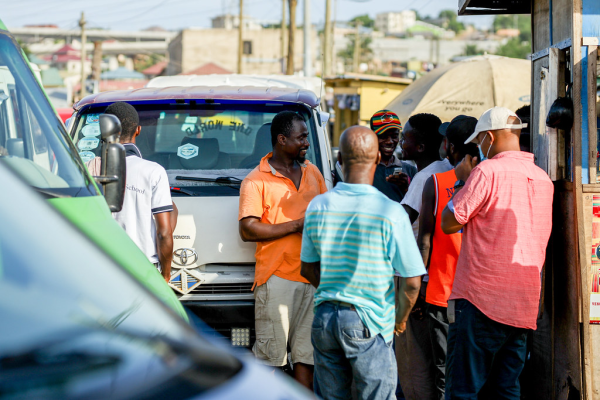
The rising transport costs in Ghana are quietly reshaping the daily lives of workers and students, creating economic and social pressures that extend far beyond the fare itself. For many, commuting is no longer a simple necessity but a financial and emotional burden that affects productivity, education, and social mobility.
Across major urban centers like Accra, Tema, and Kumasi, workers living on the outskirts often spend 20–30 percent of their monthly income just to get to and from work. For households already balancing tight budgets, this level of expenditure leaves little for savings, healthcare, childcare, or emergencies. The hidden economic cost manifests in delayed or foregone opportunities, including turning down better-paying jobs because commuting expenses would outweigh the benefits.
Rising transport costs, the impact on students
Students are among the most vulnerable to rising transport costs. Those commuting from areas like Madina, Amasaman, or Kasoa to central Accra face unpredictable fare increases, overcrowded buses, and long travel times. These challenges directly affect punctuality, attendance, and mental readiness for learning. For low-income students, the daily strain can undermine academic performance and reduce long-term prospects, effectively making transport a barrier to education.
Beyond the financial burden, the physical and mental toll is significant. Long hours in traffic, poorly maintained vehicles, and confrontations with conductors leave commuters exhausted even before starting their work or studies. This exhaustion trickles into lower productivity in offices, markets, and workshops, and reduced engagement and performance in classrooms and lecture halls.
Systemic Weaknesses in Ghana’s Transport Sector
Recent enforcement measures by the Ghana Private Road Transport Union (GPRTU) and the Ghana Police Service have targeted arbitrary fare hikes. Drivers and conductors have been arrested, vehicles impounded, and offenders prosecuted at major terminals like Amasaman and Kwame Nkrumah Interchange. While enforcement demonstrates that authorities are taking the problem seriously, it highlights deeper structural weaknesses.
The persistence of fare abuses is rooted in fragmented oversight, weak monitoring, and limited commuter education. Commuters lack transparent, real-time information on approved fares, while regulatory institutions and law enforcement agencies often operate in silos. Without comprehensive structural reform, arrests alone cannot resolve the systemic issues driving rising transport costs.
Unchecked rising transport costs have long-term consequences for households and the broader economy. High commuting expenses entrench inequality by limiting access to employment, education, and essential services for those living farther from city centers. Urban fringe populations, already constrained financially, are systematically excluded from opportunities, widening the gap between rich and poor.
For businesses, increased transport costs translate into delayed employee arrivals, absenteeism, and lower productivity. For students, the effect is reduced educational attainment and, over time, a workforce less prepared to compete in a global economy. The hidden cost of commuting is therefore measured not just in cedis but in lost potential, reduced productivity, and slower national development.
Towards Sustainable Solutions
Addressing rising transport costs requires more than enforcement. Transparent and publicly accessible fare-setting mechanisms are essential. Strengthened commuter protection frameworks and sustained investment in affordable, reliable mass transit systems are equally important. Urban planning should deliberately integrate housing, education, and employment opportunities so that geography does not determine access to opportunity.
If Ghana is to foster inclusive growth and youth development, transport must be treated as a national priority. Well-managed reforms can ensure that transportation connects people to opportunity rather than depleting their financial and mental resources.
The daily struggles of workers and students highlight the real cost of rising transport costs in Ghana. While authorities have begun enforcement actions, the root challenges, fragmented oversight, inadequate infrastructure, and lack of transparent fare systems, persist. Without comprehensive reforms, households will continue to pay a heavy hidden price, measured in lost time, reduced productivity, and unrealized potential. Tackling these challenges is essential not only for equity and social mobility but for national economic growth.