

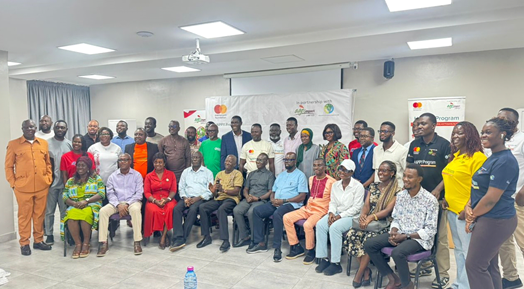
The HAPPY Programme poultry initiative is transforming Ghana’s domestic poultry sector, creating opportunities for local producers to compete effectively against imports while attracting investment and improving market access. The Harmonising Agricultural Productivity and Profitability Programme has become a pivotal tool in positioning locally produced chicken as a preferred choice for consumers across urban centres.
Driving Competitiveness Through the HAPPY Programme Poultry
The HAPPY Programme poultry has directly contributed to the production of over 4.6 million birds, according to Abraham Sarfo, Agribusiness and Value Chain Specialist at Agri-Impact. While Ghana’s strengthening cedi has made imported poultry more affordable, local producers are benefiting from reduced production costs, enhanced processing capacity, and improved distribution networks. These developments are helping domestic products compete more favourably in both price and quality.
Sarfo highlighted that urban markets, particularly in Accra and Kumasi, are increasingly sourcing freshly produced local chicken year-round rather than just during peak seasons like Christmas. The HAPPY Programme poultry has enabled this shift, giving local producers a competitive edge over imported alternatives by ensuring freshness, better packaging, and alignment with consumer taste preferences.
Economic Implications for Households and Businesses
The impact of the HAPPY Programme poultry extends well beyond the producers themselves, influencing households, communities, and businesses throughout Ghana. For families, the greater availability of locally produced chicken at competitive prices significantly improves food security, nutritional intake, and access to high-quality protein. Fresh, locally sourced poultry ensures that households no longer have to rely solely on imported alternatives, which are often subject to supply disruptions, currency fluctuations, and price volatility.
This means that families can consistently access nutritious food throughout the year without experiencing the sharp price spikes traditionally associated with festive periods or seasonal shortages. The ripple effects are also seen in reduced household expenditure on imported poultry, allowing families to allocate resources to other essential needs, such as education, healthcare, and small-scale business activities.
Businesses along the poultry value chain are equally benefiting from the HAPPY Programme poultry, creating a more vibrant and sustainable economic ecosystem. The initiative has directly generated approximately 8,000 jobs, spanning farm labour, processing, logistics, and trading, while indirectly supporting over 10,000 individuals engaged in poultry-related trading activities, including market vendors and small-scale suppliers. By strengthening local production capacity, the HAPPY Programme poultry helps reduce reliance on imported chicken, stabilising prices and ensuring a more predictable supply for businesses.
Small- and medium-scale processors are now able to supply high-end markets, fast-food chains, hotels, and urban retail outlets with fresh, quality products, which in turn supports customer satisfaction, business growth, and local entrepreneurship. This enhanced domestic capacity also promotes resilience in the poultry sector, reducing vulnerability to international supply shocks, while encouraging further investment, innovation, and professionalisation across the industry.
Underutilised Capacity Remains a Challenge
Despite these gains, the sector is far from reaching its full potential. According to Prince Manu Yeboah, Business Development and Research Manager at Agri-Impact, approximately 60 percent of poultry investment structures nationwide remain underutilised. In Dormaa, the hub of Ghana’s poultry activity, facilities with a combined capacity of 5.2 million birds operate at only 50 percent. In the Ashanti Region, utilisation stands at roughly 60 percent. The HAPPY Programme poultry has highlighted this gap, signalling opportunities for investors, technology providers, and young entrepreneurs to enhance production and efficiency.
Processing also remains a bottleneck. Currently, only about half of broiler production is processed locally, and most layer birds are exported to Côte d’Ivoire. Addressing these challenges through modern processing facilities, improved logistics, and skill development could significantly increase domestic supply and profitability.
Investment and Future Growth
The HAPPY Programme poultry has mobilised US$35 million in investments, underlining the growing confidence of stakeholders in Ghana’s poultry sector. Targeted investment in feed formulations, processing capacity, and technology adoption is key to unlocking further growth. Stakeholders stress the importance of institutional strengthening, inclusion of young people and women, and adoption of data-driven monitoring systems to enhance efficiency and profitability.
As the programme scales, businesses that integrate modern production and distribution methods stand to gain the most. Households benefit through increased affordability, consistent supply, and access to higher-quality poultry products. By enhancing competitiveness, the HAPPY Programme poultry supports both economic growth and food security objectives.
The HAPPY Programme poultry initiative demonstrates how strategic interventions can revitalise a local industry, enhance market access, and create jobs while benefiting households and businesses. By addressing underutilised capacity, investing in technology, and promoting inclusivity, the programme sets a foundation for a competitive, sustainable, and resilient poultry sector in Ghana.