

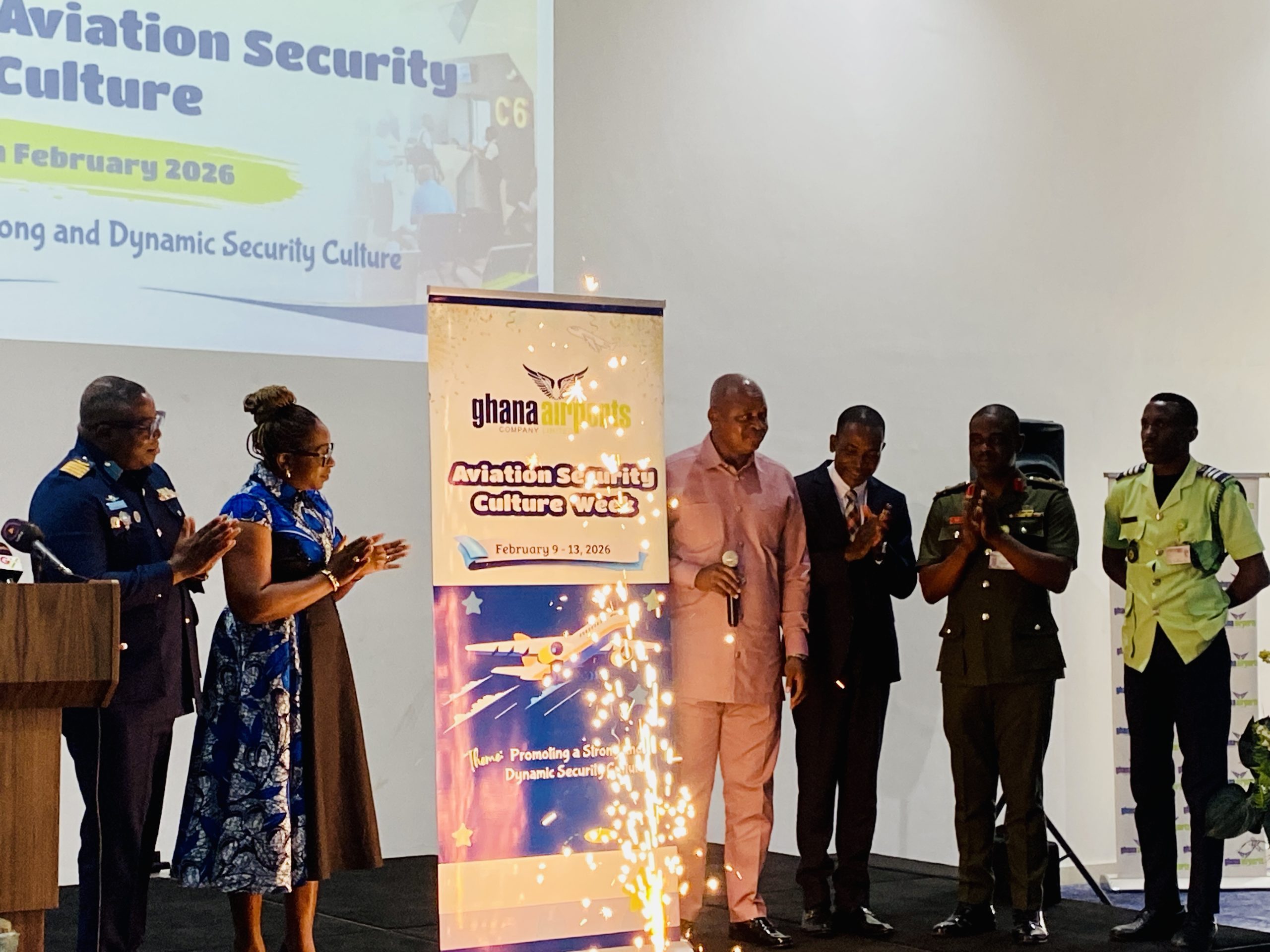
Aviation security culture is taking centre stage as the government renews its push to safeguard Ghana’s fast-growing aviation industry. At the launch of Aviation Security Culture Week in Accra, officials signalled that, this is no longer a routine compliance requirement but a strategic economic priority tied to investor confidence, tourism growth and national stability.
The renewed emphasis on the launch comes at a time when global air travel is steadily recovering from the shock of the COVID-19 pandemic and grappling with evolving security threats. For Ghana, which is positioning itself as a regional aviation hub, the stakes extend far beyond airport terminals. As it now sits at the intersection of economic resilience and global competitiveness.
Why Aviation Security Culture Matters
This matters because air transport is deeply linked to trade, tourism and foreign investment. When security systems fail or public confidence weakens, the ripple effects spread quickly through the economy. Flights are delayed or cancelled, insurance premiums rise, and international carriers may reconsider routes.
By prioritising this, authorities aim to rebuild and sustain trust in Ghana’s aviation ecosystem. The transport minister underscored that global shocks and past security disruptions created uncertainty that damaged public confidence worldwide. Rebuilding that trust requires more than equipment upgrades; it requires embedding it into everyday operations.
For households, stronger aviation security culture translates into safer travel and fewer disruptions. Families travelling for business, education or medical reasons rely on predictable and secure airport processes. When aviation security culture is robust, it reduces the risk of costly travel interruptions and enhances peace of mind.
Aviation Security Culture and Business Confidence
For businesses, this directly affects operational efficiency and profitability. Airlines, logistics firms and exporters depend on secure and seamless air corridors. A weak aviation security culture can result in tighter international scrutiny, higher compliance costs and reputational damage.
Ghana’s ambition to become a leading aviation hub in West Africa depends heavily on sustaining a credible aviation security culture aligned with International Civil Aviation Organization standards. Strong audit performance, such as the country’s recent aviation security assessment, sends a positive signal to global partners and investors.
In practical terms, it can influence decisions by multinational companies on where to locate regional offices or distribution centres. Reliable air connectivity supported by strong aviation security culture reduces business risk and improves supply chain reliability.
A key message from the launch is that, it is a shared responsibility. Authorities emphasised that security should not be seen solely as a government obligation but as a collective duty involving passengers, airport workers and private operators.
This approach reflects a broader global shift from reactive enforcement to proactive vigilance. Embedding the culture into daily routines means encouraging individuals to report suspicious activity, comply with screening procedures and adhere strictly to safety protocols.
For airport employees and service providers, it requires continuous training and awareness. In the long term, this fosters professionalism and reduces the likelihood of insider threats, which remain a significant global concern.
Economic Recovery
The timing of the renewed aviation security culture initiative is significant. As international travel rebounds, competition among African airports is intensifying. Countries that demonstrate strong aviation security culture are more likely to attract new routes, tourism flows and cargo partnerships.
Tourism-dependent households and small businesses stand to benefit. Hotels, transport operators, restaurants and informal traders around airport zones rely on steady passenger traffic. When aviation security culture reassures travellers, it supports consistent visitor inflows and stabilises incomes across related sectors.
Moreover, cargo security linked to aviation security culture affects exporters of perishable goods such as fresh produce and pharmaceuticals. Reliable security systems reduce delays and ensure compliance with international standards, protecting Ghana’s trade reputation.
Technology and Evolving Threats
Officials also highlighted the changing nature of aviation threats, including the misuse of advanced technology and improvised devices. This evolving landscape means aviation security culture must adapt continuously. Investment in modern passenger identification systems and threat detection tools forms part of this strategy.
However, technology alone cannot guarantee safety. Without a strong aviation security culture that prioritises vigilance and accountability, even advanced systems can be undermined. The emphasis on awareness campaigns and stakeholder engagement during Aviation Security Culture Week reflects recognition that culture is as critical as hardware.
Ultimately, aviation security culture is about safeguarding both national assets and economic prospects. By reinforcing aviation security culture, Ghana aims to protect its airspace, maintain international credibility and secure the confidence of travellers and investors alike.
For households, the benefits are felt in safer journeys and more stable economic opportunities linked to aviation. For businesses, aviation security culture reduces operational risks and strengthens Ghana’s position as a reliable gateway to West Africa.
As global travel dynamics continue to evolve, the countries that embed aviation security culture deeply within their institutions will be best positioned to capture growth. Ghana’s renewed commitment suggests it recognises that security is not just a protective measure but a foundation for sustainable development.
Delta Air Lines strengthens long-haul fleet with major Airbus widebody order