

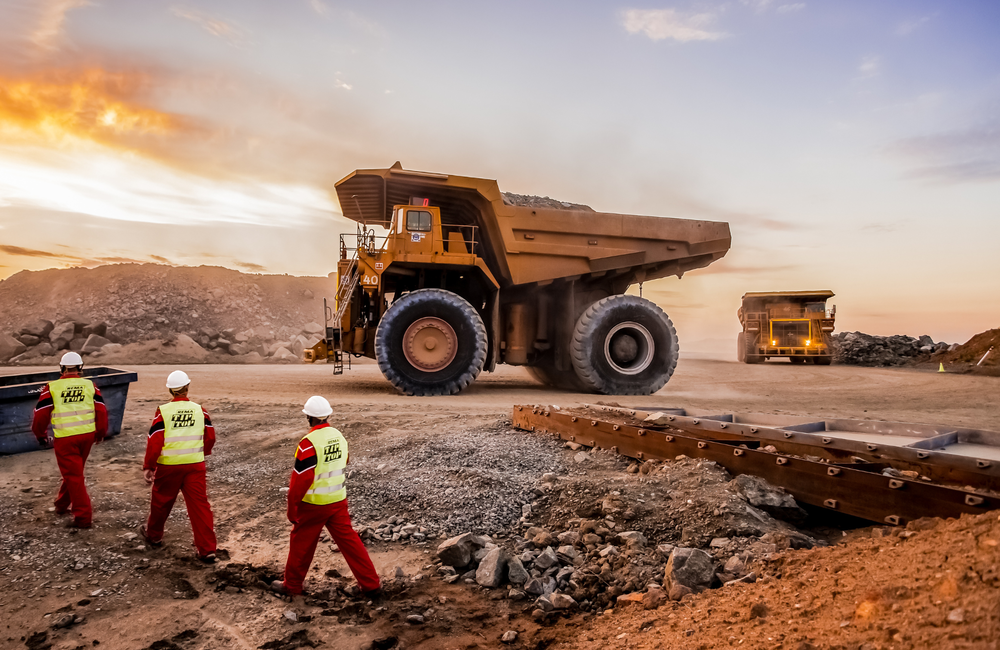
Africa holds an estimated US$29.5 trillion in mine-site mineral value, accounting for roughly 20 percent of global mineral wealth, yet the continent continues to capture only a fraction of the economic benefits embedded in this vast endowment, according to the Africa Finance Corporation (AFC).
In its latest report, Compendium of Africa’s Strategic Minerals, launched on the sidelines of the Mining Indaba in Cape Town, the AFC says Africa is at a critical inflection point. With the right mix of policies, infrastructure investment and industrial alignment, the continent’s mineral wealth could be transformed from a largely extractive asset into a catalyst for industrialisation, regional integration and long-term economic prosperity.
The report estimates that of the total mineral value identified, about $8.6 trillion remains undeveloped. This, it argues, reflects not a shortage of resources but an under-explored continent, where fragmented geological data, uneven coverage and limited transparency have historically heightened risk perceptions and discouraged investment.

Improving the quality, accessibility and coordination of geological data is identified as a crucial first step in de-risking projects, attracting exploration capital and accelerating responsible mineral development across Africa.
Beyond extraction, the AFC stresses that mine-site valuations significantly understate Africa’s true mineral potential. When raw minerals are processed into higher-value industrial outputs such as steel, aluminium, fertilisers, batteries and advanced alloys, the value generated can increase by several multiples. This downstream processing, the report argues, represents Africa’s greatest opportunity to retain value, create skilled jobs and build globally competitive industries that directly benefit African economies.
“The Compendium reframes Africa’s mineral sector through an African development lens,” said Samaila Zubairu, President and CEO of AFC. “It links mineral endowments to processing capacity, power systems, transport infrastructure and regional industrial corridors, converting natural wealth into practical execution pathways for shared prosperity.”

According to the report, a major structural challenge is the lack of alignment between Africa’s mineral production, infrastructure development and demand. As a result, many African mineral supply chains remain externally anchored, particularly to Asian industrial cycles, rather than to Africa’s own rising needs in areas such as steel production, energy systems, housing, transport and manufacturing.
This disconnect has left African producers exposed to external demand shocks, even as domestic and regional infrastructure expansion gathers pace. The AFC argues that Africa’s problem is not weak demand, but weak demand anchoring, failing to deliberately align mineral extraction, processing and infrastructure investment with the continent’s long-term development goals.
Infrastructure is therefore positioned as the backbone of Africa’s mineral strategy. Reliable power supply, efficient transport corridors, access to industrial land and strong cross-border connectivity are seen as decisive factors in determining whether beneficiation and regional value chains can succeed. By mapping mineral assets alongside railways, ports and power networks, the Compendium identifies opportunities where coordinated regional infrastructure could unlock scale, reduce costs and support integrated African industrial platforms.

In a global economy increasingly shaped by supply chain diversification, trade tensions and green industrial policies, the report notes that Africa’s strategic importance is rising. It calls for selective, value-adding integration into global supply chains, particularly for minerals such as manganese, rare earths, graphite and uranium, where African processing could enhance global resilience while advancing African development objectives.
The AFC notes that early signs of progress are already visible across parts of the continent, suggesting that Africa’s mineral future does not have to be defined by extraction alone, but by industrial transformation that delivers lasting benefits for its people.