

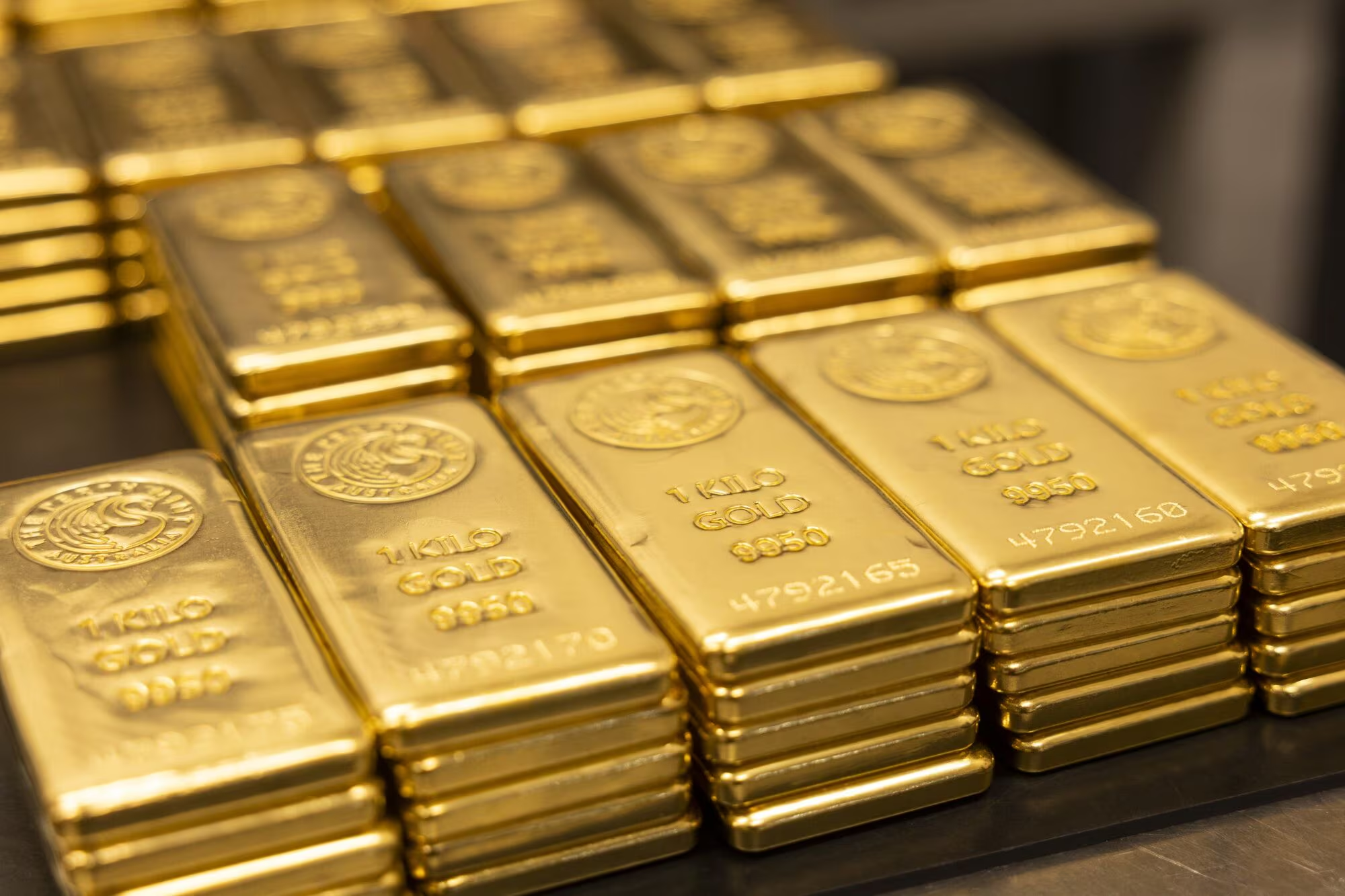
The BoG gold reserves reduction has become a focal point of public debate as Ghana navigates fragile external balances, exchange-rate pressures, and the long task of restoring macroeconomic credibility. While gold is often viewed by the public as a symbol of national wealth and security, central banks treat reserves not as trophies but as financial tools. The Bank of Ghana’s decision to reduce the share of gold in its reserve portfolio is therefore less about selling assets and more about managing risk, liquidity, and stability.
Understanding why this move was taken, and what it means for businesses and households offers insight into how Ghana is repositioning its external buffers in a volatile global environment.
BoG Gold Reserves Reduction and Portfolio Risk
At the core of the BoG gold reserves reduction is the issue of concentration risk. By the end of 2025, gold had reportedly grown to over 40% of Ghana’s Gross International Reserves, largely due to sustained accumulation and rising global gold prices. While gold is a traditional safe-haven asset, excessive exposure to a single asset class can expose a country to sharp valuation swings.

Central banks typically aim for diversification to ensure that reserves remain resilient under different global conditions. International benchmarks suggest that many peer central banks maintain gold holdings in the range of 20–25% of total reserves. By reducing gold’s share to around 20%, the Bank of Ghana is aligning reserve management with global best practice rather than abandoning gold altogether.
Liquidity Needs and External Stability
Another key driver behind the BoG gold reserves reduction is liquidity. Gold, while valuable, is not always the most flexible asset when it comes to meeting short-term foreign exchange obligations. Ghana requires readily deployable FX reserves to finance imports, service external debt, and support confidence in the cedi.
Converting part of gold holdings into high-quality foreign exchange assets improves the central bank’s ability to respond quickly to external shocks. FX assets can be deployed immediately in the currency market or used to meet balance-of-payments needs, whereas gold often requires additional steps to monetise, particularly in stressed market conditions.
Addressing Public Concerns: Was Value Lost?
Public anxiety surrounding the BoG gold reserves reduction has largely centred on fears that Ghana “lost” part of its national wealth. However, the central bank has clarified that the transaction involved a conversion, not a depletion. Gold assets were exchanged for FX assets of equivalent value, which remain fully integrated into Ghana’s international reserves.
Importantly, these FX assets are not idle. They are actively invested in line with reserve management principles, generating returns while preserving capital. From a balance-sheet perspective, Ghana did not lose reserves; it changed their composition to better match current economic needs.
Implications for Businesses
For businesses, especially importers and firms with foreign-currency exposure, the BoG gold reserves reduction carries indirect but meaningful implications. A more liquid and diversified reserve position strengthens the central bank’s ability to stabilise the currency during periods of volatility. This reduces uncertainty around input costs, external payments, and contract pricing.
Greater reserve flexibility also improves investor confidence. Foreign investors tend to assess not just the size of reserves, but their usability. A reserve structure that can quickly support the FX market lowers perceived country risk, potentially easing financing conditions for both domestic firms and foreign-funded projects.
At the household level, the BoG’s gold reserves reduction matters through its impact on inflation and purchasing power. Exchange-rate instability often feeds directly into higher prices for fuel, food, and imported essentials. By strengthening its FX position, the central bank improves its capacity to smooth excessive currency swings, helping to contain inflationary pressures.
While households are unlikely to see immediate price declines as a result of this move alone, the broader objective is macroeconomic stability. Over time, a more stable currency environment supports real incomes, reduces cost-of-living shocks, and improves planning for education, housing, and healthcare expenses.
Strategic Timing and Macroeconomic Context
The timing of the BoG gold reserves reduction is also significant. Ghana is emerging from a period of acute macroeconomic stress marked by currency depreciation, debt restructuring, and reserve rebuilding. With gold prices elevated, reducing exposure at this stage allows the country to lock in gains while rebalancing toward assets that better support near-term policy objectives.
Rather than signalling weakness, the move suggests a more active and pragmatic reserve management strategy, one that recognises both the strengths and limitations of gold in a modern monetary framework.
The BoG’s reduction in gold reserves is not a retreat from gold, nor a loss of national assets. It is a calculated adjustment aimed at reducing concentration risk, improving liquidity, and strengthening Ghana’s external defences. For businesses, it supports currency stability and investor confidence. For households, it contributes, indirectly but importantly, to inflation control and economic predictability.
In an era of global uncertainty, central banking is increasingly about flexibility rather than symbolism. Ghana’s decision reflects a shift toward treating reserves as a dynamic policy instrument, not a static store of wealth. The success of this strategy will ultimately be judged by its ability to support stability, growth, and resilience across the broader economy.
Gold reserves liquidation strengthens Ghana’s external stability, BoG explains