

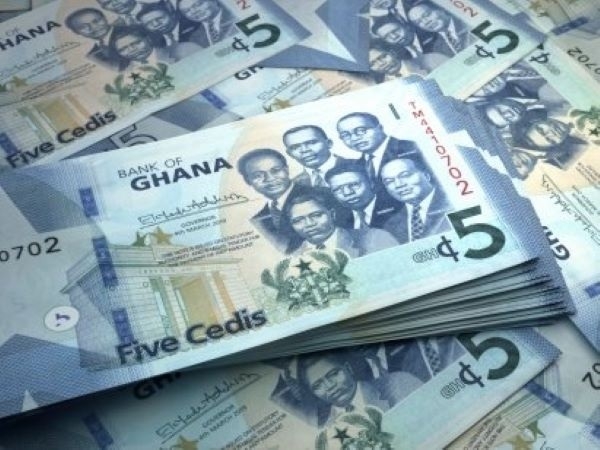
The Ghana cedi depreciation recorded in January 2026 marks an early stress test for macroeconomic stability this year, with the local currency losing 4.0 percent of its value against the US dollar within a single month. According to data from the Bank of Ghana, the cedi weakened from GH¢10.45 in December 2025 to GH¢10.88 per dollar in the interbank market, signalling renewed pressure after a strong performance last year.
This development matters because it reverses investor and household optimism built during 2025, when the cedi posted a year-to-date appreciation of over 40 percent. A weaker currency, even modestly, has immediate consequences for inflation expectations, import costs, and business confidence.
Ghana Cedi Depreciation After a Strong 2025
The return of Ghana cedi depreciation is particularly notable given the currency’s unusual strength throughout most of 2025. After early-year losses, the cedi staged a sharp turnaround from May 2025, gaining more than 43 percent against the dollar and ending the year as one of Africa’s best-performing currencies.
That rally was supported by tighter monetary policy, improved external financing conditions, and better-than-expected export inflows. However, the January 2026 data suggest those buffers may be weakening, or at least being tested by renewed demand for foreign exchange early in the year.
Seasonal import pressures, debt service obligations, and portfolio outflows often resurface in the first quarter, amplifying exchange rate volatility.
The Ghana cedi depreciation in January was not limited to the US dollar. The currency also lost 4.9 percent to the British pound and 4.1 percent to the euro in the interbank market, trading at GH¢14.77 and GH¢12.80 respectively.
This broad-based weakening suggests the pressure is systemic rather than currency-specific. For Ghana, whose trade and financial obligations span multiple currencies, such movements raise the cost of servicing external commitments and importing essential goods, including fuel, pharmaceuticals, and industrial inputs.
Although the pound and euro later softened slightly over a two-week period, the overall trend still points to fragile exchange rate stability.
What Ghana Cedi Depreciation Means for Businesses
For businesses, renewed Ghana cedi depreciation directly affects operating costs and pricing strategies. Import-dependent firms face higher input costs almost immediately, forcing difficult decisions between absorbing losses or passing costs on to consumers.
Manufacturers and retailers operating on thin margins are particularly exposed, while exporters may see marginal gains in competitiveness. However, these benefits are often offset by higher costs of imported raw materials, limiting the net advantage.
Currency volatility also complicates planning. Firms negotiating contracts, pricing goods, or servicing foreign loans face higher uncertainty, discouraging long-term investment and expansion.
At the household level, Ghana cedi depreciation tends to filter quickly into daily living costs. Even small exchange rate movements can raise prices of imported food, fuel, and consumer goods, placing additional strain on household budgets.
The retail market reflects this pressure. While the dollar eased slightly in retail trading to GH¢11.90 from GH¢12.15, the pound and euro strengthened to GH¢15.80 and GH¢13.75 respectively. These movements affect households paying school fees abroad, supporting relatives overseas, or purchasing imported essentials.
Beyond prices, currency weakness also shapes expectations. When households anticipate further depreciation, they may accelerate spending or shift savings into foreign currency, reinforcing pressure on the cedi.
Mixed Signals from Interbank and Retail Markets
Recent mixed performance highlights the fragile nature of the Ghana cedi depreciation trend. Over a two-week period, the cedi weakened slightly in the interbank market against the dollar but showed modest gains in retail trading.
Such divergence often reflects short-term liquidity dynamics rather than fundamental strength. Interbank movements are typically more indicative of underlying pressures, as they capture institutional demand and official market activity.
If depreciation persists in the interbank market, retail stability may prove temporary.
The January depreciation places renewed focus on the Bank of Ghana’s policy stance. Maintaining currency stability will require balancing inflation control with growth support, while managing foreign exchange liquidity carefully.
For policymakers, the challenge is preventing short-term currency weakness from reigniting inflation or undermining confidence. For businesses and households, the key concern is whether January’s movement represents a temporary adjustment or the start of a broader trend.
The Ghana cedi depreciation in January 2026 may ultimately prove modest in scale, but its timing is significant. After a year of exceptional gains, even a small reversal serves as a reminder of Ghana’s vulnerability to external shocks and capital flow shifts.
Whether this episode becomes a turning point or a temporary correction will depend on policy credibility, external inflows, and market confidence in the weeks ahead.
Ghana cedi best-performing currency in Africa for 2025 – IMF