

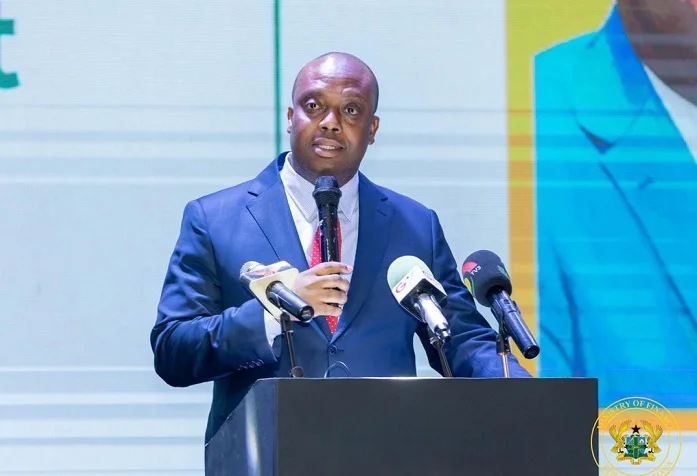
Ghana anti-money laundering fight has taken renewed prominence following the government’s firm assurances to international assessors that its commitment to combating money laundering, terrorist financing, and proliferation financing is irreversible. The message, delivered during the opening of Ghana’s on-site Mutual Evaluation, goes beyond regulatory compliance. It reflects a strategic effort to protect economic stability, preserve investor confidence, and secure Ghana’s position within the global financial system.
At a time when capital flows are increasingly sensitive to governance risks, Ghana’s stance matters not only to regulators and foreign partners, but also to domestic businesses and households whose livelihoods depend on a stable and credible financial environment. Financial crime weakens currencies, distorts markets, and raises the cost of doing business. As such, a credible anti-money laundering regime is no longer a technical exercise, it is an economic necessity.
Why Ghana Anti-Money Laundering Fight Matters for the Economy
Ghana anti-money laundering fight is critical because illicit financial flows directly undermine economic growth. When money laundering infiltrates an economy, it crowds out legitimate businesses, fuels corruption, and erodes public trust in institutions. By reinforcing its AML/CFT/CPF framework, Ghana is signalling that it intends to shield its financial system from these risks while aligning with international standards.
For investors, this matters deeply. Countries perceived as weak on financial crime controls often face reduced foreign direct investment, tighter correspondent banking relationships, and higher risk premiums. Ghana’s clear positioning helps reassure global partners that the country is a safe destination for capital, trade finance, and cross-border transactions.
Implications for Businesses and Financial Institutions
Ghana anti-money laundering fight has direct consequences for businesses operating within the formal economy. Strong enforcement levels the playing field by ensuring that companies competing for contracts or access to finance are not undercut by illicit actors using dirty money. This is especially relevant for small and medium-sized enterprises, which often suffer most when criminal networks distort pricing and access to markets.
For banks and financial institutions, the emphasis on outcomes, such as investigations, prosecutions, and asset recovery, signals a shift from box-ticking compliance to effectiveness. While this may increase short-term compliance costs, it ultimately strengthens the integrity of the financial sector. A cleaner system reduces reputational risks, preserves correspondent banking links, and expands opportunities for international partnerships.
Stability, Jobs, and Cost of Living
Although AML policies may seem distant from everyday life, Ghana anti-money laundering fight has real implications for households. Financial crime contributes to inflationary pressures, currency instability, and reduced public revenue. When illicit flows go unchecked, governments lose resources that could otherwise be invested in healthcare, education, and infrastructure.
By strengthening financial integrity, Ghana is indirectly supporting macroeconomic stability. A stable financial system helps keep borrowing costs lower, supports job creation through legitimate investment, and reduces the likelihood of sudden economic shocks that disproportionately affect low- and middle-income households.
Ghana anti-money laundering fight is being tested through the ongoing Mutual Evaluation, which the government has framed not as a threat but as a constructive engagement. This approach is significant. Countries that treat evaluations as learning opportunities tend to implement deeper reforms and achieve stronger long-term outcomes.
The evaluation process also encourages inter-agency coordination, data sharing, and institutional accountability. Over time, these improvements can spill over into broader governance reforms, strengthening public institutions beyond the financial sector.
Balancing Enforcement with Financial Inclusion
One challenge embedded within Ghana anti-money laundering fight is ensuring that stricter controls do not unintentionally exclude vulnerable populations from the financial system. Overly rigid compliance can discourage banks from serving low-income customers or small businesses perceived as higher risk.
Ghana’s emphasis on proportionality and risk-based supervision will be key. Effective AML regimes strike a balance, tightening controls on high-risk activities while enabling inclusive access to financial services. If managed well, stronger AML standards can coexist with expanded financial inclusion and digital finance growth.
Ultimately, Ghana anti-money laundering fight represents more than a regulatory obligation; it is a strategic economic choice. By demonstrating political will, institutional readiness, and openness to international scrutiny, Ghana is reinforcing the foundations of trust that underpin investment, trade, and long-term growth.
For businesses, the payoff is a fairer and more predictable operating environment. For households, it is a more stable economy with greater capacity to deliver public goods. As global financial scrutiny intensifies, Ghana’s ability to sustain and deepen these reforms will shape its economic credibility for years to come.