

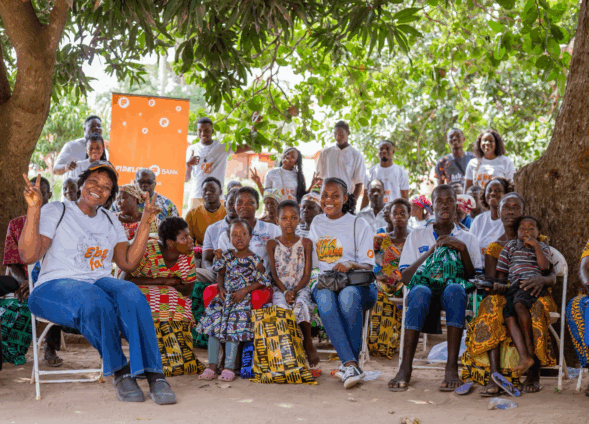
Fidelity Bank community impact is increasingly emerging as a strategic pillar of how financial institutions in Ghana position themselves within national development, rather than as a peripheral act of corporate philanthropy. The bank’s nationwide end-of-year social interventions in December 2025 highlight a broader shift in banking, from profit-centric operations to stakeholder-driven value creation, at a time when households and small communities remain under pressure from inflation, unemployment, and uneven access to social services.
The significance of this initiative extends beyond the festive season. By combining staff-led volunteering with structured partnerships across eight regions, Fidelity Bank is embedding social responsibility into its operational culture. This approach matters because financial institutions are uniquely positioned to bridge gaps left by public spending constraints, particularly in health access, skills development, and social inclusion. For vulnerable households, such interventions can translate into tangible improvements in quality of life, while for businesses, they help strengthen trust in the banking system as a partner in long-term development.
Why Fidelity Bank Community Impact Matters Now
Fidelity Bank community impact comes at a critical moment for Ghana’s social and economic landscape. While macroeconomic indicators have shown signs of stabilization, many households continue to face high living costs and limited income opportunities. In this context, corporate-led interventions that focus on dignity, empowerment, and sustainability can help cushion social vulnerabilities that economic growth alone may not immediately resolve.
Unlike one-off donations, the bank’s GH¢290,985 investment and over 120 hours of staff volunteer time were deployed across clearly defined impact pillars aligned with the United Nations Sustainable Development Goals. This alignment is important because it ensures that corporate social responsibility (CSR) efforts complement national and global development priorities rather than duplicating or diluting them. For policymakers and development partners, such coordination reduces inefficiencies and improves outcomes at the community level.
One of the most immediate effects of Fidelity Bank community impact is seen in health and inclusion initiatives, particularly those targeting persons with disabilities and underserved children. Partnerships such as the Hope In Sight Foundation’s medical eye screenings reflect a shift from symbolic goodwill to preventive healthcare, an area where early intervention can significantly reduce long-term costs for households and the health system.
For families, access to basic healthcare services can mean fewer workdays lost to illness and lower out-of-pocket medical expenses. For the broader economy, healthier populations contribute more productively to local markets. By focusing on inclusion, the bank is also reinforcing the idea that economic participation should not be limited by physical ability or social background, a principle that underpins sustainable growth.
Empowerment and Skills as Economic Multipliers
Fidelity Bank community impact is also evident in its emphasis on empowerment through vocational training, particularly in the Upper East and Upper West regions. Skills such as liquid soap and perfume production may appear modest, but they represent entry points into microenterprise development for individuals with limited access to formal employment.
For households, these skills can generate supplementary income, reduce dependency, and improve financial resilience. For local economies, small-scale production supports informal value chains and stimulates demand for basic goods. Over time, such empowerment initiatives can reduce pressure on social support systems while expanding the customer base for financial services, including savings, microcredit, and insurance.
Another dimension of Fidelity Bank community impact lies in addressing food security and access to essentials. Food packs and sanitary items distributed to widows and orphans helped stabilize household consumption during a period when seasonal spending pressures are typically high.
While these interventions do not replace systemic social protection programmes, they play a critical buffering role. For vulnerable households, short-term stability can prevent negative coping strategies such as selling productive assets or withdrawing children from school, decisions that have long-term economic consequences.
Implications for the Banking Sector and Businesses
From a business perspective, Fidelity Bank community impact also serves a strategic function. Banks that demonstrate consistent social engagement tend to build stronger brand loyalty and customer trust, particularly among younger and socially conscious consumers. This trust can translate into deeper financial inclusion, higher customer retention, and stronger community-based banking relationships.
For the wider banking sector, Fidelity’s approach raises the bar for CSR, signalling that sustainability is no longer an optional add-on but a core business consideration linked to long-term profitability and relevance.
Ultimately, Fidelity Bank community impact illustrates how structured, values-driven social interventions can deliver shared value for households, communities, and businesses alike. By prioritising dignity, empowerment, and partnership, the bank is reinforcing the idea that sustainable development requires consistent engagement rather than seasonal generosity.
As economic pressures persist and public resources remain stretched, such models of corporate responsibility are likely to play an increasingly important role in shaping inclusive growth across Ghana.
FirstBank Ghana digital banking signals a new era for financial access