

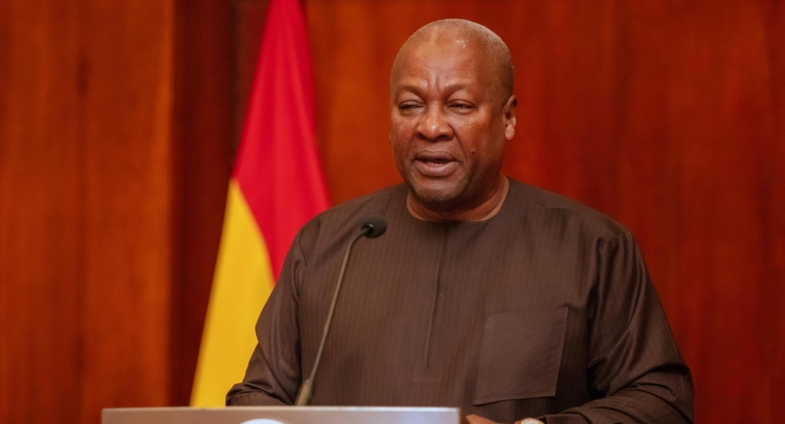
Africa industrial ownership has emerged as a defining pillar in the continent’s renewed push for economic independence, following President John Dramani Mahama’s call for African leaders to take firm control of manufacturing and industrial development as a long-term strategy for reducing structural dependence on external economies. Speaking at the Davos Convening alongside the 2026 World Economic Forum, Mahama warned that without deliberate ownership of production systems, Africa’s economic freedom will remain fragile and vulnerable to global shocks, foreign policy shifts, and supply chain disruptions beyond the continent’s control.
He argued that decades of reliance on imported manufactured goods have weakened Africa’s bargaining power and drained domestic value creation, leaving households exposed to rising costs and businesses constrained by foreign exchange pressures. In this context, industrial ownership is increasingly being framed not only as an economic ambition but as a practical necessity for stabilising growth, creating jobs, and ensuring that Africa captures greater value from its own resources in an increasingly competitive global economy.
Why Africa Industrial Ownership Matters in a Volatile Global Economy
The growing emphasis on Africa industrial ownership comes at a time when global supply chains are under pressure from geopolitical tensions, inflationary shocks, and shifting trade alliances. Africa’s long-standing reliance on imported manufactured goods, ranging from pharmaceuticals to energy equipment, has repeatedly exposed households and businesses to price volatility and supply disruptions.
By prioritising industrial ownership, African economies can reduce vulnerability to external shocks while building internal resilience. This shift enables governments to stabilise essential goods pricing, while businesses gain more predictable supply chains and reduced exposure to foreign currency risks.
President Mahama’s argument that no African country can industrialise alone highlights the structural reality shaping Africa industrial ownership. Fragmented national markets limit scale, efficiency, and competitiveness, making regional cooperation essential rather than optional.
Through shared manufacturing zones, integrated energy grids, and cross-border digital infrastructure, Africa can unlock economies of scale that support industrial growth. The African Continental Free Trade Area (AfCFTA) plays a central role in this strategy by creating a unified market capable of sustaining large-scale industrial production and attracting long-term investment.
A core message behind Africa industrial ownership is the need to transition from consumption-driven economies to production-led growth. Mahama’s focus on practical, job-ready skills underscores the urgency of aligning education with industrial demand.
Manufacturing expansion increases demand for technicians, engineers, logistics specialists, and digital professionals. For households, this translates into more stable employment, rising incomes, and improved economic security. Over time, industrial job creation strengthens domestic tax bases, allowing governments to invest more sustainably in social services and infrastructure.
Africa Industrial Ownership and Global Bargaining Power
Beyond domestic transformation, Africa industrial ownership fundamentally alters Africa’s position in global negotiations. Mahama’s call for a united African front on minerals, trade, and climate finance reflects the reality that fragmented bargaining weakens leverage.
By adding value locally rather than exporting raw materials, African economies retain a larger share of wealth within their borders. Businesses benefit from higher margins and stronger supply chains, while households gain from better wages and increased economic stability.
While Africa industrial ownership presents significant opportunities, analysts caution that success depends on disciplined policy execution. Poorly designed industrial strategies risk inefficiency, corruption, or protectionism that discourages innovation.
Ownership does not imply isolation. Strategic foreign partnerships, technology transfer, and transparent governance frameworks remain critical to ensuring industrial growth translates into broad-based development rather than elite capture.
Why Africa Industrial Ownership Matters for Businesses and Households
For businesses, Africa industrial ownership signals expanding opportunities across manufacturing, energy, logistics, and skills development. Local enterprises gain from reduced import dependence, while foreign investors benefit from access to integrated regional markets.
For households, the impact is tangible, more jobs, steadier incomes, and improved access to affordable locally produced goods. Over time, this strengthens economic resilience and reduces poverty, making economic freedom practical rather than theoretical.
Africa industrial ownership is no longer an ideological ambition but an economic necessity. President Mahama’s remarks reflect a growing continental consensus that Africa’s future prosperity depends on producing what it consumes and owning the systems that create value. Whether leaders can convert this vision into coordinated action will define Africa’s economic trajectory for decades.
Ghana launches National Virtual Asset Literacy Initiative as crypto law takes effect