Ghana to roll out AI tools in Twi, Ewe and Dagbani to expand access to education and digital services

0
168

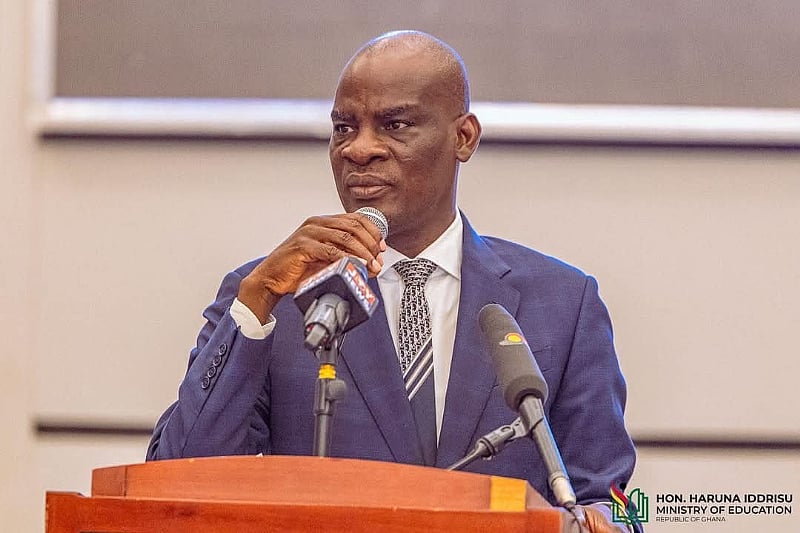
Ghana’s Education Minister, Haruna Iddrisu, announced on January 23, 2026, that the government plans to introduce artificial intelligence tools tailored to major Ghanaian languages, including Twi, Ewe and Dagbani, as part of efforts to enhance access to quality education and digital services across the country. The announcement came during the ongoing Generative AI Summit in the United Kingdom, where Mr. Iddrisu engaged with international partners on AI’s role in Ghana’s digital transformation.

Mr. Iddrisu said the initiative builds on high-level discussions with Google’s vice president and AI leadership, with a focus on leveraging advanced AI technology to support teaching, learning and broader educational outcomes. Under the plan, Google is working with the University of Ghana and the GDI Hub on developing speech recognition systems and AI tools that understand and process Ghanaian languages like Twi, Ewe and Dagbani, and the minister has advocated for inclusion of Hausa to strengthen regional utility.

Ghana to roll out AI tools in Twi, Ewe and Dagbani

The tools are expected to be deployed in Ghana at no cost to users, with commitments that education-focused AI resources will be zero-rated, meaning they can be accessed without data charges, promoting equitable access regardless of location or income. Mr. Iddrisu said the content will be aligned with school curricula and include guidance on the responsible use of AI in both teaching and learning, helping ensure that expanded AI adoption remains safe, useful and contextually relevant.

This move aligns with broader government goals to position Ghana as a leading hub for AI innovation in Africa and reflects a wider push to adapt technology to local linguistic and educational contexts. Other government initiatives have highlighted the importance of building AI in ways that respect local languages and cultures and ensure that advanced technologies benefit learners in rural and urban areas alike. For example, Ghana’s national AI strategy includes commitments to develop models that serve local languages, helping bridge digital divides and support inclusive growth.

Tool,Ewe
Hon. Haruna Iddrisu

Ghana’s language landscape is diverse, with Ghanaian languages such as Akan (including Twi), Ewe and Dagbani widely spoken alongside English, the official language. (For reference, Twi and Ewe each have several million speakers, with Dagbani spoken by over a million people in the northern parts of the country.)

Haruna Iddrisu Orders Immediate Use of Local Languages in Ghanaian Classrooms

Author

  • Daniel Ablordey

    Daniel Ablordey is a Business Analytics student at the University of Ghana Business School and an emerging strategist at the intersection of data, markets, and narrative. With a keen analytical mind and a passion for African business and economic trends, he is building a career focused on translating complex data-driven insights into accessible, decision-relevant stories that matter.

    As a writer and editor with Insight Ghana, African Business Insight, and The African Journal, Daniel delivers sharp, high-impact analysis on current affairs, business developments, and emerging trends across the continent. His work is defined by precision, clarity, and a deep commitment to responsible journalism — ensuring that every story he tells is not only accurate but meaningful to the audiences it serves.

    Beyond his editorial work, Daniel serves as an Ecobank Youth Ambassador, where he actively promotes financial inclusion, digital banking, and financial literacy among young Ghanaians. His leadership experience spans academic, professional, and faith-based institutions, where he has consistently driven initiatives centered on growth, structure, and long-term impact.

    Grounded in the principles of Pan-Africanism and service, Daniel brings a rare combination of analytical rigour and storytelling depth to his work. Whether unpacking market behavior, profiling emerging business leaders, or covering cultural shifts shaping the continent, he approaches every assignment with strategic intent and editorial integrity.

    His broader ambition is to contribute to Africa's transformation by shaping how data, business, and storytelling intersect — not just locally, but on a global stage.

Previous articleReal Madrid set to join NBA Europe League in 2027
Next articlePremier League changes LGBTQ+ support method, drops rainbow armbands and laces
Daniel Amenyo Ablordey
Daniel Ablordey is a Business Analytics student at the University of Ghana Business School and an emerging strategist at the intersection of data, markets, and narrative. With a keen analytical mind and a passion for African business and economic trends, he is building a career focused on translating complex data-driven insights into accessible, decision-relevant stories that matter.

As a writer and editor with Insight Ghana, African Business Insight, and The African Journal, Daniel delivers sharp, high-impact analysis on current affairs, business developments, and emerging trends across the continent. His work is defined by precision, clarity, and a deep commitment to responsible journalism — ensuring that every story he tells is not only accurate but meaningful to the audiences it serves.

Beyond his editorial work, Daniel serves as an Ecobank Youth Ambassador, where he actively promotes financial inclusion, digital banking, and financial literacy among young Ghanaians. His leadership experience spans academic, professional, and faith-based institutions, where he has consistently driven initiatives centered on growth, structure, and long-term impact.

Grounded in the principles of Pan-Africanism and service, Daniel brings a rare combination of analytical rigour and storytelling depth to his work. Whether unpacking market behavior, profiling emerging business leaders, or covering cultural shifts shaping the continent, he approaches every assignment with strategic intent and editorial integrity.

His broader ambition is to contribute to Africa's transformation by shaping how data, business, and storytelling intersect — not just locally, but on a global stage.