

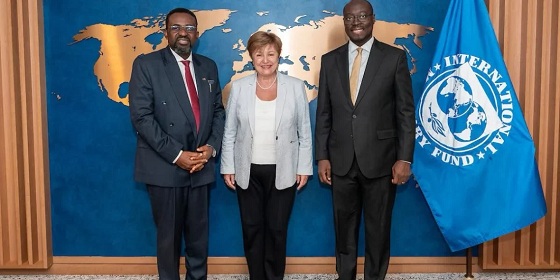
Ghana IMF programme performance regained international validation this week after the International Monetary Fund described the country’s 2025 macroeconomic outcomes as “better than expected,” reinforcing confidence in the reform path under its Extended Credit Facility. The assessment has placed the programme at the centre of renewed debate over whether recent gains reflect genuine economic recovery or temporary stabilisation driven by external support.
According to the IMF, the endorsement followed the successful completion of the programme’s fifth review, a milestone that unlocked additional funding and confirmed that Ghana met all quantitative performance and indicative targets. For policymakers, the approval represents a seal of credibility. For businesses and households, it raises a more immediate question: will improved macroeconomic scores translate into lasting relief from economic pressures?
Ghana IMF programme performance and credibility restoration
The IMF’s assessment comes at a delicate moment. After years of fiscal slippage, debt distress, and currency volatility, Ghana entered the IMF programme amid deep scepticism from markets and the public alike. That context makes the Fund’s latest remarks significant. Rather than pointing to leniency, IMF officials emphasised that Ghana’s results stemmed from corrective actions taken after fiscal overruns in 2024.
This framing matters because IMF programmes are rule-based. Meeting performance criteria requires disciplined fiscal execution, tight monetary conditions, and structural reforms, often politically costly. By stating that outcomes exceeded projections, the IMF effectively signalled that Ghana IMF programme performance is not merely compliant but improving beyond baseline assumptions.
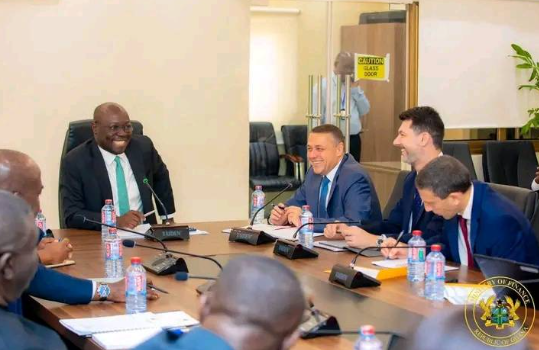
Inflation, growth and the household experience
One of the most consequential indicators highlighted by the IMF was inflation, which slowed faster than projected. For households, disinflation is not an abstract statistic. It directly affects food prices, transport costs, rent, and utilities. While living costs remain elevated by historical standards, easing inflation reduces the pace at which household purchasing power erodes.
Economic growth also exceeded forecasts, suggesting that the economy is no longer operating purely in survival mode. However, the distribution of that growth matters. If growth is driven largely by extractive sectors or fiscal compression effects, households may feel little immediate benefit. The real test of Ghana IMF programme performance will be whether growth feeds into job creation, wage stability, and informal sector resilience.
Currency stability and business confidence
For businesses, especially importers and manufacturers, currency stability is arguably the most tangible dividend of the IMF programme so far. The IMF noted that reserves improved and the cedi stabilised after a prolonged period of depreciation. Exchange rate stability reduces planning uncertainty, improves access to trade finance, and lowers hedging costs.
Improved reserves also strengthen the central bank’s credibility, making sudden foreign exchange shortages less likely. In this sense, strong Ghana IMF programme performance supports private sector confidence even before credit conditions materially ease.
Debt restructuring progress and investment signals
Another pillar of the IMF’s assessment was progress on debt restructuring. While much of the process remains complex and ongoing, movement on this front reduces sovereign risk and signals that Ghana is gradually rebuilding its relationship with creditors.
For investors, debt clarity matters as much as macro indicators. Capital tends to wait on the sidelines until restructuring paths are predictable. IMF approval reassures investors that Ghana is not drifting off-course, which may gradually lower borrowing costs and reopen financing channels, benefits that eventually ripple through to businesses and consumers.
Ghana IMF programme performance versus lived reality
Despite the positive review, public scepticism persists. Many Ghanaians continue to face unemployment pressures, tight credit, and high utility tariffs. This disconnect fuels the perception that IMF praise reflects technical compliance rather than lived improvement.
This tension highlights a central risk: macroeconomic stabilisation can coexist with microeconomic strain. Fiscal consolidation, while necessary, often suppresses short-term demand. If reforms under the programme are not paired with targeted social protection and private sector stimulation, political and social fatigue could undermine reform momentum, even if Ghana IMF programme performance remains strong on paper.
Why durability now matters more than approval
The IMF’s endorsement should therefore be viewed less as a finish line and more as a stress test. Ghana has demonstrated the capacity to implement corrective measures under pressure. The next challenge is sustaining discipline as conditions ease and political incentives shift.
Durability will depend on whether reforms become institutionalised rather than programme-driven. Revenue mobilisation, expenditure control, debt transparency, and monetary coordination must survive beyond IMF reviews. Otherwise, the cycle of crisis and correction risks repeating.
A cautious but consequential milestone
In sum, the IMF’s assessment confirms that Ghana’s recovery in 2025 is real, measurable, and stronger than initially forecast. Strong Ghana IMF programme performance has restored a degree of confidence among investors, stabilised key macroeconomic variables, and eased immediate risks.
Yet for households and businesses, the ultimate verdict will rest on whether stabilisation evolves into opportunity, jobs, affordable credit, and rising incomes. Until then, the IMF’s praise is an important milestone, but not yet a declaration of economic normalcy.