

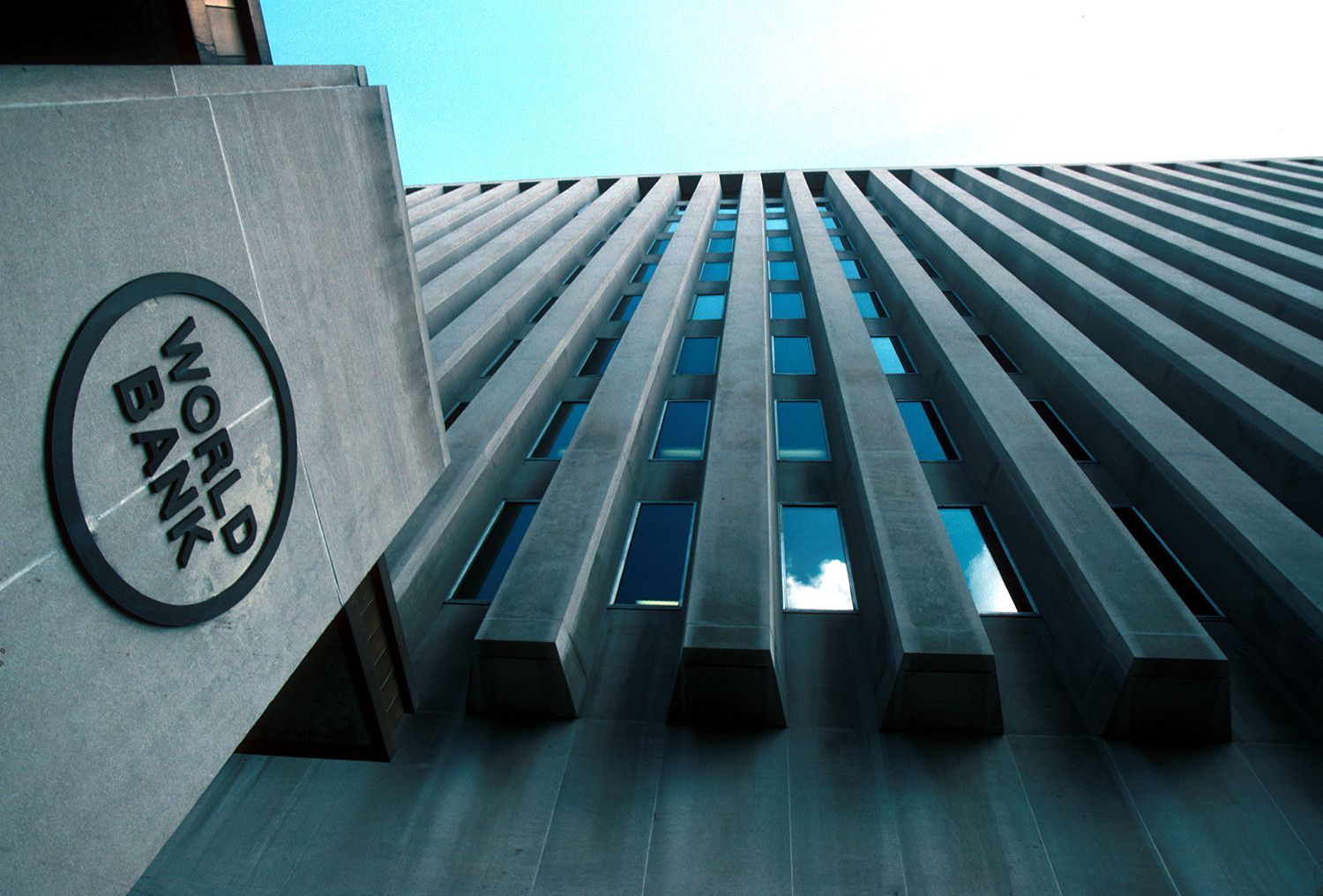
The World Bank’s latest projection that global economic growth will slow to 2.6% in 2026 offers a sobering assessment of the post-pandemic recovery, signalling that much of the momentum that supported the world economy in recent years is beginning to fade. While the global economy has proven more resilient than many feared, the outlook suggests that households, businesses, and governments are entering a period of heightened uncertainty marked by weaker trade, tighter financial conditions, and uneven recovery paths across regions.
According to the World Bank’s January 2026 Global Economic Prospects report, the global economic growth slowdown in 2026 reflects the waning of several temporary supports that boosted activity in 2024 and 2025. These include inventory stockpiling by firms, strong risk appetite in financial markets, and a surge in spending linked to artificial intelligence. As these factors recede, structural challenges, particularly trade frictions and financing constraints, are becoming more prominent.
What is driving the global economic growth slowdown in 2026
One of the key drags identified by the World Bank is weaker trade growth. Companies that previously built up inventories to guard against supply disruptions are now scaling back, reducing demand for traded goods. At the same time, the cumulative effects of tariffs and other trade barriers are weighing more heavily on cross-border commerce.
This weakening trade environment is central to the global economic growth slowdown in 2026, especially for economies that depend on exports as a major source of growth. Rising trade tensions and policy uncertainty could further dampen business confidence, delay investment decisions, and disrupt supply chains that only recently stabilised after years of volatility.
Risks tilted to the downside
The World Bank cautions that near-term risks to the outlook are skewed downward. A deterioration in financial market sentiment, triggered by asset price corrections, fiscal stress, or unexpected inflation, could tighten credit conditions globally. For businesses, this would mean higher borrowing costs and reduced access to finance, while households could face slower income growth and increased job insecurity.

At the same time, the report acknowledges upside possibilities. Broader adoption of artificial intelligence across sectors could lift productivity, and firms may continue to adapt to new trade realities more effectively than expected. However, these positive forces are not yet strong or widespread enough to offset the broader headwinds captured in the global economic growth slowdown forecast for 2026.
Uneven recovery across countries
A striking feature of the World Bank’s analysis is the divergence between advanced economies and emerging market and developing economies (EMDEs). Nearly 90% of advanced economies have surpassed their pre-pandemic per capita income levels, reflecting robust recoveries supported by strong institutions and policy buffers.
By contrast, more than one-quarter of EMDEs, particularly low-income countries and those affected by conflict or fragility, remain below their 2019 income levels. This gap underscores how the global economic growth slowdown in 2026 could exacerbate inequality between countries, limiting progress on poverty reduction and job creation in the most vulnerable regions.
Implications for businesses
For businesses, especially those operating internationally, slower global growth implies a more challenging operating environment. Export-oriented firms may face softer demand, while companies reliant on imported inputs could continue to grapple with trade frictions and regulatory barriers. Investment decisions are also likely to become more cautious, as uncertainty about global demand and financing conditions persists.
In emerging markets, tighter global financial conditions could constrain credit availability, affecting small and medium-sized enterprises disproportionately. These firms often lack the buffers to absorb prolonged slowdowns, making them more vulnerable to shifts linked to the global economic growth slowdown in 2026.
How households may be affected
Households are likely to feel the impact through slower wage growth and reduced employment opportunities, particularly in economies already struggling to recover fully from the pandemic shock. In low-income countries, weaker growth could limit governments’ ability to expand social spending, leaving households more exposed to economic shocks.
Higher global uncertainty may also translate into volatility in food and energy prices, affecting household budgets. While inflation has eased in many regions, renewed supply disruptions or financial stress could quickly reverse these gains.
Policy priorities in a slowing world
The World Bank argues that addressing the risks associated with the global economic growth slowdown in 2026 requires coordinated global and domestic action. Improving the trade environment, easing financing constraints, and mitigating climate-related risks are seen as essential steps to support long-term growth.
For EMDEs, the report emphasises the importance of domestic reforms to diversify trade, strengthen macroeconomic frameworks, and remove structural bottlenecks. Without stronger economic dynamism, many countries will struggle to generate enough jobs for their expanding working-age populations.
A fragile outlook
Ultimately, the World Bank’s projection is a reminder that the global recovery remains incomplete and fragile. While resilience has been notable, the slowdown expected in 2026 highlights the limits of temporary growth drivers and the need for deeper structural reforms. For businesses and households alike, the coming year is likely to demand careful navigation of a more subdued and uncertain global economic landscape.
Ghana’s inflation decline to 5.4% signals a critical turning point