

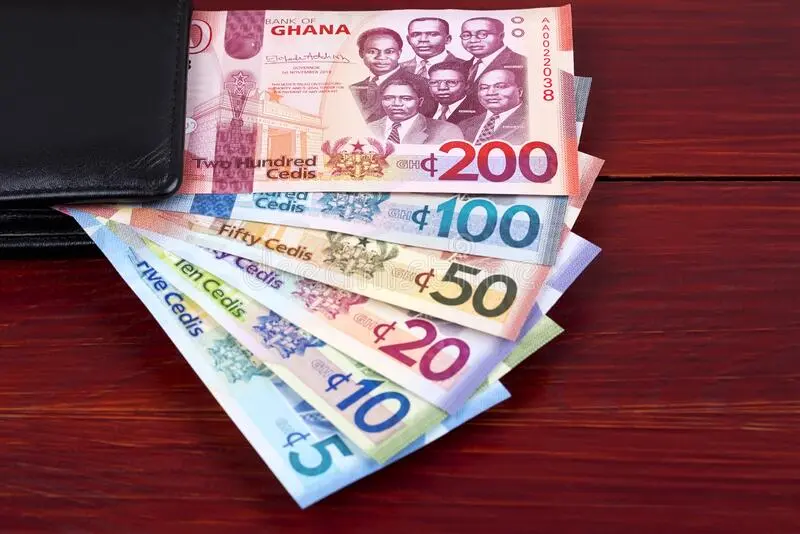
BoG monetary policy impact has become central to explanations of the sharp appreciation of the Ghanaian cedi in 2025, a development that has been widely debated in policy and market circles. Recent analysis by a US-based Monetary Economist, Dr. Dennis Nsafoah reframes the narrative by placing deliberate central bank actions at the heart of the currency’s turnaround. Rather than attributing the strengthening cedi to temporary external inflows or shifting market sentiment, the argument highlights domestic policy measures that tightened liquidity conditions and eased pressure on the foreign exchange market.
The appreciation occurred alongside a marked slowdown in the growth of reserves held at the central bank, underscoring how the BoG monetary policy impact translated directly into reduced excess liquidity. As cedi liquidity was withdrawn, demand for foreign currency weakened, allowing the exchange rate to stabilise and strengthen.
Why the BoG monetary policy impact matters for macroeconomic credibility
The emphasis on the BoG monetary policy impact carries important implications for Ghana’s macroeconomic credibility. Currency volatility has historically undermined confidence, discouraged long-term investment, and complicated inflation management. Demonstrating that disciplined monetary tightening can reverse depreciation reinforces the credibility of the central bank’s toolkit.
From a theoretical standpoint, the explanation aligns with established monetary frameworks. Lower growth in money supply relative to trading partners reduces inflationary pressure and supports currency appreciation over time. The 2025 experience suggests that the BoG monetary policy impact was not accidental but consistent with long-run monetary principles, strengthening confidence in policy transmission mechanisms.
Household implications of the BoG monetary policy impact
For households, the impact of BoG’s monetary actions was felt most directly through easing inflationary pressure. A stronger currency reduces the local cost of imported goods such as fuel, food, and pharmaceuticals, all of which weigh heavily on household budgets. As inflation slowed, purchasing power stabilised, offering relief to consumers after prolonged periods of price instability.

However, the BoG monetary policy impact also came with trade-offs. Tighter liquidity conditions can raise borrowing costs in the short term, constraining access to credit for households. While this may dampen consumption initially, the longer-term benefit lies in improved price stability, which ultimately supports real incomes and financial planning.
Business effects of the BoG monetary policy impact
For businesses, the BoG monetary policy impact reshaped both costs and planning horizons. Currency appreciation lowers the cedi cost of imported inputs, easing pressure on manufacturers, retailers, and energy-intensive sectors. This can improve margins and reduce the need for frequent price adjustments.
At the same time, tighter monetary conditions associated with the BoG monetary policy impact can limit access to cheap credit. Firms reliant on short-term borrowing may face higher financing costs, particularly during the adjustment phase. Nonetheless, improved exchange rate stability reduces uncertainty, enabling businesses to plan investments with greater confidence and hedge less aggressively against currency risk.
Why the BoG monetary policy impact outpaced other factors
A key insight from the analysis is that while many variables influence exchange rates, the BoG monetary policy impact dominated in 2025. External shocks, speculative narratives, and short-term inflows played secondary roles compared to the decisive contraction in domestic liquidity. By anchoring expectations and allowing tight conditions to persist, the central bank altered behaviour in both currency and goods markets.
This perspective challenges the tendency to attribute exchange rate movements to factors beyond domestic control. Instead, the Impact of BoG’s monetary actions demonstrates that internal policy choices can decisively shape outcomes, even in an open and import-dependent economy.
Early warning signals tied to the BoG monetary policy impact
Another critical takeaway is the identification of early warning indicators linked to the BoG monetary policy impact. Rapid growth in reserves held at the central bank has historically preceded episodes of currency depreciation. Monitoring these reserves therefore offers a clearer signal of future exchange rate pressures than speculative commentary or short-term market noise.
If reserve growth accelerates sharply, the BoG monetary policy impact could reverse, reigniting excess liquidity and foreign exchange demand. Conversely, continued moderation in reserve growth suggests that currency stability can be sustained.
Why the BoG monetary policy impact matters going forward
Ultimately, the BoG monetary policy impact observed in 2025 reinforces a central lesson for Ghana’s economic management: exchange rate stability is rooted in disciplined control of liquidity and inflation. For households, this supports purchasing power. For businesses, it reduces uncertainty and import costs. For policymakers, it confirms that consistent monetary discipline can deliver tangible results.
As Ghana looks ahead, the durability of the BoG monetary policy impact will depend on resisting pressures to loosen liquidity prematurely. The experience of 2025 stands as a reminder that sustainable currency strength is built on policy restraint rather than short-term fixes.
Ghana economic reset, 20 transformative reforms and achievements that defined 2025