

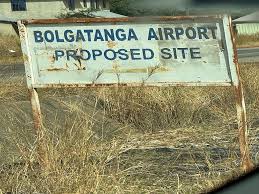
The Bolgatanga Airport project has entered a critical evaluation phase following a site inspection by senior leadership of the Ghana Airports Company Limited (GACL), signalling renewed institutional momentum behind one of northern Ghana’s most anticipated infrastructure developments. The inspection, led by GACL Chief Executive Officer Mrs. Yvonne Nana Afriyie Opare and a 25-member board delegation, underscores growing alignment between national aviation authorities and local stakeholders on advancing regional connectivity and economic integration.
The visit served as both a technical assessment and a stakeholder engagement exercise, allowing GACL to evaluate the current state of the proposed airport site while acknowledging years of community-led efforts that have preserved the project’s viability. From a business and development perspective, the inspection reflects a broader shift toward infrastructure projects where public institutions leverage sustained local investment to accelerate delivery timelines and reduce early-stage execution risks.

Bolgatanga Airport Project and Community-Led Capital Formation
A defining feature of the Bolgatanga Airport project is the scale of self-financed intervention undertaken by local actors in the absence of formal construction activity. The Alagumgube Group, led by entrepreneur Gabriel Agambila, has played a central role in maintaining site accessibility and legal readiness, effectively preserving the asset’s strategic value over several years.
According to disclosures made during the inspection, the group independently financed the grading of the runway to ensure uninterrupted access to the site. This was complemented by continuous maintenance of culverts affected by seasonal flooding, particularly during the rainy season. In parallel, a private individual native to the region funded the cadastral plan, an essential legal requirement for land registration and project advancement, removing a key administrative bottleneck that often delays infrastructure execution.
From a business standpoint, these interventions represent sunk capital that significantly lowers entry barriers for formal project rollout. They also signal strong local demand fundamentals, reducing uncertainty for public financiers and potential private partners.
Institutional Assessment and Project Readiness
During the inspection, GACL leadership evaluated the physical condition of the site, access routes, and supporting infrastructure, while engaging directly with community representatives who have maintained stewardship of the land. Mrs. Opare commended the locally funded works, describing them as evidence of long-term commitment to development and a critical factor in sustaining project credibility.

Importantly, assurances reportedly given during the engagement that construction could commence in the second quarter of the year have strengthened confidence among residents and local investors. While final timelines remain subject to procurement and regulatory processes, the visit itself functions as a governance signal, indicating that the Bolgatanga Airport project is transitioning from a dormant proposal into an execution-ready infrastructure asset.
Economic and Commercial Implications of the Bolgatanga Airport Project
From a regional economics perspective, the Bolgatanga Airport project is positioned to unlock multiple layers of commercial value across the Upper East Region. Improved air connectivity would reduce travel times, enhance logistics efficiency, and strengthen the region’s integration into national and cross-border trade corridors, particularly with Burkina Faso and other Sahelian markets.
The airport is expected to support growth in agribusiness value chains, healthcare access, tourism, and public service delivery. For businesses, this translates into lower transport costs, improved access to markets, and greater attractiveness of the region for investment. For financial institutions, enhanced regional activity could expand demand for trade finance, SME lending, and infrastructure-linked services.
Risk Considerations and Execution Outlook
Despite the positive momentum, execution risks remain. These include funding mobilisation, contractor selection, and coordination across regulatory agencies. However, the presence of documented local contributions mitigates early-stage project risk and strengthens the case for prioritisation within national infrastructure planning frameworks.
The inspection also highlights an emerging development model in which community capital and institutional oversight operate in tandem, reducing delays associated with land access disputes and local resistance, which have historically constrained infrastructure projects in parts of Ghana.
Strategic Outlook
The Bolgatanga Airport project now stands as a test case for how sustained grassroots investment can catalyse national infrastructure delivery. If construction proceeds as indicated, the project could redefine economic access in northern Ghana and serve as a blueprint for public–community collaboration in capital-intensive developments.
For policymakers, investors, and development financiers, the project reinforces the importance of aligning institutional capacity with local commitment. For businesses, it signals a future operating environment marked by improved connectivity and expanded regional opportunity.
Ghana’s New E-Commerce Bill to Strengthen Consumer Rights and Digital Market Trust