

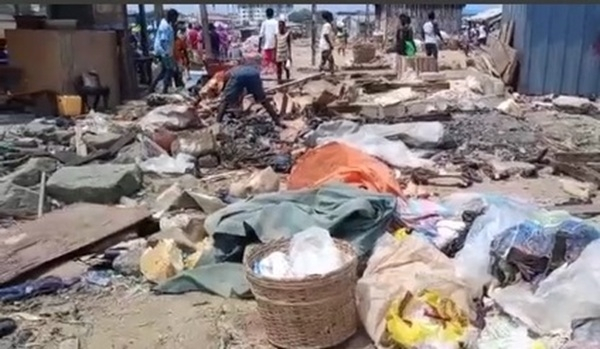
The ongoing demolition of buildings and informal structures in parts of Tema has sparked growing public concern, with a prominent labour leader warning that the situation could negatively affect the National Democratic Congress (NDC) in the 2028 general elections if not handled carefully. The demolitions, which have affected homes, small businesses, and roadside traders, have raised questions about government sensitivity to the economic hardships faced by ordinary citizens.
In several communities across Tema, bulldozers have cleared structures described by authorities as illegal or non-compliant with planning regulations. While the exercise is part of efforts to enforce land use and improve urban planning, many affected residents say the demolitions have come without adequate notice, compensation, or alternative arrangements. For traders and low-income families, the destruction of their structures means the loss of both shelter and livelihoods.
The labour leader cautioned that such actions, when they directly impact people’s daily survival, can quickly turn into political issues. According to him, many of those affected are working-class citizens who form a key voting bloc. If they feel abandoned or unfairly treated, their frustration could reflect at the polls in future elections. He stressed that development policies must take into account the human cost, especially during a period of economic difficulty.
Tema plays an important role in Ghana’s economy, serving as a major industrial and port city. It is also a densely populated urban area where many people depend on informal trading and small-scale businesses. Analysts say that decisions taken in cities like Tema often influence national political trends, as they reflect broader concerns about employment, housing, and the cost of living.
Critics of the demolitions argue that the government should have adopted a more consultative approach before embarking on the exercise. They say engagement with community leaders, traders’ associations, and residents could have reduced tensions and helped find solutions that balance planning regulations with social protection. Without such engagement, they warn, public trust in government leadership could weaken.
Supporters of the demolitions, however, argue that enforcing planning laws is necessary for long-term development. They point out that unauthorized structures can pose safety risks, block access roads, and hinder infrastructure development. According to this view, allowing illegal developments to continue would create future problems that are harder and more expensive to resolve.
Even so, political observers note that timing and execution matter. With memories of recent economic hardships still fresh, citizens are particularly sensitive to policies that disrupt their income or housing. The labour leader’s warning highlights the need for government to combine enforcement with compassion, especially when dealing with vulnerable groups.
Within the broader political context, the NDC faces increasing pressure to demonstrate that it understands the everyday struggles of Ghanaians. Issues such as unemployment, rising living costs, and housing shortages remain high on the public agenda. Actions perceived as worsening these challenges could damage the party’s image as one that represents the interests of ordinary people.
Opposition figures and civil society groups have already begun using the Tema demolitions as an example of what they describe as poor governance and lack of empathy. They argue that such issues could become major talking points as the 2028 elections draw closer, particularly in urban areas where the impact is most visible.
As the demolitions continue, many residents are calling for clearer communication, fair compensation, and alternative support for those affected. How the government responds to these demands could shape public opinion in the coming years. The situation in Tema serves as a reminder that development policies, no matter how well-intentioned, must be carefully managed to avoid political backlash.
Ultimately, the labour leader’s message is a simple one: development should not come at the expense of people’s livelihoods. As Ghana moves toward the 2028 elections, the way the government handles sensitive issues like the Tema demolitions may play a crucial role in determining voter confidence and political outcomes.