August 6 military helicopter crash: Investigation reveals key causes behind tragedy

0
116

The official Investigation Committee has released its findings on the August 6 military helicopter crash that claimed the lives of several Ghana Armed Forces personnel. According to the report, a combination of poor weather conditions, limited navigational aids, and aircraft limitations led to the tragic incident, which occurred between Kumasi and Brofuyedu in the Ashanti Region.

Investigators identified adverse weather conditions as the primary factor. Poor visibility, fog, drizzle, and low clouds over southern and middle Ghana created unsafe flight conditions. The area around Kumasi and Brofuyedu was particularly affected, with dense cloud cover making navigation difficult.

The committee also highlighted a lack of weather information provided to the pilot before departure. No formal update or flight route data was issued prior to takeoff, leaving the crew unaware of deteriorating weather patterns along the route.

Military helicopter crash,August

A sudden downdraft, a rapid downward movement of air, was also cited as a direct environmental cause. The crash resulted from a sudden loss of altitude and lift consistent with the changing conditions over the high, rugged terrain, according to the report.

Investigators further noted limited navigational aids along the flight route. There were no ground-based radar or real-time flight monitoring systems such as ADS-B in the area, which could have provided better situational awareness and early warnings of altitude loss.

The report also exposed aircraft limitations. Though the helicopter was declared airworthy and had recently passed its 100-hour maintenance inspection, it lacked critical avionics and safety systems required for modern military aviation. These included:

  • Terrain Awareness and Warning System (TAWS)
  • Enhanced Ground Proximity Warning System (EGPWS)
  • Advanced navigation with terrain mapping
  • Automatic Flight Control System (autopilot)

Experts say the absence of these systems significantly reduced the crew’s ability to react quickly to changing weather and altitude conditions.

Military helicopter crash,August

Authorities have since pledged to improve flight safety standards, including real-time weather updates, enhanced radar coverage, and avionics upgrades for all military aircraft. The Ghana Armed Forces say recommendations from the report will be implemented immediately to prevent similar incidents in the future.

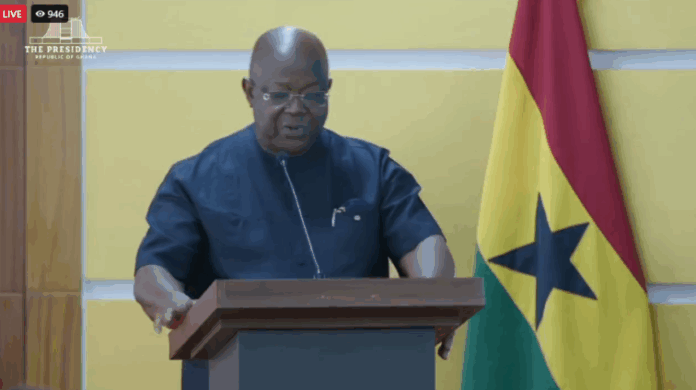
Watch the full official briefing here: https://youtube.com/live/ZHTXiLWIKnI

Ghana Receives Final Report on August 6 Military Helicopter Crash — Implications for National Aviation Safety

Author

  • Daniel Ablordey

    Daniel Ablordey is a Business Analytics student at the University of Ghana Business School and an emerging strategist at the intersection of data, markets, and narrative. With a keen analytical mind and a passion for African business and economic trends, he is building a career focused on translating complex data-driven insights into accessible, decision-relevant stories that matter.

    As a writer and editor with Insight Ghana, African Business Insight, and The African Journal, Daniel delivers sharp, high-impact analysis on current affairs, business developments, and emerging trends across the continent. His work is defined by precision, clarity, and a deep commitment to responsible journalism — ensuring that every story he tells is not only accurate but meaningful to the audiences it serves.

    Beyond his editorial work, Daniel serves as an Ecobank Youth Ambassador, where he actively promotes financial inclusion, digital banking, and financial literacy among young Ghanaians. His leadership experience spans academic, professional, and faith-based institutions, where he has consistently driven initiatives centered on growth, structure, and long-term impact.

    Grounded in the principles of Pan-Africanism and service, Daniel brings a rare combination of analytical rigour and storytelling depth to his work. Whether unpacking market behavior, profiling emerging business leaders, or covering cultural shifts shaping the continent, he approaches every assignment with strategic intent and editorial integrity.

    His broader ambition is to contribute to Africa's transformation by shaping how data, business, and storytelling intersect — not just locally, but on a global stage.

Previous articleSouthey Contracting supports Technical education and safety awareness in Takoradi
Next articleHeFRA shuts down Tamale Technical University Hospital over poor sanitary conditions
Daniel Amenyo Ablordey
Daniel Ablordey is a Business Analytics student at the University of Ghana Business School and an emerging strategist at the intersection of data, markets, and narrative. With a keen analytical mind and a passion for African business and economic trends, he is building a career focused on translating complex data-driven insights into accessible, decision-relevant stories that matter.

As a writer and editor with Insight Ghana, African Business Insight, and The African Journal, Daniel delivers sharp, high-impact analysis on current affairs, business developments, and emerging trends across the continent. His work is defined by precision, clarity, and a deep commitment to responsible journalism — ensuring that every story he tells is not only accurate but meaningful to the audiences it serves.

Beyond his editorial work, Daniel serves as an Ecobank Youth Ambassador, where he actively promotes financial inclusion, digital banking, and financial literacy among young Ghanaians. His leadership experience spans academic, professional, and faith-based institutions, where he has consistently driven initiatives centered on growth, structure, and long-term impact.

Grounded in the principles of Pan-Africanism and service, Daniel brings a rare combination of analytical rigour and storytelling depth to his work. Whether unpacking market behavior, profiling emerging business leaders, or covering cultural shifts shaping the continent, he approaches every assignment with strategic intent and editorial integrity.

His broader ambition is to contribute to Africa's transformation by shaping how data, business, and storytelling intersect — not just locally, but on a global stage.