Government Officially Revokes Controversial LI 2462

0
81

The Ghanaian government has moved to formally revoke LI 2462, a regulation permitting mining in forest reserves, as part of a broader reform of the mining sector. The decision, announced by the Attorney-General and Minister for Justice, Dominic Akuritinga Ayine, follows mounting public outcry and widespread concerns about the environmental impact of unrestricted mining in protected areas.

At a stakeholders’ engagement on illegal mining held in Accra, the Attorney-General confirmed that a new regulatory instrument, LI 2505, has been prepared and will be tabled in Parliament on October 14, 2025 to officially revoke LI 2462.  He emphasised that once LI 2505 is laid in Parliament and lapses into law, the legal framework permitting mining in forest reserves will be annulled.

LI 2462 had triggered intense criticism from civil society groups, environmental organisations and community advocates who argued it opened the door for mining firms and individuals to exploit forest reserves with minimal oversight and degraded ecosystems.  The government’s commitment to revoke the instrument signals recognition of the scale of concern and the need for more stringent environmental protections and governance.

Government Officially Revokes Controversial LI 2462

According to official statements, the replacement instrument is designed to close key legal loopholes. It will include an explicit prohibition on mining in forest reserves, and attach a comprehensive list of reserves that will be off-limits, making any future attempt to mine in these zones subject to parliamentary review.

Beyond revoking the instrument, the government has indicated that it will strengthen enforcement and introduce specialised courts or tribunals, via a Public Tribunals Bill, to expedite mining-related prosecutions. More than 600 active dockets involving illegal mining have been noted by the authorities.

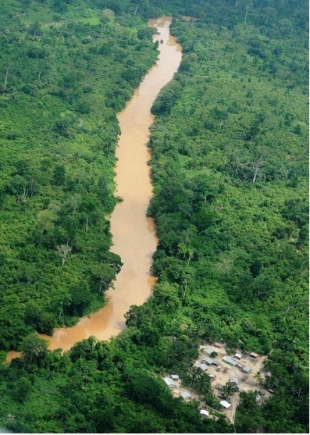
For years the “galamsey” phenomenon (illegal small-scale mining) has ravaged many of Ghana’s forest-reserve areas and water-ways, causing severe environmental degradation, loss of biodiversity and community harm. The revocation of LI 2462 is being described by many stakeholders as a foundational step in the government’s anti-galamsey agenda and its commitment to sustainable natural-resource management.

Government Officially Revokes Controversial LI 2462


While the decision has been welcomed by environmentalists and sector-watchers, they caution that the real impact will depend on how swiftly the new law is enacted, how thoroughly enforcement is carried out and whether new institutional mechanisms can prevent another cycle of exploitation.

Galamsey Illegal Mining Puts Takoradi–Nsuta Rail Line at Risk

Author

  • Daniel Ablordey

    Daniel Ablordey is a Business Analytics student at the University of Ghana Business School and an emerging strategist at the intersection of data, markets, and narrative. With a keen analytical mind and a passion for African business and economic trends, he is building a career focused on translating complex data-driven insights into accessible, decision-relevant stories that matter.

    As a writer and editor with Insight Ghana, African Business Insight, and The African Journal, Daniel delivers sharp, high-impact analysis on current affairs, business developments, and emerging trends across the continent. His work is defined by precision, clarity, and a deep commitment to responsible journalism — ensuring that every story he tells is not only accurate but meaningful to the audiences it serves.

    Beyond his editorial work, Daniel serves as an Ecobank Youth Ambassador, where he actively promotes financial inclusion, digital banking, and financial literacy among young Ghanaians. His leadership experience spans academic, professional, and faith-based institutions, where he has consistently driven initiatives centered on growth, structure, and long-term impact.

    Grounded in the principles of Pan-Africanism and service, Daniel brings a rare combination of analytical rigour and storytelling depth to his work. Whether unpacking market behavior, profiling emerging business leaders, or covering cultural shifts shaping the continent, he approaches every assignment with strategic intent and editorial integrity.

    His broader ambition is to contribute to Africa's transformation by shaping how data, business, and storytelling intersect — not just locally, but on a global stage.

Previous articleMahama Cancels SML Revenue Assurance Contracts After OSP Finds “No Value for Money”
Next articleMahama Arrives in Cairo for Grand Egyptian Museum Opening
Daniel Amenyo Ablordey
Daniel Ablordey is a Business Analytics student at the University of Ghana Business School and an emerging strategist at the intersection of data, markets, and narrative. With a keen analytical mind and a passion for African business and economic trends, he is building a career focused on translating complex data-driven insights into accessible, decision-relevant stories that matter.

As a writer and editor with Insight Ghana, African Business Insight, and The African Journal, Daniel delivers sharp, high-impact analysis on current affairs, business developments, and emerging trends across the continent. His work is defined by precision, clarity, and a deep commitment to responsible journalism — ensuring that every story he tells is not only accurate but meaningful to the audiences it serves.

Beyond his editorial work, Daniel serves as an Ecobank Youth Ambassador, where he actively promotes financial inclusion, digital banking, and financial literacy among young Ghanaians. His leadership experience spans academic, professional, and faith-based institutions, where he has consistently driven initiatives centered on growth, structure, and long-term impact.

Grounded in the principles of Pan-Africanism and service, Daniel brings a rare combination of analytical rigour and storytelling depth to his work. Whether unpacking market behavior, profiling emerging business leaders, or covering cultural shifts shaping the continent, he approaches every assignment with strategic intent and editorial integrity.

His broader ambition is to contribute to Africa's transformation by shaping how data, business, and storytelling intersect — not just locally, but on a global stage.