

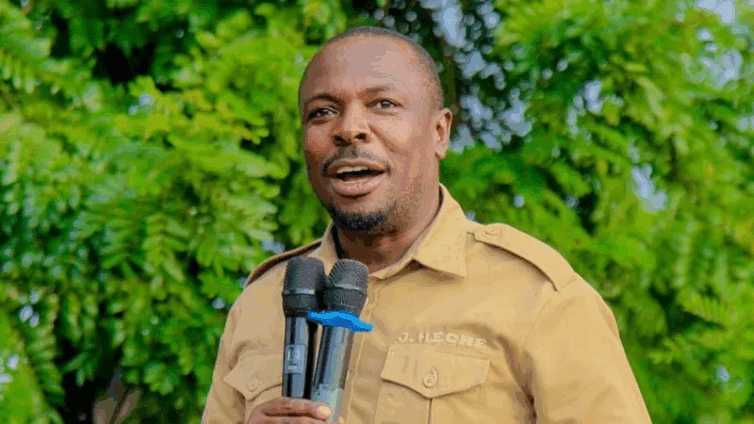
Tanzania’s pre-election climate has taken a tense and troubling turn as John Heche, deputy chairperson of the country’s main opposition party, Chadema, was arrested just days before the general elections scheduled for October 29. The move has sparked outrage from opposition figures and human rights advocates who warn of growing authoritarianism under President Samia Suluhu Hassan’s administration.
Heche was detained on Wednesday while attempting to attend the treason trial of his party’s leader, Tundu Lissu, at the High Court in Dar es Salaam. According to a statement issued by Chadema, authorities are allegedly executing a coordinated plan to “arrest senior party leaders and detain them until after the elections.” The Tanzanian government has yet to comment on the claims, but the incident marks the latest in a series of politically charged arrests that have cast doubt on the fairness of the upcoming vote.
The party further alleged that Heche was transported to Tarime, a northern town over 1,300 kilometers from the capital, a tactic observers describe as an attempt to isolate opposition leaders from their political base and supporters. The police have not issued any formal statement about the arrest, leaving the public in suspense and fueling speculation of state interference.
This marks the second time within a week that Heche has been detained. The first incident occurred on Saturday when he was briefly held while trying to cross into Kenya to attend the burial of former Kenyan Prime Minister Raila Odinga. Tanzania’s immigration department claimed Heche attempted to cross the border illegally, but Chadema dismissed the allegation, calling it “a politically motivated fabrication.”
The latest arrest comes amid growing unease in Tanzania over the disappearance of Humphrey Polepole, a former Tanzanian ambassador and outspoken government critic. Polepole’s family reported that he was abducted from his Dar es Salaam home on October 6. His brother described finding the house door broken and blood on the floor — details that have intensified public alarm over the state of civil liberties and rule of law in the country.
Political analysts say these developments highlight a disturbing regression in Tanzania’s democratic trajectory. President Samia Suluhu Hassan, who ascended to power in 2021 following the death of John Magufuli, initially received praise for loosening restrictions on free speech and political engagement. However, as her first presidential election campaign unfolds, critics argue that her administration has reverted to the repressive tactics of her predecessor.

Under her leadership, opposition activities have been severely curtailed. Chadema, the largest opposition party, has been banned from participating in next week’s polls. Its leader, Tundu Lissu, remains imprisoned since April on charges widely seen as politically motivated. Lissu, who survived an assassination attempt in 2017 and spent years in exile, returned to Tanzania with renewed calls for political reform — a stance that has made him a persistent target of government scrutiny.
Meanwhile, Luhaga Mpina, the candidate of ACT-Wazalendo, Tanzania’s second-largest opposition party, was also disqualified from the race. The decision effectively clears the path for President Samia to face only minor-party candidates, raising concerns that the election may lack meaningful competition.
Observers fear that this pattern of repression signals a deliberate effort to consolidate power under the ruling Chama Cha Mapinduzi (CCM) party, which has governed Tanzania uninterrupted since independence. The CCM has long been accused of using state institutions to suppress dissent, manipulate electoral processes, and intimidate opponents, claims that the government consistently denies.

International reaction to the developments has been cautious but critical. Regional observers and rights groups, including Amnesty International and Human Rights Watch, have called for the immediate release of all detained opposition figures and urged the government to ensure free and fair elections. Western diplomatic missions in Dar es Salaam have also expressed concern, warning that the arrests could undermine Tanzania’s global reputation as one of East Africa’s stable democracies.
At the domestic level, citizens are increasingly divided. While some CCM loyalists view the crackdown as a necessary measure to preserve peace and national security, many ordinary Tanzanians, particularly young voters, see it as a betrayal of the democratic principles the country claims to uphold. Civil society leaders have noted that voter apathy is growing, with many believing the outcome of the election is already predetermined.
Political commentators argue that President Samia’s approach reflects the CCM’s deep fear of a strong opposition resurgence, particularly after Chadema’s growing popularity among urban and educated voters in recent years. John Heche, known for his articulate criticism of corruption and poor governance, has been one of Chadema’s most visible and vocal figures. His detention, critics argue, is intended to silence a key voice capable of rallying support ahead of the election.
The timing of these events is particularly sensitive. Tanzania’s economy, though one of the fastest-growing in Africa, continues to grapple with high youth unemployment, inflation, and limited political freedoms. As a result, many citizens have been demanding greater transparency, accountability, and social inclusion; issues that the opposition has consistently emphasized in its campaigns.

Despite the mounting tension, the Tanzanian government has shown no sign of backing down. Officials insist that the elections will proceed as scheduled and maintain that all candidates will be treated fairly under the law. Yet, with opposition leaders in detention and dissenting voices being stifled, confidence in the electoral process is steadily eroding.
The arrest of John Heche is not just a political incident; it is a test of Tanzania’s democratic resilience and the credibility of its institutions. The coming days will be critical in determining whether the East African nation can maintain the democratic gains it has achieved over the past three decades — or slide further into authoritarian control under the guise of political stability.
Army Colonel Sworn In as Madagascar’s New Leader After Military Coup