

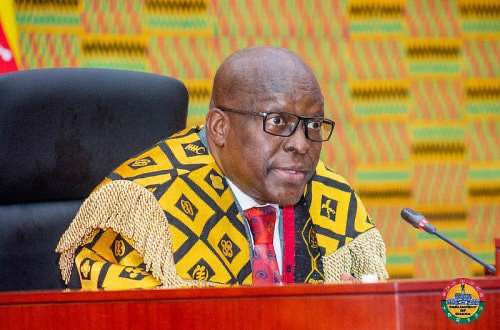
Speaker Suspends Parliament Over Funding Crisis, Delays Key Legislative Agenda
Ghana’s Parliament has been forced to postpone its scheduled sitting following a directive from Speaker Alban Sumana Kingsford Bagbin, who cited financial constraints as the reason for the indefinite suspension. The session, which was expected to begin on Tuesday, October 14, 2025, has now been deferred until further notice.
In an official statement released by the Office of the Speaker on Monday, October 6, Bagbin announced:
“Commencement of the Third Meeting of the First Session of the Ninth Parliament of the Fourth Republic is deferred until further notice due to circumstances beyond my control.”
Though the Speaker’s statement was brief and non-specific, parliamentary insiders and sources close to the legislature have confirmed that the delay stems from the Ministry of Finance’s failure to release budgeted funds to Parliament, affecting core operations and activities.
Sources familiar with the situation indicate that Parliament is currently experiencing significant financial challenges. Multiple activities, including committee work and administrative tasks, are reportedly being run on credit. Allowances for MPs, particularly for committee sittings, have not been paid for several months.
Despite repeated appeals to the Finance Ministry, no resolution has been reached. A source within the Ministry of Finance, speaking on condition of anonymity, explained that Parliament has accumulated substantial debts since the beginning of the year. According to the source, the Ministry’s position is that new allocations will only be released once those debts are cleared.
This standoff has now triggered a broader institutional crisis, disrupting not only parliamentary proceedings but also time-sensitive legislative work.

One of the most urgent issues affected by the postponement is the government’s plan to revoke Legislative Instrument (LI) 2462, which controversially permits mining in forest reserves. The instrument has been the focus of intense criticism from civil society, environmental advocates, and political actors amid Ghana’s escalating fight against illegal mining (galamsey).
Attorney-General and Minister for Justice, Dr. Dominic Ayine, had previously announced at the Galamsey Dialogue held at the Jubilee House that a new Legislative Instrument LI 2505 was ready to be laid before Parliament on October 14 to repeal LI 2462.
“The Lands and Natural Resources Minister and I have agreed that on that day, when Parliament resumes, we will lay the instrument to revoke the famous LI 2462,” Dr. Ayine stated.
With the recall postponed, LI 2462 remains legally in force. This further delays the government’s anti-galamsey agenda and undermines current efforts to restrict mining in environmentally sensitive areas, including forest reserves.
Packed Legislative Agenda in Limbo
The now-delayed session was expected to address a series of pressing national matters. Among the key items on the agenda were:
- The 2026 Budget Statement and Economic Policy, which was scheduled for presentation in November;
- New legislative and constitutional instruments related to natural resource governance and electoral regulations;
- Critical committee reports, including those from the Public Accounts Committee and the Committees on Education and Health.
These legislative processes are vital for the country’s fiscal planning, environmental governance, and electoral reforms ahead of the 2026 general elections. The indefinite suspension could have ripple effects on government timelines and policy implementation.
The Speaker’s decision to suspend Parliament due to funding issues underscores deeper concerns about budgetary independence and institutional autonomy in Ghana’s democratic system. As Parliament plays a central role in checks and balances, delays in its work can affect national governance, policy reform, and public accountability.
In the broader African context, Ghana has often been held up as a model of legislative maturity and democratic governance. However, the financial strain now threatening its parliamentary operations raises critical questions about the sustainability of democratic institutions when resources are constrained or delayed.
A similar challenge was observed in Nigeria in 2022, when legislative sessions were disrupted due to budgetary delays affecting the National Assembly’s operations. Ghana now faces a comparable dilemma.
Updated Timeline and Next Steps

The Office of the Speaker has indicated that Parliament will reconvene on October 21, 2025, but this date remains tentative and depends on whether the Ministry of Finance releases the required funds. Until then, the fate of pending bills and policies including those aimed at curbing illegal mining and safeguarding electoral integrity remains uncertain.
There has been no official comment from Finance Minister Cassel Ato Forson regarding the release of funds. Similarly, the Majority and Minority Leaders in Parliament are yet to issue formal statements addressing the suspension and its implications.
The Speaker’s suspension of parliamentary proceedings serves as a stark reminder of the critical importance of financial autonomy for the effective functioning of democratic institutions. While the action may be temporary, its impact on legislation, governance, and environmental protection is far-reaching.
As Parliament prepares to reconvene later this month pending financial clearance the spotlight remains on both the executive and legislature to resolve the funding impasse promptly. Ghana’s ability to maintain institutional stability and legislative productivity will be closely watched in the weeks ahead.
Read more: Citizen Petitions President Mahama to Remove Acting Chief Justice Over Alleged Misconduct