

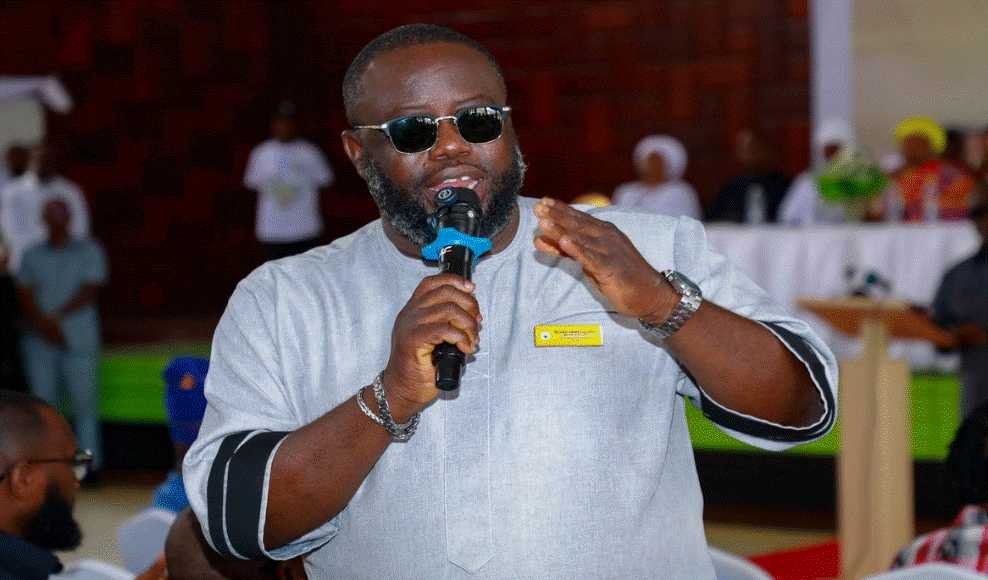
The Mayor of Accra, Michael Kpakpo Allotey, has ordered the prosecution of 37 individuals and business entities for defying the city’s directive to observe the National Sanitation Day clean-up exercise held last Saturday. The order, which targets companies such as Samir Engineering at Abossey Okai and Vision Transport, underscores the Accra Metropolitan Assembly’s (AMA) renewed determination to enforce environmental laws and restore sanitation discipline in the capital.
According to the AMA, the directive forms part of the government’s broader effort to revive the National Sanitation Day initiative, which was relaunched earlier this year to curb the city’s chronic waste management problems. The exercise, which took place across all metropolitan, municipal, and district assemblies (MMDAs), required residents, shop owners, and businesses to temporarily close and participate in communal cleaning activities.
However, several individuals and institutions reportedly ignored the order and continued with their business operations while others failed to show up entirely. Mayor Allotey described this act as “total disregard for civic responsibility and public health,” stressing that such behavior undermines the collective goal of keeping Accra clean. “We cannot keep calling for a cleaner city while people deliberately flout sanitation regulations. This is a citywide initiative that requires participation from all residents,” he said.

Officials from the AMA’s Public Health Department and Sanitation Task Force were deployed across key business areas including Abossey Okai, Kaneshie, Okaishie, and Circle, where offenders were identified and recorded. The list of violators, the Assembly confirmed, has been forwarded to the sanitation court for immediate prosecution.
The National Sanitation Day, first introduced in November 2014 under former President John Mahama, was designed to foster community participation in environmental hygiene by dedicating the first Saturday of each month to nationwide clean-up activities. However, participation levels dropped sharply in the years that followed due to lax enforcement and public apathy. The current administration’s relaunch of the initiative aims to reawaken civic responsibility and make cleanliness a shared culture among Ghanaians.

Despite multiple sensitization campaigns before the exercise, the AMA expressed disappointment over the low compliance rate among some traders and transport operators. “No one is above the law,” Mayor Allotey emphasized. “Whether you are a business entity or an individual, failure to comply with city regulations will attract legal consequences.”
Environmental experts have welcomed the renewed enforcement drive, saying it reflects a shift from rhetoric to real action in urban sanitation management. Dr. Joseph Ofori, a sanitation policy analyst, noted that for Accra to achieve its goal of becoming the “cleanest city in Africa,” consistent law enforcement is essential. “Public education is important, but sanctions are equally necessary to deter habitual offenders,” he stated.
Residents have expressed mixed reactions to the development. While some praised the AMA for taking decisive action, others complained about inadequate communication regarding the clean-up schedule and road closures during the exercise. Some traders at Kaneshie Market, for instance, argued that the timing of the exercise on weekends disrupts business and suggested that the Assembly explore flexible schedules.
The AMA, however, maintains that the success of the sanitation initiative depends on the collective cooperation of citizens. The Assembly has vowed to intensify monitoring and ensure that future exercises are more effective, with stricter penalties for offenders.
With Accra struggling under mounting waste and clogged drains that often worsen flooding during the rainy season, the city’s leadership insists that the sanitation agenda must become non-negotiable. The prosecution of the 37 offenders is expected to send a strong signal that civic negligence will no longer be tolerated in Ghana’s capital.
Accra Mayor Directs Schools to Display “Oobakɛ” to Boost Ga Language Preservation