

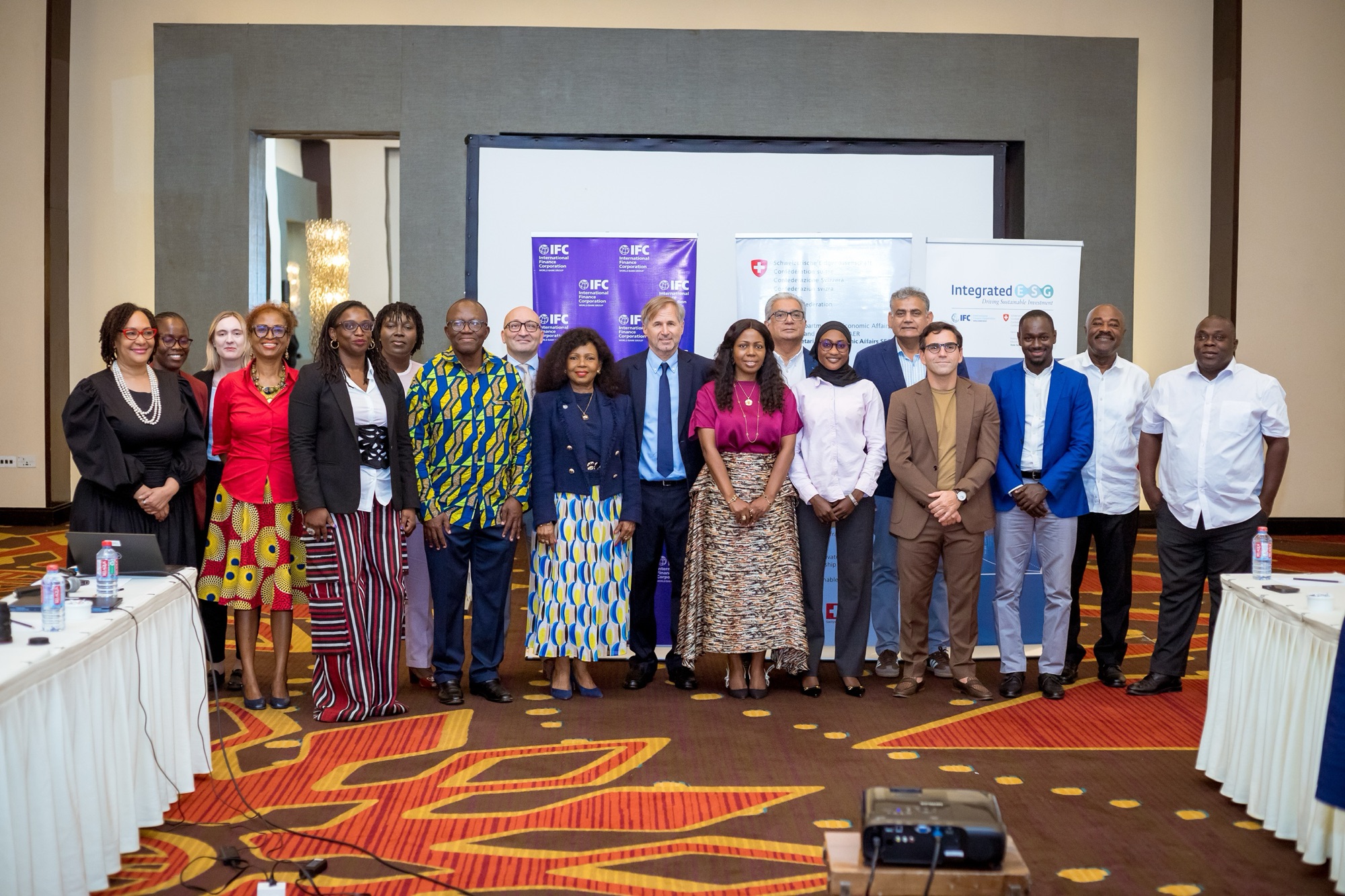
The International Finance Corporation (IFC), a member of the World Bank Group, hosted its second Family Business Governance Workshop in Accra, bringing together entrepreneurs, business leaders, and governance experts to discuss strategies for strengthening family-owned enterprises in Ghana.
The workshop, dubbed Family Governance and Legacy: The Family Constitution Blueprint, formed part of IFC’s Integrated Environmental, Social and Governance (IESG) Programme, supported by Switzerland through the Swiss State Secretariat for Economic Affairs, SECO. The programme aims to help businesses embed sustainability, risk management, and corporate governance standards into their operations.

With family businesses accounting for more than two-thirds of Ghana’s private enterprises, IFC stressed that stronger governance practices are essential for their continuity and contribution to the national economy. At the event, IFC officials highlighted succession planning and family constitutions as two critical areas requiring urgent attention.
While many family-owned enterprises have grown into major players in sectors such as retail, hospitality, real estate, and agriculture, they often remain heavily dependent on their founders. The lack of clear succession plans, IFC warned, leaves these businesses vulnerable to disputes, leadership vacuums, and in some cases, collapse.
“Family businesses are at the heart of Ghana’s economy, yet too many remain exposed to risks that could be prevented with proper governance,” said Moez Miaoui, IFC, Acting ESG Advisory Lead, Africa. “Succession planning and family constitutions are not optional; they are essential tools for protecting businesses, safeguarding jobs, and ensuring that wealth is preserved across generations.”

A family constitution, participants learned, can serve as a guiding document to clarify ownership rights, outline leadership transition rules, and establish dispute resolution mechanisms. Although not legally binding, such frameworks provide families with a reference point that reduces conflict and supports long-term stability. The workshop also featured case studies from other African markets where family constitutions have been used successfully to maintain cohesion during generational transitions. These examples, IFC said, demonstrate that governance reform is both feasible and effective in preserving the longevity of family-owned enterprises.
In addition to providing training and technical expertise, the IFC emphasised that sound governance practices can also improve access to finance. Banks and investors are increasingly scrutinising governance frameworks when assessing companies, making it more difficult for firms with weak structures to attract capital. Businesses that demonstrate succession plans and constitutions, by contrast, are seen as more resilient and reliable partners.
One participant, a second-generation entrepreneur in the manufacturing sector, described the workshop as timely. “Our family business has grown, but we have struggled with decision-making as more relatives become involved. This workshop has given us a clear roadmap for building structures that will ensure continuity,” she said.
The IFC reaffirmed its commitment to supporting Ghanaian family enterprises through continued workshops, advisory services, and training sessions. By strengthening governance frameworks, the IFC aims to build resilience, preserve jobs, and secure the long-term contribution of family-owned businesses to Ghana’s economic growth. “Family businesses are not only commercial entities but also legacies,” Kyle Kelhofer, IFC, Senior Country Manager for Ghana, added. “The work we are doing together will ensure these legacies endure.”
About IFC
IFC – a member of the World Bank Group – is the largest global development institution focused on the private sector in emerging markets. IFC works in more than 100 countries, using our capital, expertise, and influence to create markets and opportunities in developing countries. In fiscal year 2025, IFC committed a record US$71.7 billion to private companies and financial institutions in developing countries, leveraging private sector solutions and mobilizing private capital to create a world free of poverty on a liveable planet. For more information, visit www.ifc.org.
Read Also: Bold New Era: Africa Rejects Imported Governance Models in Landmark Strategic Compliance Forum