Korle-Bu Teaching Hospital secures 30 new dialysis machines

0
189

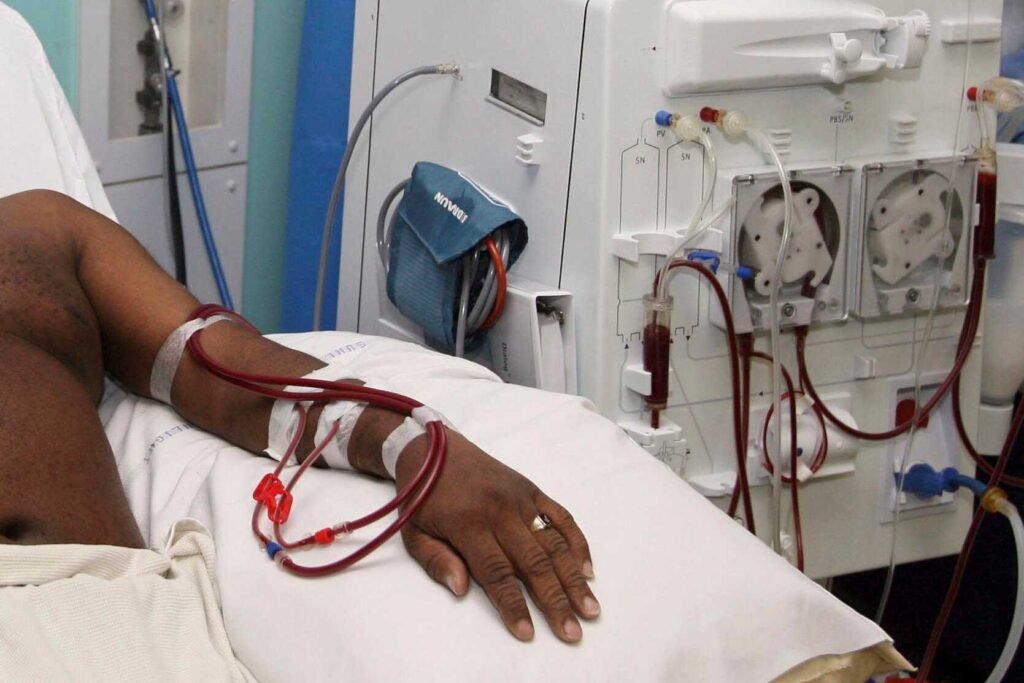
Korle-Bu Teaching Hospital (KBTH) has taken a significant step to boost its renal services by securing 30 brand-new dialysis machines, a move that promises to revolutionize patient care and increase cost efficiency. This critical enhancement, facilitated by the Ministry of Health, is set to alleviate the immense pressure the hospital has faced in recent months.

The arrival of these dialysis machines follows a challenging period when the hospital’s renal unit was forced to close its doors to outpatients due to overwhelming demand. The unit’s sole dialysis machine struggled to keep up with the increasing number of kidney patients, leaving many without the care they urgently needed.
Korle

In an interview with JoyNews, Dr. Opoku Ware Ampomah, Chief Executive Officer of KBTH, expressed deep gratitude to the Minister of Health, Dr. Bernard Okoe-Boye, for securing these much-needed machines. He also offered a heartfelt apology to the affected renal patients for the temporary closure and the resulting inconvenience.

“Thankfully, the renal unit has now reopened to outpatients, and services have fully resumed. I want to extend my sincere apologies to our patients and the public for the inconvenience caused,” Dr. Ampomah stated. “The situation arose due to factors beyond our immediate control, but we are committed to preventing such occurrences in the future. The Minister of Health, Honorable Dr. Bernard Okoe-Boye, and the Ministry have been instrumental in securing these 30 new dialysis machines for Korle-Bu.”
Korle

In addition to the current machines, Dr. Ampomah revealed that the hospital has entered into an agreement with a company to supply 30 additional dialysis machines, further enhancing the center’s capacity.

In a bid to improve patient care amid ongoing dialysis challenges, Korle Bu Teaching Hospital is also spearheading efforts to introduce innovative kidney treatment options. One of the most anticipated advancements is the introduction of peritoneal dialysis, a method widely adopted in the United States and other advanced countries. This treatment allows patients to manage their condition from the comfort of their homes, significantly improving their quality of life.

The decision to adopt peritoneal dialysis comes after the hospital’s dialysis unit faced a temporary shutdown due to a shortage of essential supplies. Dr. Ampomah expressed optimism about this new treatment approach, noting that it could soon become a viable option for patients, transforming the way kidney care is delivered at Korle-Bu.

Author

  • Korle

    Abraham Kofi Amudzegbe is a Level 300 Nursing student at the University
    of Ghana, Legon, an author, student leader, and youth advocate with a
    strong passion for public service, leadership, and student empowerment.
    Through his writing, he explores topics related to education, youth
    development, leadership, health, and social impact, contributing
    meaningful perspectives on issues that affect students and young people.

    As an author at Insight Ghana, Abraham leverages his strong communication
    and research skills to produce informative and thought-provoking content.
    His work reflects a commitment to advocacy, public engagement, and
    fostering conversations that inspire positive change within society.

    Abraham currently serves in several leadership capacities, including
    Vice President of the Volta Region Students Association (VORSA Legon),
    Public Relations Officer (PRO) of the University of Ghana Nursing and
    Midwifery Students Association (UGHANMSA), Deputy Head of the Business
    and Political Chamber of PENSA Legon, Public Relations Officer (PRO) of
    the Oti Region Students Association (ORSA), and a Member of the
    University of Ghana Parliament House.

    Over the years, he has led and supported numerous student-centered
    initiatives, including academic tutorials, mentorship programmes,
    welfare interventions, and advocacy campaigns aimed at improving the
    student experience and promoting collective growth.

    As an aspiring President of the University of Ghana Students'
    Representative Council (UGSRC) for the 2026/2027 academic year,
    Abraham seeks to champion a vision centered on student welfare,
    accountability, inclusiveness, innovation, and effective representation.

Previous articleCrude oil production declined for fourth consecutive year in 2023 - PIAC
Next articleDec polls: 20 independent candidates file nomination to contest
Abraham kofi Amudzegbe

Abraham Kofi Amudzegbe is a Level 300 Nursing student at the University of Ghana, Legon, an author, student leader, and youth advocate with a strong passion for public service, leadership, and student empowerment. Through his writing, he explores topics related to education, youth development, leadership, health, and social impact, contributing meaningful perspectives on issues that affect students and young people.

As an author at Insight Ghana, Abraham leverages his strong communication and research skills to produce informative and thought-provoking content. His work reflects a commitment to advocacy, public engagement, and fostering conversations that inspire positive change within society.

Abraham currently serves in several leadership capacities, including Vice President of the Volta Region Students Association (VORSA Legon), Public Relations Officer (PRO) of the University of Ghana Nursing and Midwifery Students Association (UGHANMSA), Deputy Head of the Business and Political Chamber of PENSA Legon, Public Relations Officer (PRO) of the Oti Region Students Association (ORSA), and a Member of the University of Ghana Parliament House.

Over the years, he has led and supported numerous student-centered initiatives, including academic tutorials, mentorship programmes, welfare interventions, and advocacy campaigns aimed at improving the student experience and promoting collective growth.

As an aspiring President of the University of Ghana Students' Representative Council (UGSRC) for the 2026/2027 academic year, Abraham seeks to champion a vision centered on student welfare, accountability, inclusiveness, innovation, and effective representation.