

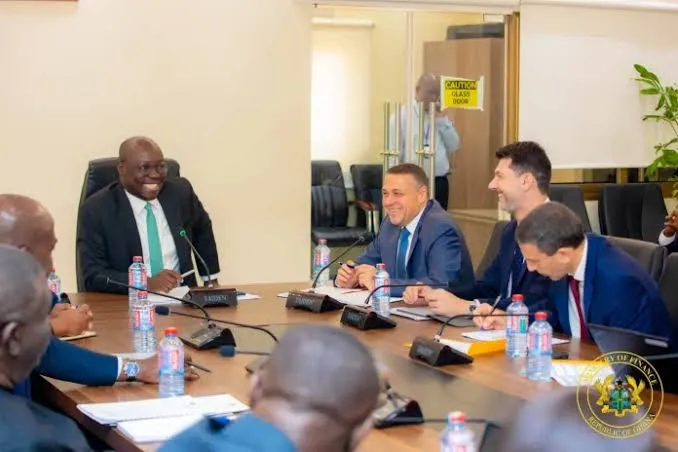
The development comes as Ghana continues its transition from the previous US$3 billion Extended Credit Facility (ECF) bailout programme to a new framework focused on maintaining economic discipline without additional direct financing from the IMF. Editorial Standards
The Policy Coordination Instrument, which was approved by the IMF Executive Board on July 27, 2026, is designed to support the government’s economic reform agenda, strengthen policy credibility and encourage continued confidence among investors and development partners.
Unlike the previous bailout arrangement, the PCI does not provide direct financial assistance.
Instead, it offers policy monitoring and technical guidance to help participating countries maintain macroeconomic stability and implement sustainable economic reforms.
In its assessment, the IMF described Ghana’s economic performance as resilient, highlighting improvements in economic growth, inflation management and the country’s fiscal position.
According to the Fund, Ghana’s real Gross Domestic Product (GDP) expanded by 6.2 per cent year-on-year during the first half of 2026, supported largely by investment activities.
The IMF has projected full-year economic growth of 5.7 per cent, reflecting expectations that the economy will maintain its positive performance despite uncertainties in the international economic environment.
Inflation has also recorded significant improvements. The Fund reported that Ghana’s inflation rate declined to 5.5 per cent in October 2026, remaining below the Bank of Ghana’s medium-term target range of 6 to 10 per cent.
The IMF further observed that the country’s fiscal position remained strong, with the primary surplus expected to meet the programme’s end of year target.

Public debt has also declined considerably following sustained fiscal consolidation and debt restructuring efforts.
However, the Fund cautioned that Ghana’s improving economic indicators should not overshadow existing vulnerabilities, particularly pressures on foreign exchange reserves.
The IMF identified the decline in Ghana’s international reserves in recent months as a major concern and called for consistent implementation of corrective measures introduced by the authorities.

Among the interventions highlighted were the transfer of foreign exchange intermediation responsibilities from the Bank of Ghana to GoldBod and the enforcement of increased gold sale requirements for large-scale mining companies.
The Fund stressed that these measures, alongside greater exchange rate flexibility, would be important in rebuilding Ghana’s foreign exchange reserves and strengthening the country’s ability to withstand external economic shocks.
Ghana remains exposed to fluctuations in international gold, cocoa and crude oil prices, as well as geopolitical tensions and tighter global financial conditions. Editorial Standards
At the domestic level, the IMF identified significant debt refinancing requirements, financial sector weaknesses and fiscal pressures arising from the energy, cocoa and gold sectors as areas requiring continued attention.
On fiscal policy, the IMF noted that the government’s proposed 2027 Budget is broadly aligned with the objectives of the PCI.
The budget targets a primary surplus of 0.5 per cent of GDP on a commitment basis, building on the fiscal consolidation achieved in recent years.
The government is expected to use the fiscal space created through improved revenue mobilisation and expenditure discipline to support priority investments, particularly in infrastructure development and job creation under its New Economy agenda.
The IMF, however, emphasised that public investment must be guided by rigorous project assessments, competitive procurement processes and strict expenditure controls to ensure value for money. Editorial Ethics & Independence
It also expects Ghana to strengthen non-oil revenue mobilisation through tax measures approved in July 2026, improvements in customs and excise legislation and reforms to revenue administration.
On structural reforms, the Fund described progress as broadly satisfactory, pointing to the publication of the Fiscal Strategy Document, parliamentary approval of the new Cocoa Board Act and continued quarterly electricity tariff adjustments.
Ghana has also completed a comprehensive review of its customs and excise legislation ahead of schedule.
Nevertheless, several outstanding commitments require attention. These include reforms to the Bank of Ghana’s liquidity management framework, the rollout of the Integrated Tax Administration System, operationalisation of the Fiscal Council and preparation of the Fiscal Risk Statement.
The IMF also highlighted the delayed publication of the audit of the Electricity Company of Ghana’s collection accounts as an outstanding reform commitment.
The Fund indicated that completing these reforms on schedule would be important for strengthening public financial management, improving transparency and protecting the country’s economic recovery.
Governance reforms also remain a priority, with the IMF identifying the adoption of the Conduct of Public Officers Bill, publication of the second National Ethics and Anti Corruption Action Plan and stronger oversight of state owned enterprises as important measures. Newscard
For Ghana, the successful completion of the first PCI review would reinforce its commitment to maintaining economic discipline after concluding the previous IMF bailout programme.
However, the agreement is not yet final, as the IMF Management and Executive Board must still approve the outcome of the review.
The next phase will therefore depend on the government’s ability to sustain fiscal discipline, rebuild foreign exchange reserves, complete outstanding structural reforms and manage risks within the domestic economy.
Ultimately, the IMF’s assessment presents a cautiously positive outlook for Ghana.
While improvements in growth, inflation and public finances demonstrate progress, maintaining these gains will require consistent policy implementation and stronger economic resilience.