

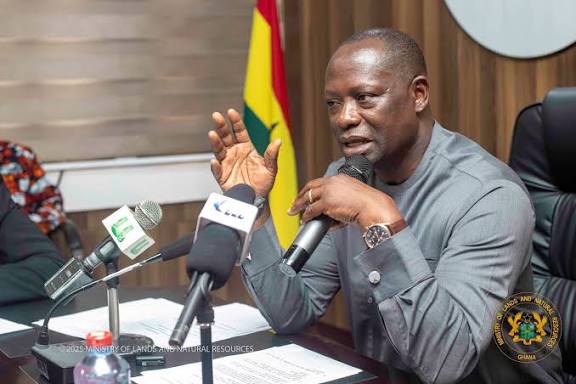
The Minister for Lands and Natural Resources, Emmanuel Armah-Kofi Buah, has identified prosecution as the most significant obstacle in Ghana’s ongoing battle against illegal mining, commonly known as galamsey, despite intensified enforcement operations that have led to the arrest of hundreds of suspects and the seizure of large quantities of mining equipment.
Speaking during a policy engagement organised by the IMANI Centre for Policy and Education in Accra, the minister said the government’s efforts to combat illegal mining had yielded substantial enforcement results. However, he stressed that the ultimate success of the campaign would depend not only on arrests and seizures but also on the ability of the justice system to successfully prosecute offenders.
According to Mr Buah, a total of 258 suspects had been arrested in operations conducted within forest reserves as of July 2026. While describing the arrests as evidence of the government’s determination to tackle the menace, he admitted that securing convictions remains a major challenge. “The challenge we are having is not the arrest. It is the prosecution,” he stated.

The minister explained that although law enforcement agencies have been able to apprehend individuals involved in illegal mining activities, many cases fail to progress effectively through the legal process. This situation, he indicated, undermines efforts to create a strong deterrent against environmental destruction and illegal exploitation of Ghana’s natural resources.
The policy dialogue, which brought together stakeholders from government, civil society and the mining sector, focused on inherited challenges within the ministry, ongoing reforms and future policy directions aimed at restoring order and sustainability in Ghana’s mining industry.
During the engagement, the Ministry of Lands and Natural Resources presented figures highlighting the scale of enforcement activities undertaken in recent months. However, no detailed information was provided regarding the number of suspects who have been formally charged, convicted, acquitted or whose cases remain before the courts. Mr Buah disclosed that the ministry is working closely with the Attorney-General’s Department to address bottlenecks within the prosecution process and improve the effectiveness of legal action against illegal miners.

The revelation has renewed concerns among environmental advocates and policy analysts who argue that arrests alone are insufficient if offenders are not successfully prosecuted and punished. Many observers believe that the absence of swift and consistent convictions weakens the overall impact of anti-galamsey operations.
The minister further revealed the extent of equipment seizures recorded during recent operations. According to him, authorities have seized 200 excavators and immobilised an additional 34 excavators linked to illegal mining activities. Enforcement teams have also confiscated 1,469 pumping machines and 950 changfan machines, while another 1,259 pumping machines and 774 changfan machines have been immobilised.
In addition, 48 tricycles, 285 motorbikes and 82 gold detectors have been seized, while 801 structures associated with illegal mining activities have been immobilised in forest reserve operations. The figures underscore the vast scale of illegal mining operations across the country and the enormous logistical challenge confronting authorities tasked with protecting Ghana’s forests, rivers and mineral resources.

Mr Buah also painted a grim picture of the environmental damage caused by illegal mining. He disclosed that approximately 8,900 hectares of forest reserves have been completely degraded as a result of galamsey and other destructive activities.
Nine forest reserves were identified as among the most severely affected areas. According to the minister, some of these locations have become difficult for Forestry Commission officials to access because of the presence of armed illegal miners, threats of violence and challenging terrain created by mining activities.
He noted that previous estimates of environmental destruction had significantly understated the extent of the problem because they relied on outdated data. More recent assessments, he said, reveal a much greater level of degradation than previously understood. Restoring these damaged ecosystems will require substantial financial investment, long-term planning and collaboration among government agencies, local communities and environmental organisations.

As part of efforts to prevent illegal mining before it begins, the government is introducing stricter controls over the importation and deployment of excavators, which are widely regarded as key tools used in illegal mining operations. The minister disclosed that more than 4,000 excavators are currently being held at Ghana’s ports pending compliance with a newly introduced documentation and clearance system.
Under the new arrangement, importers must provide detailed information on the importer, the intended end user and the specific location where each excavator is expected to operate before clearance is granted. The Minerals Commission has established a presence at the ports to supervise the process. Approved excavators will also be fitted with tracking devices and subjected to geofencing measures designed to restrict them to their approved operational locations.
According to Mr Buah, the initiative is intended to create a comprehensive monitoring system that will make every excavator operating in Ghana traceable and accountable. Beyond enforcement and equipment tracking, the government is also targeting the supply chain that supports illegal mining activities.

The minister noted that many changfan machines used in illegal mining are manufactured locally before being transported to mining sites and water bodies. With a combined total of 1,724 changfan machines either seized or immobilised, he said attention must now be directed toward individuals and businesses involved in producing, financing and distributing such equipment. Authorities believe disrupting these supply networks could significantly reduce the ability of illegal mining operators to continue their activities.
Mr Buah also highlighted the role of the government’s Blue Water Guards initiative, under which approximately 2,000 personnel have been deployed around water bodies to serve as community-based intelligence gatherers and first responders. While acknowledging reports that some members of the initiative may have engaged in misconduct, including accepting bribes, he maintained that the programme has produced valuable intelligence and contributed positively to efforts aimed at protecting water resources.
The minister further outlined proposed reforms to Ghana’s mining licensing regime. Among the proposed changes is a reduction in the maximum initial duration of large-scale mining leases from 30 years to 20 years. He argued that the reform would promote greater accountability and ensure that mining concessions are utilised more effectively.

The government also plans to impose stricter requirements on holders of exploration and prospecting licences, compelling them to demonstrate meaningful progress within specified timeframes. Mr Buah criticised the long-standing practice whereby some companies hold mining concessions for years without undertaking significant exploration or development activities.
In addition, the ministry is proposing the establishment of District Mining Committees to give local communities a stronger voice in decisions regarding mining applications. The committees would assess potential impacts on water bodies, farms, settlements and other community assets before licences are approved. Mining companies would also be required to enter into community development agreements that clearly define their obligations to communities affected by their operations.
As Ghana intensifies its fight against illegal mining, the minister’s remarks have highlighted both the progress made and the challenges that remain. While hundreds of arrests, equipment seizures and new regulatory measures demonstrate a more aggressive approach to combating galamsey, concerns over weak prosecution outcomes continue to cast doubt on the long-term effectiveness of enforcement efforts.

For many stakeholders, the true measure of success will not be the number of arrests recorded but whether offenders are successfully prosecuted and whether the country can reverse the extensive environmental destruction caused by years of illegal mining.
Philbert Amiba Ayuusah