

Finance Minister Dr Cassiel Ato Forson has called for a fundamental shift in Ghana’s defense and security strategy, urging greater investment in technology, intelligence gathering and operational agility to address the increasingly complex security challenges facing the country and the wider region.
According to the minister, the rapidly changing nature of global and regional threats means that Ghana can no longer rely primarily on traditional manpower-based military structures. Instead, he said, the country must embrace modern defense systems driven by advanced technology, real-time intelligence and flexible operational capabilities.
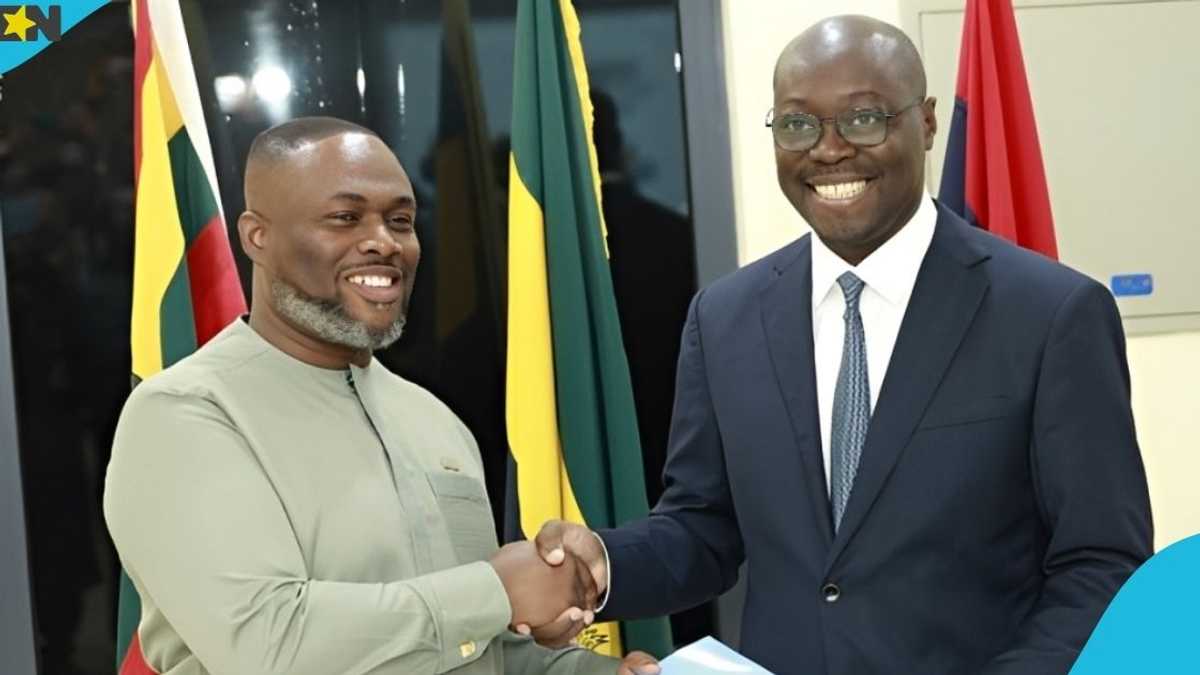
Dr Forson made the remarks during a handing-over and assumption-of-duty ceremony involving Gilbert Adjei in Accra on Friday, August 14. The event brought together government officials, security stakeholders and senior public servants to witness the administrative transition and discuss the future direction of Ghana’s security architecture.

Addressing participants at the ceremony, Dr Forson emphasized that modern warfare and security threats have evolved significantly over the years, requiring countries to adapt their defense strategies accordingly. He noted that while the dedication and professionalism of military personnel remain essential, technological innovation has become an equally important component of national security.
“The future of defense cannot remain manpower led; it must become technology-led, intelligence-driven and agile,” Dr Forson stated.
The finance minister explained that advances in technology have transformed the way nations protect their borders, monitor security risks and respond to emerging threats. He said countries that fail to invest in modern defense technologies risk falling behind in an era where cyber threats, transnational crime, terrorism and sophisticated criminal networks continue to grow.

According to him, Ghana must position itself to respond effectively to these evolving challenges through strategic investments in surveillance systems, intelligence infrastructure, communication technologies and modern military equipment.
Dr Forson stressed that intelligence gathering and analysis should become a central pillar of Ghana’s security framework. He explained that timely and accurate intelligence can help security agencies prevent threats before they materialize, thereby reducing risks to citizens and national assets. He said strengthening intelligence capabilities would also improve coordination among security agencies and enhance decision-making during emergencies and security operations.
The minister further indicated that agility and adaptability would be critical in addressing modern security concerns. He explained that security threats today are often unpredictable and can emerge rapidly, making it necessary for military and security institutions to develop flexible response mechanisms. According to him, defense institutions must be able to adjust quickly to changing circumstances while maintaining high levels of readiness and operational effectiveness.

Dr Forson’s remarks come at a time when many African countries are reassessing their security strategies in response to growing concerns over terrorism, cybercrime, organized criminal activities and political instability in parts of the continent. Security analysts have increasingly argued that technological innovation is becoming a key determinant of military effectiveness, with countries investing heavily in drones, surveillance systems, cybersecurity infrastructure and artificial intelligence-based security tools.
The finance minister suggested that Ghana should not be left behind in this global transformation. He noted that strategic investments in technology would not only strengthen national security but also improve the efficiency and effectiveness of the country’s defense institutions. He emphasized that the government remains committed to ensuring that security agencies receive the necessary support to perform their duties effectively and safeguard the country’s stability.
During the ceremony, Dr Forson also highlighted the importance of leadership and continuity in public administration, describing the transition involving Gilbert Adjei as an opportunity to build on existing achievements while pursuing new reforms and innovations. He expressed confidence in the ability of the incoming leadership to contribute meaningfully to the country’s development agenda and strengthen institutional performance.

The minister encouraged public officials to embrace innovation and forward-thinking approaches in addressing national challenges, noting that effective governance requires continuous adaptation to changing circumstances. Observers at the event said the minister’s comments reflect a growing recognition within government circles that future security challenges will require more sophisticated responses than those employed in the past.
They noted that technological advancements are increasingly shaping defense policies around the world, with intelligence-led operations becoming a central feature of modern security management.
Experts have also pointed to the importance of investing in cybersecurity and digital infrastructure as part of broader efforts to strengthen national resilience. As governments, businesses and public institutions become more dependent on digital systems, the need to protect critical infrastructure from cyber threats has become a major security priority.

Dr Forson’s call for a technology-driven defense strategy is therefore expected to contribute to ongoing discussions about the future of Ghana’s security architecture and the investments required to modernize the country’s defense capabilities. His remarks underscore the growing importance of innovation, intelligence and technological advancement in safeguarding national security and ensuring that Ghana remains prepared to confront emerging threats in an increasingly complex global environment.
As Ghana continues to pursue economic growth and development, the finance minister stressed that national security must remain a priority, emphasizing that a safe and stable environment is essential for investment, prosperity and sustainable progress.
With security threats becoming more sophisticated and interconnected, Dr Forson’s message was clear: Ghana’s defense strategy must evolve to meet the demands of the modern era, relying not only on personnel strength but also on technology, intelligence and agility to protect the nation and its people.
Philbert Amiba Ayuusah