


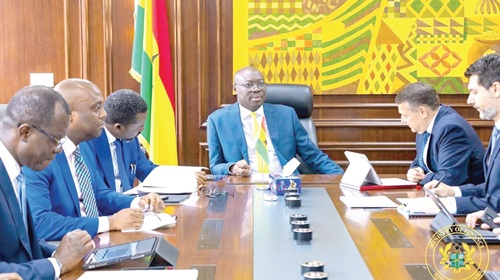
The International Monetary Fund (IMF) has approved a more flexible fiscal path for Ghana beginning in 2027, paving the way for increased government spending on critical development projects while maintaining confidence that the country can still achieve its long-term debt reduction targets.
The recommendation, contained in the IMF’s latest Article IV Consultation and proposed Policy Coordination Instrument (PCI) report, reflects growing confidence in Ghana’s economic recovery following years of fiscal consolidation and debt restructuring. According to the Fund, the country’s improving debt outlook and stronger macroeconomic performance provide sufficient room to ease the pace of fiscal tightening without undermining fiscal sustainability.
Under the revised fiscal framework, the IMF proposed that Ghana reduce its primary fiscal surplus target from the current 1.5 percent of Gross Domestic Product (GDP) to 0.5 percent starting in 2027. The adjustment, the Fund said, would create additional fiscal space for development spending while keeping the country on track to achieve its legally mandated objective of reducing public debt to 45 percent of GDP by 2034.

The recommendation comes after Ghana implemented a series of difficult fiscal reforms under the IMF supported programme aimed at restoring macroeconomic stability, rebuilding investor confidence and placing public debt on a sustainable path. According to the IMF, the proposed easing of the fiscal surplus target does not represent a departure from fiscal discipline but rather reflects the country’s stronger economic fundamentals and progress in implementing structural reforms.
“The lowering of the fiscal primary surplus will be supported by an ambitious package of fiscal structural reforms to contain quasi-fiscal pressures and safeguard debt sustainability,” the Fund stated in its report.
The IMF explained that maintaining prudent fiscal management will remain essential even as spending increases. It said the revised fiscal strategy would rely heavily on reforms designed to strengthen tax administration, improve public financial management and enhance oversight of state-owned enterprises to prevent the accumulation of new fiscal risks.

The report noted that Ghana’s approved 2026 Budget remains anchored on a primary surplus target of 1.5 percent of GDP, consistent with the objectives of the current IMF-supported programme. However, beginning in 2027, the Fund believes the surplus target can safely be reduced to 0.5 percent under the proposed PCI framework, allowing government to allocate more resources to strategic development priorities.
The IMF stressed that the additional fiscal space has become possible because Ghana has made significant strides in restoring debt sustainability through fiscal consolidation, debt restructuring and continued implementation of reforms aimed at strengthening public finances. It further noted that the revised fiscal path would strike a balance between supporting economic growth and ensuring that debt continues on a downward trajectory.
A key justification for the proposed policy shift is Ghana’s substantial financing requirements to achieve its long-term development objectives. According to the IMF, the country will need to invest more than 16 percent of GDP by 2030 to attain the Sustainable Development Goals (SDGs), particularly in sectors such as education, healthcare, infrastructure and social development.
The Fund argued that sustained investment in these sectors is essential to improving living standards, reducing poverty and accelerating inclusive economic growth.

It also identified agriculture and the energy sector as strategic areas capable of generating broad-based economic benefits if supported with increased public investment. According to the report, greater investment in these labour intensive sectors would stimulate private sector participation, increase value addition across the economy and create employment opportunities, particularly for Ghana’s growing youth population.
The proposed Policy Coordination Instrument also envisages a gradual increase in primary government spending from 2027, with a stronger emphasis on capital expenditure to support infrastructure expansion and productive investment. To ensure that higher expenditure does not compromise fiscal stability, the IMF recommended that Ghana intensify domestic revenue mobilisation through comprehensive tax reforms and improved compliance measures.
Among the planned initiatives are reviews of customs legislation, excise tax policies and income tax laws, alongside reforms to be implemented under the government’s Medium-Term Revenue Strategy. The Fund believes these measures will strengthen domestic revenue generation and reduce reliance on borrowing to finance development.

Improving tax collection efficiency, expanding the tax base and strengthening compliance mechanisms, the report said, will be critical in preserving fiscal sustainability while allowing government to finance increased public investment. The IMF also emphasised the importance of continued reforms within public institutions, particularly in public financial management systems and the governance of state-owned enterprises, to minimise quasi-fiscal liabilities that could undermine recent gains.
Ghanaian authorities welcomed the IMF’s assessment and agreed that the proposed relaxation of the fiscal stance is supported by the country’s improved debt dynamics and sustained implementation of economic reforms. According to the Fund, government officials argued that the additional fiscal space would enable the country to finance priority development programmes that promote economic transformation, improve public services and create jobs.
“The authorities viewed the more relaxed fiscal stance as justified by strong policy action and sustained improvement in debt dynamics,” the IMF said.
“They emphasised that freed fiscal space is needed for priority spending to support jobs and development, reaffirmed commitment to fiscal structural reforms, and agreed to prioritise revenue mobilisation.”

The IMF’s endorsement marks a significant milestone in Ghana’s economic recovery, signalling growing international confidence in the country’s fiscal management. If successfully implemented, the revised fiscal framework is expected to provide government with greater flexibility to accelerate investment in infrastructure, education, healthcare and productive sectors while maintaining the discipline required to achieve long-term debt sustainability.
The proposed fiscal adjustment is also expected to strengthen Ghana’s transition from crisis management to sustainable economic growth, allowing the country to leverage its improving macroeconomic position to pursue broader development objectives without compromising fiscal credibility.
Philbert Amiba Ayuusah