

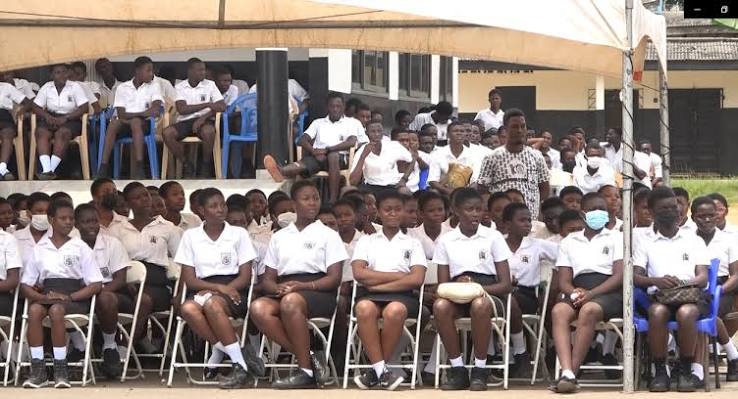
Parliament has approved a US$300 million loan facility aimed at transforming infrastructure and improving learning conditions in Ghana’s secondary education sector.

The facility, supported through the World Bank, is expected to finance major interventions under the Ghana Secondary Education Transformation for Access, Relevance and Results for Jobs (STARR-J) Project, which seeks to expand access to quality secondary education and address infrastructure challenges facing schools across the country.
The approval comes at a time when Ghana’s secondary education system continues to face pressure due to increasing student enrolment and limited infrastructure. The expansion of access to secondary education has created demand for more classrooms, laboratories, workshops and other essential facilities.

Under the project, government plans to construct new senior high schools while rehabilitating and upgrading existing ones to improve teaching and learning conditions. The initiative is also expected to support skills development programmes and strengthen the link between education and employment opportunities.
Education Minister Haruna Iddrisu previously indicated that the intervention would support the construction of 10 new senior and technical high schools and the rehabilitation of 150 existing schools across the country. He said the investment would help address infrastructure gaps and improve the quality of secondary education delivery.

The project is also expected to contribute to efforts aimed at ending challenges associated with the double-track system, which was introduced to manage increased enrolment following the expansion of free secondary education.
Government officials have argued that improving school infrastructure is critical to ensuring that students have access to better learning environments and the practical skills needed for future employment.
The World Bank has said the financing will support almost 1,000 public secondary schools and benefit millions of students through improved learning spaces, stronger teaching systems and better alignment between education and labour market needs.

Education stakeholders have welcomed increased investment in the sector, noting that sustainable improvements in secondary education require continuous funding for infrastructure, teacher development and modern learning resources.
They have also stressed the importance of ensuring that borrowed funds are used efficiently and that projects are completed on schedule to deliver the intended benefits to students and communities.
With Parliament’s approval of the facility, attention now shifts to implementation, as authorities begin the process of rolling out the projects expected to reshape secondary education infrastructure across Ghana.
BY GBEDEVI DORCAS SELORM