

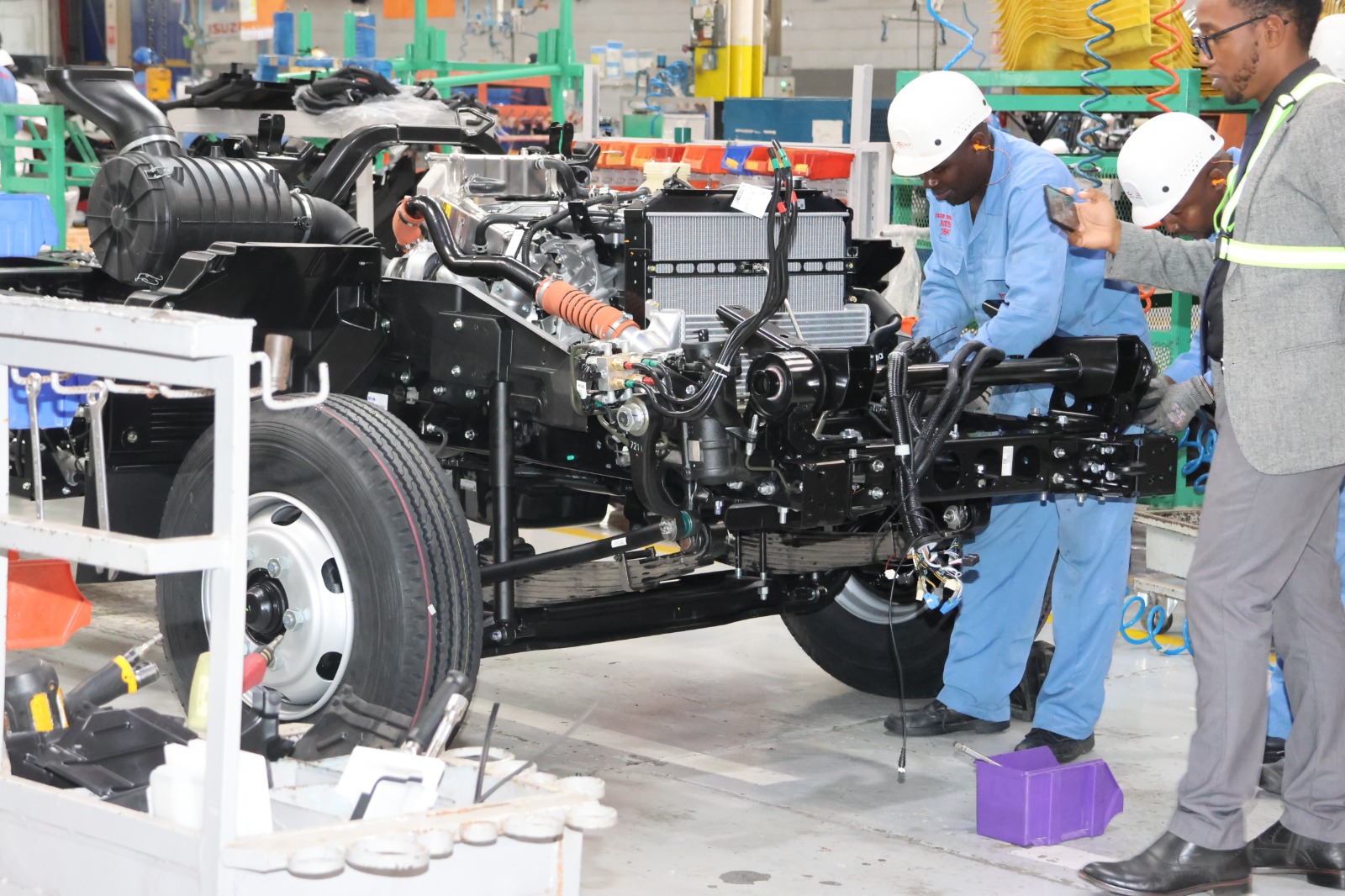
Ghana’s automotive industry is entering a crucial stage of development as the government reviews the Value Added Tax (VAT) exemption granted to locally assembled vehicles while simultaneously advancing plans to expand local component manufacturing and establish the country as West Africa’s leading automotive production hub.
The policy discussions were highlighted during the 2026 Citi Business Festival, where government officials and industry stakeholders examined the future of Ghana’s automotive sector and the measures needed to sustain its growth. The conversations come as Ghana seeks to attract more investment into vehicle assembly, create jobs, and reduce dependence on imported vehicles. (channelonenewsonline.com)
One of the key issues under review is the VAT exemption currently enjoyed by locally assembled vehicles. While the incentive has helped attract major global automobile manufacturers to establish assembly plants in Ghana, government officials say there is a need to assess whether the tax relief remains effective in achieving its long term objectives or requires adjustments to ensure sustainability.

The automotive industry has argued that maintaining competitive tax incentives is essential if Ghana is to continue attracting investment, especially as neighbouring countries are also competing to become regional manufacturing centres. Industry players believe any abrupt removal of existing tax incentives could increase production costs, discourage investment, and reduce the competitiveness of locally assembled vehicles against imported used vehicles.
Officials from the Ministry of Trade, Agribusiness and Industry have indicated that the review forms part of a broader strategy to strengthen Ghana’s industrial base rather than discourage investors. The government maintains that its objective is to create a sustainable policy environment that balances revenue generation with industrial development.
Beyond taxation, government is placing greater emphasis on developing local manufacturing capacity for automotive components. Authorities believe producing parts such as batteries, wiring harnesses, plastic components, seats, tyres, glass, and metal products within Ghana would significantly increase local value addition while reducing reliance on imported inputs.

According to industry experts who participated in the Citi Business Festival discussions, local component manufacturing represents the next phase of Ghana’s automotive development. While several global brands already assemble vehicles in Ghana, a significant proportion of the components used in production are still imported. Increasing local production would strengthen supply chains, create thousands of skilled jobs, and stimulate growth in related manufacturing sectors.
Ghana has already attracted several international vehicle manufacturers under the Ghana Automotive Development Programme, including companies such as Toyota, Nissan, Volkswagen, Sinotruk, Suzuki, and KIA. These firms have established assembly operations that produce vehicles for the domestic market while positioning Ghana as a potential export base under the African Continental Free Trade Area (AfCFTA).
Government officials say the AfCFTA provides a major opportunity for Ghana to supply vehicles and automotive parts across Africa through reduced trade barriers. With a market of more than 1.4 billion people, the continental trade agreement is expected to significantly expand demand for vehicles assembled within Africa.

However, industry leaders acknowledge that achieving regional leadership will require more than assembly plants alone. They argue that reliable electricity, efficient transport infrastructure, improved port operations, affordable financing, technical skills development, and stable government policies will all be essential to attracting additional investment into the sector.
Stakeholders also emphasised the importance of developing specialised technical education to prepare Ghanaian workers for careers in automotive engineering, manufacturing, robotics, and industrial automation. They believe stronger collaboration between government, universities, technical institutions, and private industry will help build the skilled workforce needed to support long term growth.
The issue of imported used vehicles also remains central to the industry’s future. Ghana continues to import large numbers of second hand vehicles annually, making it difficult for locally assembled vehicles to compete on price despite improvements in quality and financing options. Industry participants argue that carefully designed policies encouraging the purchase of locally assembled vehicles could strengthen domestic production while protecting consumers.
Government has reiterated its commitment to making Ghana an attractive destination for automotive investment. Officials say future reforms will focus on expanding local production capacity, increasing exports, promoting technology transfer, supporting local suppliers, and ensuring Ghana becomes a competitive manufacturing destination within the African automotive value chain.

As policy reviews continue, industry observers say the decisions taken over the coming months could determine whether Ghana successfully transforms from an emerging vehicle assembly destination into a fully integrated automotive manufacturing hub capable of serving markets across West Africa and the broader African continent.
Samsung profits surge as AI boom drives chip earnings but shortage fears grow