

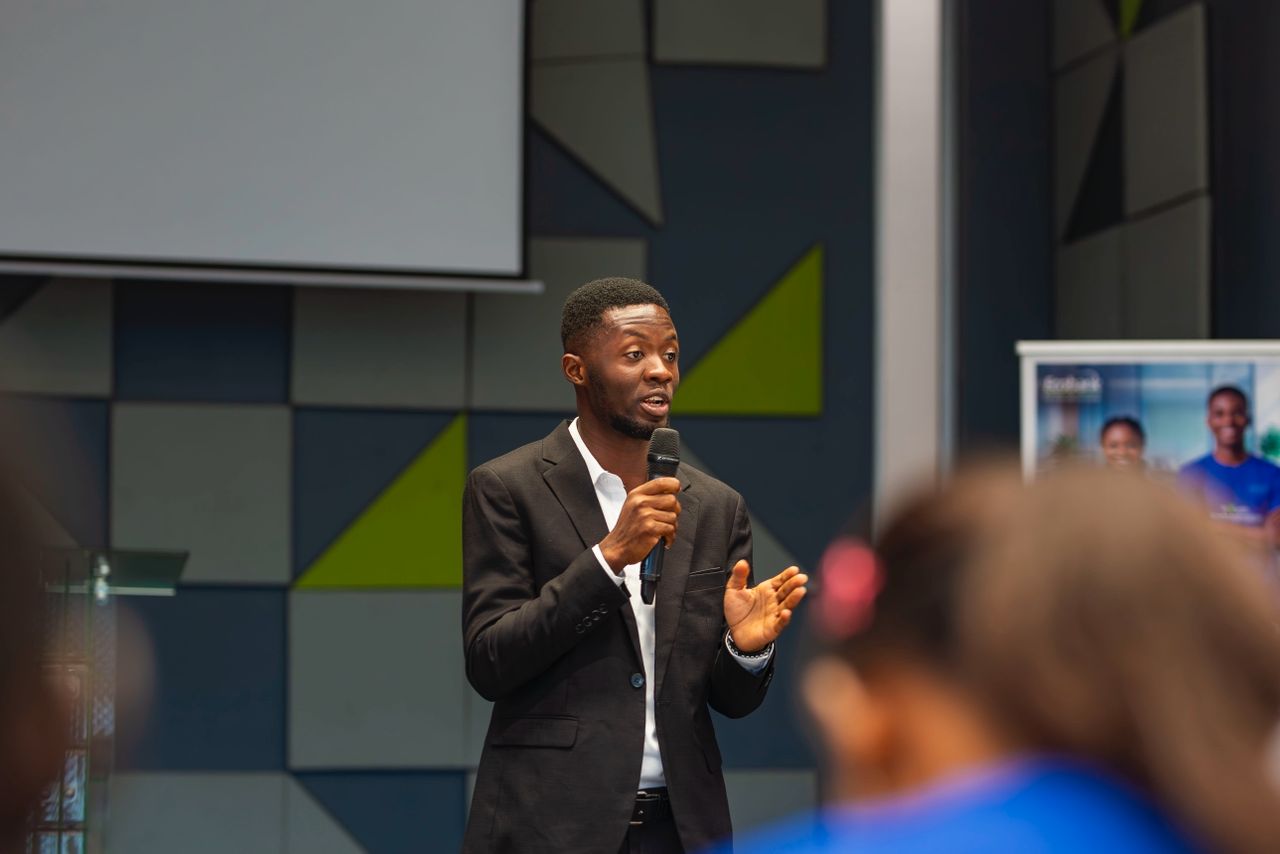
There is a specific kind of silence that hits right before a major idea proves itself. For the Youth Economic Forum, that moment came inside the Kofi Ohene Konadu Auditorium at the University of Professional Studies Accra when thousands of young people filled the space with a level of attention and anticipation that cannot be manufactured through promotion alone. It had to be earned over time.
The Youth Economic Forum, organised by the Business and Financial Times, began as a structured event focused on youth economic participation. My role as Team Lead and member of the YEF Secretariat placed me at the intersection of digital marketing execution and event strategy design. In practice, this meant shaping how people experienced the forum long before they ever entered the physical venue and ensuring that experience remained consistent after they left.
Early in the process, a key shift changed everything about how we approached the work. The focus moved from treating the forum as a single annual gathering to building it as a living community. That decision reframed every communication effort. It was no longer enough to push awareness or drive attendance. The objective became deeper engagement, continuity of dialogue, and long term belonging.

That shift was not abstract. It influenced how campaigns were designed, how content was distributed, and how audiences were nurtured over time. Instead of one directional messaging, we built feedback loops. Instead of isolated promotions, we built continuous interaction points across digital platforms. The idea was simple but demanding in execution. If young people across different countries were going to identify with the forum, they needed to feel that it existed beyond Accra.
One of the strongest mechanisms for achieving that was the ambassador programme. We recruited 100 ambassadors across multiple African countries. These were not symbolic appointments. Each ambassador functioned as a local activation point, translating the forum message into their immediate environments such as universities, entrepreneurship groups, and youth networks. The strength of this approach was authenticity. A message delivered by peers carried more weight than any paid advertisement could achieve.
Alongside the ambassador system, we introduced a series of online webinars. These were designed to maintain engagement between editions of the forum while also widening participation. The webinars became a digital bridge connecting people who had attended physically with those who had not yet had the opportunity. Over time, they evolved into spaces for discussion, learning, and shared ambition. This helped shift perception of the forum from a one time experience to an ongoing ecosystem.
As the forum expanded, its purpose also became clearer. It was not simply a networking platform. It was a structured attempt to connect youth potential with practical economic pathways. With a significant percentage of Ghana and Africa’s population being young, the relevance of such a platform extended beyond inspiration. It was about creating real exposure to opportunities in entrepreneurship, policy, and economic leadership.
On the day of the main event, the outcome of all this preparation became visible. The auditorium was filled with students, entrepreneurs, policymakers, and industry leaders engaging under the theme From Potential to Prosperity Youth Driving the New Economy. The scale of participation reflected not only interest but sustained trust built over time.
That trust was reinforced by consistency. Messaging across digital channels remained aligned for months. Community engagement did not stop after registration. Event logistics were carefully coordinated to ensure that the experience delivered on the expectations created online. In many ways, the success of the physical event was simply the visible layer of a much deeper system operating in the background.
“The brief wasn’t just to market an event. It was to make young people across Africa feel that something was happening and that it was for them.”

Media attention further validated the reach of the work. Coverage came from Joy News, Joy Business, Channel One Television, and Metro Television. Each outlet approached the forum from slightly different angles, ranging from general news to business focused reporting and national agenda discussions. Across these appearances, my role as Team Lead and representative of the YEF Secretariat centered on explaining how the forum had evolved and what the broader vision represented.
Joy News and Joy Business highlighted the economic and youth development aspects of the initiative. Channel One Television featured the forum in its major news bulletin on 27 February 2026, while Metro Television focused on its relevance to national youth economic priorities. The consistency of message across these platforms reflected the internal clarity of the project itself.
One of the most important outcomes of the 2026 edition was the direct support provided to emerging startups. Ten startups received structured financial support and mentorship packages following their participation. This outcome demonstrated that the forum was not only generating conversation but also enabling tangible progress for participants.
The experience reshaped my understanding of what marketing can achieve when applied beyond surface level objectives. Reach alone is limited. Visibility without connection fades quickly. The real impact comes from resonance, where people do not just see a message but internalise it and act on it.
“The best events don’t feel marketed. They feel inevitable, like something that was always going to happen, and you’re glad you were there.”
That statement became more evident with each edition of the forum. What began as a structured event has gradually evolved into a continental network of young people who engage with the platform throughout the year. Ambassadors continue to activate conversations in their local spaces. Participants return with new ideas and collaborations. The forum now exists as a cycle rather than a moment.
Ultimately, the Youth Economic Forum demonstrated that digital marketing, when aligned with purpose and community design, can extend far beyond promotion. It can shape identity, build continuity, and support real world outcomes. That is the direction I intend to continue pursuing. Not just attention, but sustained engagement. Not just audiences, but movements.