


How I helped build the Youth Economic Forum from a single-day gathering into a living, continent-wide community and what it taught me about what marketing can really do.
By Nicholas | Digital Marketer · Team Lead · YEF Secretariat
Key Figures: 2,500+ Students at Main Event | 100 Ambassadors Recruited Across Africa | 4 TV Stations · Interviewed | 3rd Edition & Growing
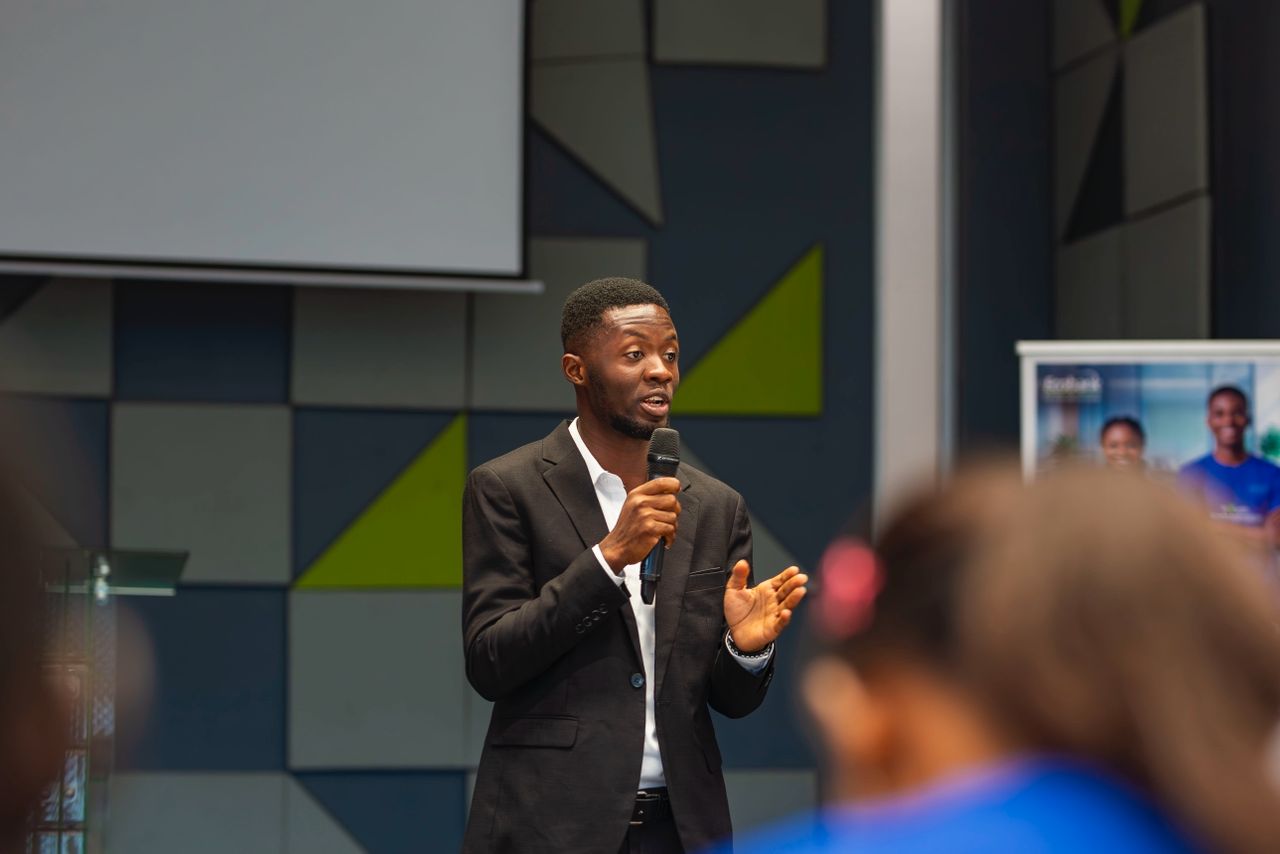
There is a particular kind of energy you feel when 2,500 young people fill an auditorium, not because they were told to be there, but because they chose to be. That feeling, inside the Kofi Ohene-Konadu Auditorium at the University of Professional Studies, Accra (UPSA), is something I will not easily forget. It was the clearest proof that the work had mattered.
The Youth Economic Forum (YEF), organised by the Business & Financial Times, came with an official title for me: Team Lead and member of the YEF Secretariat. But titles rarely capture what the work actually looks like. My role sat at the intersection of digital marketing and event strategy, two disciplines that most people treat as separate lanes, but which, when done right, are the same conversation.
From Event to Community: The Real Brief
The most consequential decision I was part of had nothing to do with a campaign. It was the decision to stop thinking of YEF as an annual event and start building it as a community. Events are powerful but they are also ephemeral. You create energy, you release it in a room, and then it dissipates. A community holds that energy and compounds it.
That shift in framing changed everything downstream. It meant digital marketing wasn’t just about driving ticket sign-ups or filling seats. It was about building belonging. It was about making a student in Nairobi or a young entrepreneur in Abuja feel as invested in the forum as someone sitting in the front row in Accra.
“The brief wasn’t just to market an event. It was to make young people across Africa feel that something was happening and that it was for them.”
Ambassadors, Webinars & the Continent-Wide Reach
One of the most deliberate efforts was the ambassador recruitment drive. We recruited 100 ambassadors across Africa, young people who believed in the forum’s mission enough to carry it into their own networks, campuses, and communities. This wasn’t vanity outreach. Each ambassador was a node in a network, someone who could localise the message and make it land with authenticity that no paid ad can replicate.
Alongside this, I organised online webinars that served a dual purpose: they kept the community warm between editions of the forum, and they expanded the conversation beyond what a single-day event in Accra could contain. The webinars became the connective tissue, the thing that turned attendees into members and members into advocates.
What the Forum Stands For
YEF was built on a sharp conviction: that Ghana’s economic future will not be decided only in boardrooms, but shaped by the courage and discipline of young people. With over 60% of Ghana’s population under 35, the forum is not a feel-good exercise. It is a strategic investment. From pitch competitions for start-ups to masterclasses and policy dialogue, the programme was designed to convert ambition into action.
The Day of the Event and What Marketing Really Produced
On the day of the main event, the auditorium told the story more clearly than any analytics dashboard. Students, entrepreneurs, policymakers and corporate leaders, all converging under the theme “From Potential to Prosperity: Youth Driving the New Economy.” The forum was now in its third edition, each year broader and more embedded than the last. That continuity doesn’t happen by accident.

What produced it was consistency: consistent messaging that gave the forum a clear identity, community coordination that kept people engaged across the year, and the kind of on-the-ground event logistics that ensure the digital promise translates into a physical experience people remember. Marketing that stops at the click is incomplete. The work isn’t done until the room feels right.
“The best events don’t feel marketed. They feel inevitable, like something that was always going to happen, and you’re glad you were there.”
When Ghana’s Newsrooms Took Notice
Being on that side of the camera, speaking as Team Lead and representative of the YEF Secretariat, was not something I had anticipated when I first took on this project. But it made sense. When a journalist needs to understand how something was built, they go to the people who built it. I spoke to what the forum stood for, how the community strategy came together, and what we were trying to create beyond the single day on stage. Four networks: Joy News, Joy Business, Channel One TV, and Metro TV. Four conversations. One consistent message.
Joy News and Joy Business, both under the Multimedia Group, covered YEF from both a general news and business angle, a signal that the story was landing across desks, not just one editorial beat. Channel One TV, the state broadcaster, ran the story in its flagship Biggest Stories bulletin on 27 February 2026. Metro TV covered the forum’s role in Ghana’s broader youth economic agenda. Being sought out by all four was not something I engineered. It was the result of the work being real enough to speak for itself.
Media Appearances
Joy News: Television, Multimedia Group | Role: Team Lead & YEF Secretariat
Joy Business: Television, Multimedia Group | Role: Team Lead & YEF Secretariat
Channel One TV: Television, GBC | Role: Team Lead & YEF Secretariat | Aired: 27.02.2026
Metro TV: Television, Metropolitan | Role: Team Lead & YEF Secretariat
What I Took Away
Working on YEF sharpened something I’d long suspected: the most powerful thing a digital marketer can do for an event isn’t reach. It’s resonance. Reach without resonance fills a room. Resonance builds something that outlasts the room.
The Youth Economic Forum is now a community. Young people across Africa identify with it between editions. Ambassadors carry the flag in cities where B&FT has no office. Start-ups that pitched on that stage in Accra are now growing. Ten of them walked away from the 2026 edition with structured financial support and mentorship packages, which is ultimately what all the digital work was in service of: real outcomes for real people.
That’s the work I want to keep doing. Not just filling screens, but filling rooms. Not just building audiences, but building movements.
Equip women and youth for AfCFTA success