


Apple is preparing a major expansion of artificial intelligence features in iOS 27, moving beyond the long anticipated overhaul of Siri to introduce a wider set of practical AI tools integrated directly into everyday iPhone use.
According to reports from TechCrunch, while Siri’s upgraded AI capabilities dominated attention at Apple’s Worldwide Developers Conference, the company’s broader strategy for iOS 27 is focused on embedding intelligence across multiple system apps and user workflows rather than relying solely on the voice assistant.
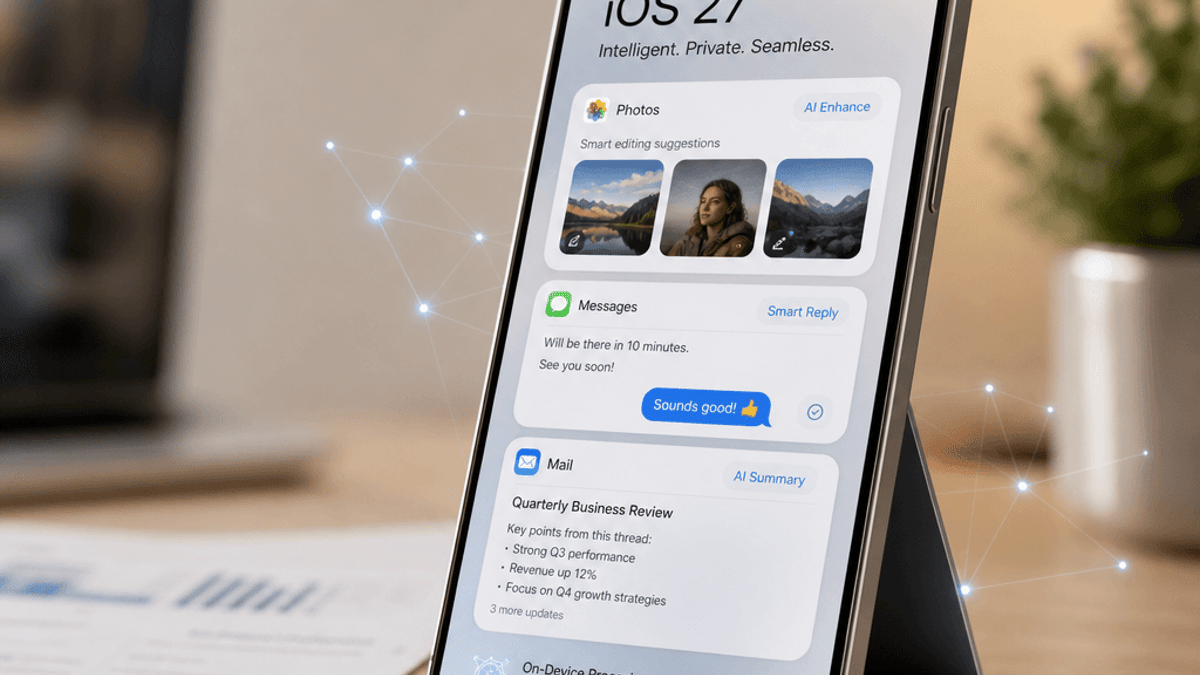
The new features are expected to include smarter writing assistance, more context aware notifications, improved photo organisation tools, and enhanced predictive suggestions across apps such as Messages, Mail and Safari. These tools are designed to work quietly in the background, helping users complete tasks faster without needing to explicitly activate Siri.

Industry analysts say Apple’s approach reflects a shift toward “ambient AI,” where intelligence is distributed throughout the operating system rather than concentrated in a single assistant interface. This strategy positions the iPhone as a device that anticipates user needs based on behaviour patterns, app usage and on device data processing.
One of the key focuses of iOS 27 is expected to be on privacy preserving AI. Apple is reportedly continuing its emphasis on on device processing, meaning many of these features will run locally on the iPhone rather than relying heavily on cloud computation. This approach has been a central part of Apple’s marketing as it seeks to differentiate itself from competitors such as Google and Samsung in the AI race.
The Siri upgrade remains a central part of the update, but Apple appears to be framing it as just one element of a much larger ecosystem. Instead of positioning Siri as the main entry point to AI, iOS 27 will reportedly allow users to interact with intelligence features through text, visuals and system level prompts across the interface.

For example, users may see automatic summarisation of long emails, AI generated smart replies that match tone and context, and more advanced content editing tools integrated directly into apps. Photos and videos could also benefit from improved search and categorisation, allowing users to find content using natural language descriptions.
Apple is also expected to improve cross app intelligence, allowing the system to understand context between different applications. This could mean, for example, pulling travel details from emails and automatically suggesting calendar events or reminders.
The move comes as competition in consumer AI intensifies globally, with companies like OpenAI, Google and Microsoft rapidly integrating generative AI into their ecosystems. Apple’s strategy appears more cautious but highly integrated, focusing on usability and privacy rather than rapid standalone AI expansion.

While Apple has not officially confirmed all details of iOS 27, early developer previews suggest that the update will represent one of the most significant shifts in the iPhone experience in years, fundamentally changing how users interact with their devices.
As anticipation builds ahead of the official release cycle, iOS 27 is shaping up to be less about a single feature like Siri, and more about a complete rethinking of how intelligence is woven into the Apple ecosystem.
Apple brings ads to Apple Maps as business tools expand