

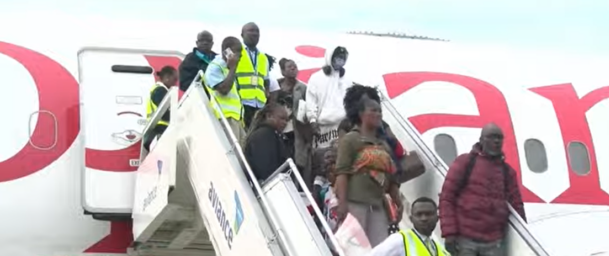
The first batch of Ghanaian nationals evacuated from South Africa has safely arrived in Accra following renewed anti immigrant protests and rising xenophobic tensions in parts of the Southern African country.
A total of 300 evacuees landed at the Accra International Airport on Wednesday afternoon aboard a government chartered Ethiopian Airlines flight after weeks of uncertainty and fear triggered by growing hostility toward foreign nationals in South Africa.
The arrival was marked by emotional scenes as families, government officials and security personnel gathered at Terminal Two to welcome the returnees back home. Many of the evacuees were seen waving Ghana flags, singing and embracing relatives after returning from what several described as a difficult and traumatic experience.

The government delegation that received the evacuees included Chief of Staff Julius Debrah, Foreign Affairs Minister Samuel Okudzeto Ablakwa, Deputy Foreign Affairs Minister James Gyakye Quayson and National Disaster Management Organisation Chief Executive Dr Joseph Bikanyi Kuyon. Officials from the Ghana Immigration Service, airport authorities and other state agencies also participated in the reception exercise.
The evacuation followed weeks of escalating anti immigrant demonstrations in parts of South Africa where campaign groups and protesters accused undocumented foreign nationals of contributing to crime, unemployment and pressure on public services. The protests reportedly resulted in intimidation, destruction of property and attacks targeting migrants from several African countries, including Ghanaians.
South African authorities confirmed that more than 800 Ghanaians had registered with Ghana’s High Commission in Pretoria seeking voluntary repatriation amid safety concerns.

Ghana’s High Commissioner to South Africa, Benjamin Quashie, said the evacuation exercise was intended to protect citizens while preserving diplomatic relations between Ghana and South Africa. He stressed the importance of lawful migration practices and cooperation between both countries in handling immigration concerns.
“The demonstrators have said they want us to work together. We must ensure that those who are undocumented are returned home and that institutions are allowed to function,” Quashie stated while dismissing suggestions of a diplomatic breakdown between both nations.
The evacuation process itself attracted significant attention after South African immigration officials claimed that only 10 of the 300 returnees were legally residing in the country, while the remaining evacuees allegedly violated immigration laws. South African authorities indicated that sanctions could later be enforced against those found to have breached immigration regulations.
The remarks have since generated debate on social media and within migration policy circles, especially as many migrants blamed economic hardship, unemployment and insecurity for their decision to remain abroad despite documentation challenges. Discussions on online platforms reflected mixed reactions ranging from sympathy for the evacuees to criticism of immigration enforcement failures across the region.

Foreign Affairs Minister Samuel Okudzeto Ablakwa assured the returnees that the Ghanaian government would provide comprehensive reintegration support to help them rebuild their lives after returning home.
According to government officials, the support package includes transportation assistance to final destinations within Ghana, temporary accommodation support, counselling services, financial assistance and access to employment and entrepreneurship opportunities. Returnees are also expected to benefit from inclusion in a special database designed to connect them to jobs and startup opportunities nationwide.
The Ministry of Foreign Affairs explained earlier that logistical and permit related complications initially delayed the evacuation process before the final arrangements were completed this week. Additional evacuation flights are expected in the coming days as authorities continue screening and processing registered Ghanaians willing to return home.

South Africa has experienced repeated waves of xenophobic violence over the years, often driven by frustrations over high unemployment, inequality and economic pressure. Migrant rights groups have repeatedly argued that foreign nationals are unfairly blamed for deeper structural economic problems affecting the country. South Africa’s unemployment rate remains above 30 percent, with the black population particularly affected.
Despite the tensions, South African authorities have publicly condemned violence against foreign nationals and pledged to protect constitutional rights while enforcing immigration laws.
The Ghanaian government says it remains committed to ensuring the safety, dignity and reintegration of all affected citizens as the repatriation exercise continues.
Ghana pushes African Union to act on xenophobic attacks in South Africa