

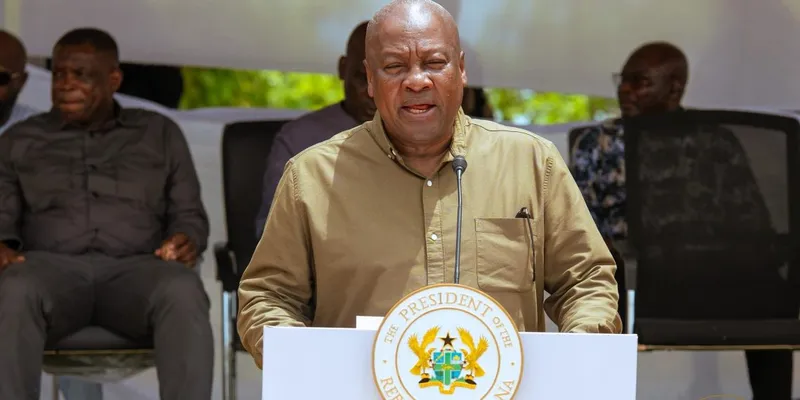
President John Dramani Mahama has confirmed that preparations for the establishment of a Women’s Development Bank are advancing steadily, with Vice President Jane Naana Opoku Agyemang expected to present a formal resolution at the next Cabinet meeting as government seeks to finalise the policy framework for the initiative. The proposal, which is part of a broader financial inclusion agenda targeting women entrepreneurs and small business owners, is being positioned as one of the flagship social and economic interventions of the current administration.
According to details shared from government communications, the upcoming Cabinet presentation will focus on the institutional design, funding structure, and implementation roadmap of the proposed bank. The initiative is expected to prioritise access to credit for women-led micro, small and medium enterprises, many of which continue to face significant barriers in Ghana’s formal banking sector, including high collateral requirements, limited credit history, and higher lending rates compared to male dominated sectors.
President Mahama indicated that the policy is not merely symbolic but intended as a structural response to long standing gender gaps in financial access. “Vice President Jane Naana Opoku-Agyemang is expected to present a formal resolution on the government’s proposed Women’s Development Bank at the next Cabinet meeting,” he disclosed, signalling that the proposal has moved beyond conceptual discussions into the formal policy approval stage.

Economic analysts have long argued that expanding women’s access to finance has a direct impact on national productivity. The World Bank has previously noted that women entrepreneurs in emerging economies are more likely to reinvest earnings into household welfare, education, and community development, creating broader multiplier effects in local economies. In Ghana, where informal sector participation remains high, women constitute a significant share of traders, processors, and service providers, yet they continue to receive a disproportionately small share of formal credit.
The Women’s Development Bank initiative is therefore being framed within this broader economic context, with policymakers suggesting that it could help bridge financing gaps that conventional commercial banks have struggled to address. Although full operational details are yet to be made public, early indications suggest the institution may operate through a mix of government seed capital, international development partnerships, and private sector participation to ensure sustainability.
This approach aligns with similar models in other African countries where development banks or specialised financial institutions have been used to support underserved groups. For instance, the African Development Bank has consistently promoted targeted financial instruments for women and youth as part of its inclusive growth strategy, particularly through programmes that support entrepreneurship, agribusiness expansion, and digital financial services.
In Ghana, the debate over specialised development banks has often centred on sustainability and governance. Critics of state backed financial institutions typically point to past challenges where some public funds struggled with loan recovery and operational inefficiencies. However, supporters argue that properly structured development banks, with strong oversight and professional management, can play a critical catalytic role in sectors where commercial banks are risk averse.
The proposed Women’s Development Bank is also expected to complement existing government programmes aimed at supporting small businesses and entrepreneurship. These include initiatives that provide training, startup capital, and business development services, although stakeholders have frequently raised concerns about fragmentation and limited coordination between such schemes.
At the Cabinet level, attention is likely to focus on ensuring that the new institution does not duplicate existing structures but instead fills a clearly defined financing gap. Policy discussions are expected to examine how the bank will assess loan eligibility, manage risk, and ensure equitable regional distribution of resources across Ghana’s diverse economic landscape.

The timing of the proposal also reflects growing global emphasis on gender inclusive economic recovery strategies following years of economic shocks, inflationary pressures, and labour market disruptions. International development partners have increasingly highlighted women’s economic empowerment as a key driver of resilience, particularly in developing economies where informal work dominates.
If approved, the Women’s Development Bank could become one of the most significant gender focused financial institutions in Ghana’s recent history, potentially reshaping how credit is distributed to women led enterprises. It may also signal a broader shift in economic policy towards more targeted development finance instruments designed to address structural inequalities in access to capital.
For now, all eyes are on the upcoming Cabinet meeting where Vice President Jane Naana Opoku Agyemang is expected to formally table the resolution. The outcome of that meeting will determine the next phase of policy development, including possible legislative backing and operational rollout timelines.