

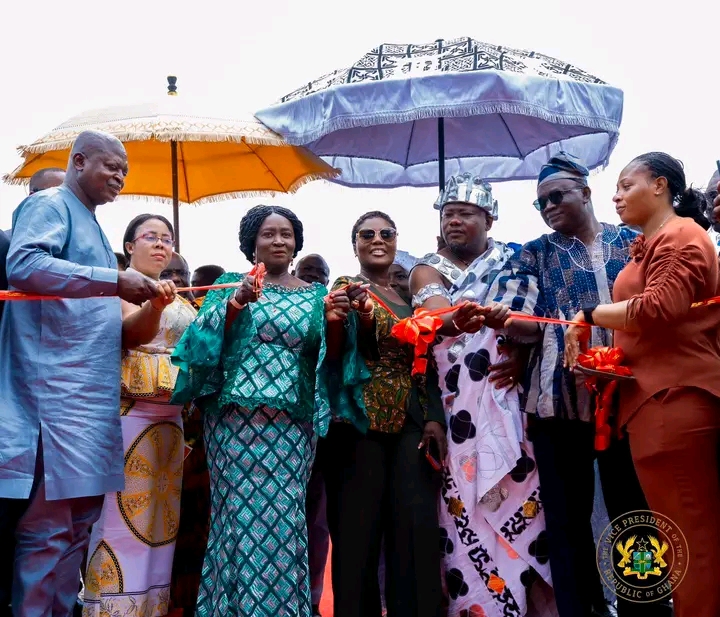
The Vice President has called for strict maintenance discipline and responsible management of newly acquired Metro Mass Transit (MMT) buses, stressing that the success of government investment in public transport depends not only on procurement but on how well the assets are maintained over time.
The appeal was made during the commissioning and deployment of new buses aimed at strengthening Ghana’s public transport system and improving mobility across major cities and rural corridors. According to official remarks reported by local media, the Vice President emphasised that the introduction of new buses must be matched with a strong maintenance culture, professional handling, and accountability from drivers and operational staff.
The directive comes at a time when Ghana is expanding its public transport infrastructure through the addition of new fleet capacity. Government has recently introduced hundreds of buses under the Metro Mass Transit system to address long standing challenges such as overcrowding, unreliable schedules, and limited coverage on key routes.

Officials say the expansion is part of a broader plan to modernise the country’s transport sector and improve accessibility, especially for commuters in urban centres like Accra, Kumasi, Tema, Takoradi and other growing municipalities. The new fleet is expected to ease pressure on existing transport services and restore public confidence in state operated mass transit systems.
The Vice President’s message focused strongly on sustainability, noting that public assets often fail to deliver long term value when maintenance systems are weak. She stressed that Ghana’s transport transformation agenda must go beyond acquisition to include preventive maintenance, routine inspections, and proper usage practices to ensure durability of the buses.
Transport experts say this approach is critical, especially in developing transport systems where infrastructure wear and tear can be rapid due to high passenger demand and challenging road conditions. Without proper maintenance culture, analysts warn that new investments can deteriorate quickly, leading to repeated financial losses and reduced service reliability.

Reports indicate that the new buses form part of a larger national effort to restructure public transport delivery, including fleet expansion plans and route optimisation strategies. The Metro Mass Transit company, which was established in 2003 to provide affordable and reliable transport services, continues to play a central role in this strategy.
Over the years, MMT has served millions of passengers across Ghana and remains a key component of the country’s mass transit system. However, the organisation has also faced challenges including fleet shortages, operational inefficiencies and maintenance constraints, which have affected service delivery in some periods.
The latest intervention, therefore, is seen as a reset moment for the sector. Government officials believe that combining new buses with improved operational discipline and maintenance systems will significantly improve reliability and reduce long term costs associated with frequent repairs or replacements.

The Vice President further highlighted that accountability in usage is equally important, urging drivers and transport managers to treat the buses as national assets that require careful handling. She noted that training, supervision and monitoring systems will be essential in ensuring that the fleet performs efficiently over its lifespan.
Stakeholders in the transport sector have welcomed the directive, describing it as a necessary step toward improving public service delivery. They argue that many transport systems across the region struggle not because of lack of investment, but due to weak maintenance structures and poor asset management practices.
Commuters are also expected to benefit from the expansion, as the new buses are projected to improve travel times, reduce overcrowding and increase reliability on key routes. The deployment is also expected to support economic activity by improving access to workplaces, markets, schools and health facilities.

As Ghana continues to invest in transport infrastructure, attention is now shifting toward implementation discipline. Analysts say the long term success of the MMT expansion will depend on how effectively maintenance systems are enforced, how well staff are trained, and how consistently operational standards are maintained.
For now, government officials are presenting the initiative as a step toward building a more efficient, reliable and modern public transport system, with maintenance culture positioned at the centre of sustainability.
VEEP meets Ghanaians in Spain, shares update on Mahama government’s agenda