

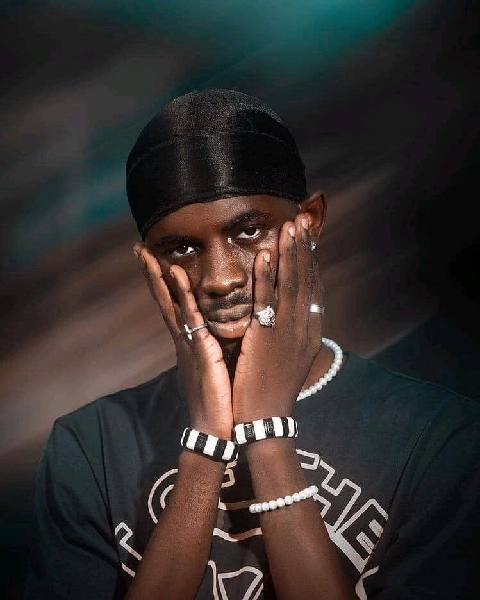
Ghanaian music star Black Sherif has sparked conversations online after declaring that he intends to marry based on love rather than religious affiliation.
Speaking during an interview that has since gone viral across social media platforms, the award winning artiste said, “Christian or Muslim, I am marrying who I love,” a statement that immediately generated mixed reactions among fans and observers.
Black Sherif, born Mohammed Ismail Sherif, is publicly known to come from a Muslim background and has on several occasions spoken about his upbringing in Konongo Zongo in the Ashanti Region.

The musician’s latest remarks have reopened discussions around interfaith relationships, personal freedom, and cultural expectations in Ghanaian society, particularly among young people navigating modern relationships while balancing family and religious traditions.
While some social media users praised the singer for prioritising genuine emotional connection over religious divisions, others argued that faith remains an important factor in marriage and family life.
Black Sherif has built a reputation for expressing deeply personal opinions through both interviews and music. Over the years, the “Kwaku the Traveller” hitmaker has consistently portrayed himself as someone who resists societal pressure and prefers living life on his own terms. In a recent interview, he openly described himself as “a rebel” who has “always” struggled to play by rules imposed on him.

The comments also align with the broader themes often reflected in his music, where he speaks about pain, identity, spirituality, struggle, freedom, and emotional honesty. Despite being rooted in different influences including drill, highlife, hip hop, and Afrobeats, many of his songs contain strong references to faith, reflection, and personal growth.
Interestingly, Black Sherif has previously spoken about the relationship between religion and his music career. In earlier interviews, he admitted that growing up in a devout Muslim environment made it difficult for him to initially imagine building a life around music.
The artist has also publicly defended the spiritual depth of some of his songs. Earlier this month, he argued that tracks such as “Lord I’m Amazed” and “Sacrifice” deserved recognition within gospel music discussions because of their inspirational and faith centered messages.

His latest relationship comments therefore come at a time when fans increasingly view him as an artist who blends spirituality, modern youth culture, and unconventional thinking into both his public image and creative work.
Across Ghana and much of Africa, interfaith marriages remain a sensitive topic in many communities, often influenced by family expectations, cultural traditions, and religious doctrines. However, younger generations are increasingly challenging those boundaries, particularly in urban settings where social interactions across faiths are more common.
The reactions to Black Sherif’s statement highlight how public figures continue to shape conversations far beyond entertainment. For many fans, the issue is not simply about religion, but about personal choice, compatibility, and respect in relationships.

The singer has not expanded further on the statement since the clip began circulating online, but the remark has already become one of the most discussed entertainment conversations on Ghanaian social media this week.