

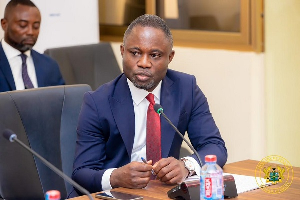
The Minister for Health, Kwabena Mintah Akandoh, has assured Ghanaians that government is taking all necessary steps to prevent an Ebola outbreak in the country following the World Health Organization’s declaration of the disease as a Public Health Emergency of International Concern.
The assurance comes amid growing global concern over a rare Bundibugyo strain Ebola outbreak reported in parts of the Democratic Republic of Congo and Uganda, which has already resulted in dozens of deaths and hundreds of suspected cases across affected regions. The WHO says the situation requires urgent international coordination due to the risk of cross border spread and the lack of approved vaccines or treatments for the strain involved.
Speaking on the matter, the Health Minister stated that Ghana’s public health system has been placed on high alert, with surveillance intensified at all entry points including land borders, airports, and seaports. Health authorities say screening measures have been reinforced as part of broader preparedness efforts to ensure early detection of any suspected cases.

Health officials have also activated emergency response protocols within the Ghana Health Service, including rapid response teams, isolation readiness, and public health education campaigns aimed at increasing awareness among citizens. The Ministry has urged the public to remain calm while strictly observing hygiene and safety protocols such as frequent handwashing and reporting symptoms early to health facilities.
According to the Ministry of Health, no suspected or confirmed Ebola case has been recorded in Ghana or anywhere in the West African sub region at this time. Authorities say the outbreak remains geographically limited to Central and East Africa, particularly areas in the Democratic Republic of Congo and Uganda, but caution that cross border movement makes vigilance necessary.
Recent statements from the Ghana Health Service indicate that screening and monitoring systems at key border points have been strengthened in response to the WHO alert. Health workers at points of entry have been instructed to remain alert for symptoms such as fever, vomiting, weakness, and unexplained bleeding, which are associated with Ebola virus disease.
The WHO declaration has triggered renewed global concern, with health agencies warning that the Bundibugyo strain is particularly challenging due to the absence of specific vaccines or widely available treatments. Experts say rapid containment depends heavily on early detection, contact tracing, and strict infection prevention measures.
Africa CDC has also called for heightened preparedness across the continent, urging countries to strengthen surveillance and coordinate responses to prevent cross border transmission. Ghana’s Health Ministry says it is working in collaboration with international partners to ensure readiness in case of any escalation.

Public health experts in Ghana have also advised against misinformation, urging citizens to rely only on official government and health service communications. They say panic and rumours could undermine response efforts and create unnecessary fear among the population.
The Health Minister emphasized that Ghana’s preparedness systems are stronger than in previous years, citing improvements in disease surveillance infrastructure and emergency response coordination. He assured that the country remains fully committed to protecting public health while supporting global efforts to contain the outbreak.
As monitoring continues, authorities have urged Ghanaians to stay informed but calm, noting that early detection systems remain the country’s strongest defence against any potential importation of the virus.