Six poorest districts in Ghana are in North East Region – GSS report reveals regional inequality gap

0
173

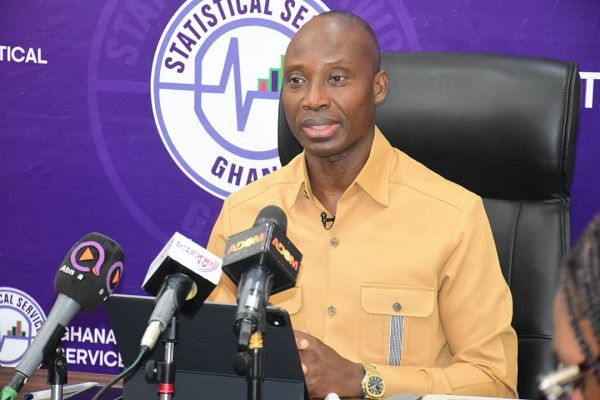
The Ghana Statistical Service (GSS) has identified six districts in the North East Region as the poorest in the country, highlighting persistent regional inequalities in income levels, access to services, and overall living conditions.

According to the findings, the concentration of poverty in these districts reflects long standing developmental disparities between northern Ghana and the southern parts of the country, where infrastructure, economic activity, and social services are comparatively more developed.

The report indicates that the affected districts continue to face significant challenges including limited access to quality education, inadequate healthcare facilities, poor road networks, and low levels of formal employment. These conditions contribute to higher poverty incidence and slower economic progress compared to national averages.

district

The Ghana Statistical Service notes that while national poverty levels have shown gradual improvement over time, progress remains uneven across regions. The North East Region, in particular, continues to record some of the highest poverty rates in the country, driven largely by reliance on subsistence agriculture and limited industrial or commercial activity.

Development experts say the situation is also influenced by structural factors such as environmental constraints, including erratic rainfall patterns and land degradation, which affect agricultural productivity. In many of the affected districts, farming remains the main source of livelihood, making households highly vulnerable to climate variability and economic shocks.

The findings have renewed calls for targeted government interventions aimed at bridging the development gap between regions. Policy analysts argue that improving road infrastructure, expanding irrigation systems, and investing in agro processing could significantly boost economic activity in northern Ghana.

Six poorest districts in Ghana are in North East Region – GSS report reveals regional inequality gap

There is also growing emphasis on human capital development, with stakeholders urging increased investment in education and skills training to improve employment opportunities for young people in the region. Limited access to tertiary institutions and vocational training centres has been identified as a key barrier to upward mobility.

The report further highlights the importance of decentralised development planning, where local authorities are empowered with resources and decision making authority to address specific challenges within their districts. Without such targeted approaches, analysts warn that regional disparities may continue to widen.

Despite the challenges, government programmes such as social protection initiatives, rural electrification projects, and agricultural support schemes have been credited with gradually improving living standards in some parts of northern Ghana. However, the GSS findings suggest that more sustained and coordinated efforts are needed to significantly reduce poverty levels.

district

The identification of these districts as the poorest in the country is expected to influence future policy discussions on resource allocation and regional development priorities. Stakeholders are increasingly calling for a more equitable distribution of national resources to ensure that no region is left behind in Ghana’s development agenda.

district

GSS says drop in bribery reporting linked to fading public confidence in action

Author

  • Daniel Ablordey

    Daniel Ablordey is a Business Analytics student at the University of Ghana Business School and an emerging strategist at the intersection of data, markets, and narrative. With a keen analytical mind and a passion for African business and economic trends, he is building a career focused on translating complex data-driven insights into accessible, decision-relevant stories that matter.

    As a writer and editor with Insight Ghana, African Business Insight, and The African Journal, Daniel delivers sharp, high-impact analysis on current affairs, business developments, and emerging trends across the continent. His work is defined by precision, clarity, and a deep commitment to responsible journalism — ensuring that every story he tells is not only accurate but meaningful to the audiences it serves.

    Beyond his editorial work, Daniel serves as an Ecobank Youth Ambassador, where he actively promotes financial inclusion, digital banking, and financial literacy among young Ghanaians. His leadership experience spans academic, professional, and faith-based institutions, where he has consistently driven initiatives centered on growth, structure, and long-term impact.

    Grounded in the principles of Pan-Africanism and service, Daniel brings a rare combination of analytical rigour and storytelling depth to his work. Whether unpacking market behavior, profiling emerging business leaders, or covering cultural shifts shaping the continent, he approaches every assignment with strategic intent and editorial integrity.

    His broader ambition is to contribute to Africa's transformation by shaping how data, business, and storytelling intersect — not just locally, but on a global stage.

Previous articleSupreme Court dismisses Gifty Oware’s bid to stop criminal trial
Next articleGhana handed tough Group C draw with Côte d’Ivoire in AFCON 2027 qualifiers
Daniel Amenyo Ablordey
Daniel Ablordey is a Business Analytics student at the University of Ghana Business School and an emerging strategist at the intersection of data, markets, and narrative. With a keen analytical mind and a passion for African business and economic trends, he is building a career focused on translating complex data-driven insights into accessible, decision-relevant stories that matter.

As a writer and editor with Insight Ghana, African Business Insight, and The African Journal, Daniel delivers sharp, high-impact analysis on current affairs, business developments, and emerging trends across the continent. His work is defined by precision, clarity, and a deep commitment to responsible journalism — ensuring that every story he tells is not only accurate but meaningful to the audiences it serves.

Beyond his editorial work, Daniel serves as an Ecobank Youth Ambassador, where he actively promotes financial inclusion, digital banking, and financial literacy among young Ghanaians. His leadership experience spans academic, professional, and faith-based institutions, where he has consistently driven initiatives centered on growth, structure, and long-term impact.

Grounded in the principles of Pan-Africanism and service, Daniel brings a rare combination of analytical rigour and storytelling depth to his work. Whether unpacking market behavior, profiling emerging business leaders, or covering cultural shifts shaping the continent, he approaches every assignment with strategic intent and editorial integrity.

His broader ambition is to contribute to Africa's transformation by shaping how data, business, and storytelling intersect — not just locally, but on a global stage.