

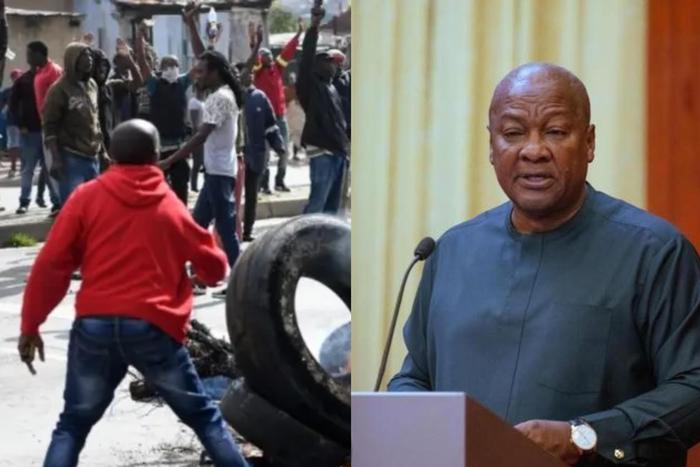
President John Dramani Mahama has granted presidential approval for the urgent evacuation of approximately 300 Ghanaians from South Africa, in response to growing safety concerns affecting citizens in the country.
The directive signals a swift escalation in government action as authorities move to protect nationals amid reported threats, tensions, or deteriorating conditions. While full details surrounding the trigger for the evacuation have not been officially disclosed, such interventions are typically linked to rising insecurity, xenophobic incidents, or risks to the welfare of foreign nationals.
The evacuation exercise is expected to be coordinated by Ghana’s Ministry of Foreign Affairs and Regional Integration in collaboration with diplomatic missions in South Africa. Ghana’s High Commission in Pretoria is likely to play a central operational role, including identifying affected individuals, facilitating documentation, and organising transport logistics.

Emergency evacuations of this scale involve complex planning, including securing safe passage, arranging chartered or commercial flights, and ensuring temporary shelter for evacuees before departure. Authorities must also verify identities, prioritise vulnerable individuals, and coordinate with host country officials to ensure a smooth process.
For the Mahama administration, the decision underscores a broader commitment to citizen protection beyond Ghana’s borders. Governments are increasingly judged not only by domestic policies but also by how effectively they respond to crises involving their nationals abroad. Rapid intervention in such situations is often critical in preventing escalation and ensuring public confidence.
South Africa has, over the years, experienced periodic tensions involving foreign nationals, particularly within migrant communities. Incidents of xenophobia, economic competition, and social unrest have occasionally placed African migrants at risk, prompting diplomatic responses from affected countries.
The evacuation of 300 Ghanaians highlights the scale of concern and suggests that authorities are taking a precautionary approach rather than waiting for conditions to worsen. In crisis management, early action can significantly reduce risks and limit potential harm to citizens.
Upon arrival in Ghana, the evacuees are expected to undergo reception and reintegration processes. This may include temporary accommodation, counselling, and support for resettlement, particularly for individuals who may have lost livelihoods or personal belongings during the crisis.
The economic implications of such evacuations are also significant. Many Ghanaians living abroad contribute to the domestic economy through remittances, and disruptions to their livelihoods can have ripple effects on families and communities back home. Ensuring their safe return and reintegration is therefore both a humanitarian and economic priority.

Diplomatically, the move may also require engagement between Ghana and South Africa to address the underlying issues that led to the evacuation. Governments often use such incidents as a basis for strengthening bilateral discussions on migration, security, and the protection of foreign nationals.
The decision by John Dramani Mahama reflects a proactive stance in crisis response, prioritising human safety over logistical or financial considerations. It also reinforces the principle that citizens abroad remain under the protection of their home government, regardless of location.
As the evacuation unfolds, attention will focus on the efficiency of the operation and the support provided to affected individuals. The success of the exercise will depend on coordination between government agencies, diplomatic missions, and international partners.
The situation also serves as a reminder of the vulnerabilities faced by migrant communities and the importance of robust systems for monitoring and responding to risks abroad. For Ghana, strengthening these systems will be essential in ensuring timely and effective responses to future crises.
South Africa orders arrests over attacks on Ghanaians amid rising xenophobia tensions