

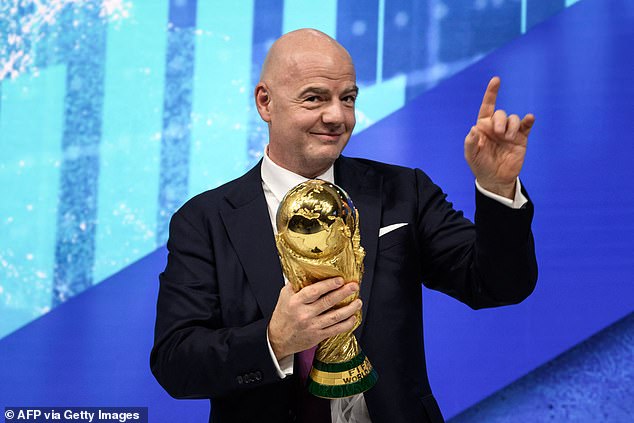
FIFA has unveiled a series of global social campaigns focused on anti racism, unity, and healthy living ahead of the 2026 FIFA World Cup, as football’s governing body attempts to use the tournament’s global reach to promote social inclusion and collective responsibility.
The initiatives, branded around themes such as “No Racism,” “Be Active,” and “Unity,” are expected to form part of FIFA’s broader engagement strategy leading into the expanded 2026 tournament, which will be hosted across United States, Canada, and Mexico.
According to reports surrounding the announcement, the campaigns will be integrated into matches, fan experiences, digital media, grassroots football programmes, and player driven messaging throughout the competition cycle. FIFA says the objective is to reinforce football’s role as a unifying force at a time when global divisions, discrimination, and online abuse continue to rise.

The “No Racism” campaign is expected to become one of the most visible pillars of the initiative. Racism has remained a major issue in global football over the past decade, affecting players, officials, and fans both inside stadiums and across social media platforms. Several high profile incidents in European and international football have intensified pressure on governing bodies to move beyond symbolic gestures and implement stronger action.
FIFA has faced criticism in previous years over whether enough was being done to combat discriminatory behaviour during competitions. However, the organisation now appears determined to place social responsibility closer to the centre of the World Cup brand.
The “Be Active” campaign will reportedly focus on encouraging physical activity and healthier lifestyles, particularly among young people. FIFA intends to leverage the popularity of football stars and national teams to promote exercise, grassroots sports participation, and public health awareness globally.

Health experts have increasingly warned about rising inactivity levels among young people worldwide, driven partly by urban lifestyles and increased screen time. By attaching wellness messaging to football, FIFA hopes to encourage broader participation in sports beyond professional competition.
Meanwhile, the “Unity” campaign is designed to emphasise inclusion, cultural diversity, and peaceful coexistence during the tournament. The 2026 World Cup is already being described as one of the most internationally connected editions in the competition’s history, with 48 teams set to participate for the first time.
That expansion is expected to increase representation from Africa, Asia, and smaller football nations, giving the tournament a wider global footprint than previous editions. FIFA believes this diversity creates an opportunity to promote cross cultural understanding through sport.
The governing body has increasingly attempted to position football not only as entertainment, but also as a platform for social messaging and international cooperation. This approach mirrors broader trends in global sports, where organisations are under growing pressure from fans, sponsors, and advocacy groups to address issues such as discrimination, mental wellbeing, equality, and community engagement.
However, critics often argue that such campaigns must be matched by consistent enforcement and accountability. In the past, anti racism initiatives in football have sometimes been criticised as overly symbolic, particularly when disciplinary actions against offenders were viewed as weak or inconsistent.

For FIFA, the challenge will be balancing commercial interests with meaningful social impact during one of the world’s biggest sporting events. The 2026 World Cup is expected to attract billions of viewers globally, making it a powerful platform for messaging but also exposing the organisation to intense scrutiny.
The tournament itself is projected to break several records, including attendance, commercial revenue, and digital engagement. FIFA hopes the new campaigns will help shape the competition’s identity beyond football alone, framing it as a global event centred on inclusion, participation, and collective identity.
As preparations continue, football fans, players, and advocacy groups will be watching closely to see whether these initiatives translate into practical action during the tournament and beyond.
FIFA receives over 500 million ticket requests for 2026 World Cup