


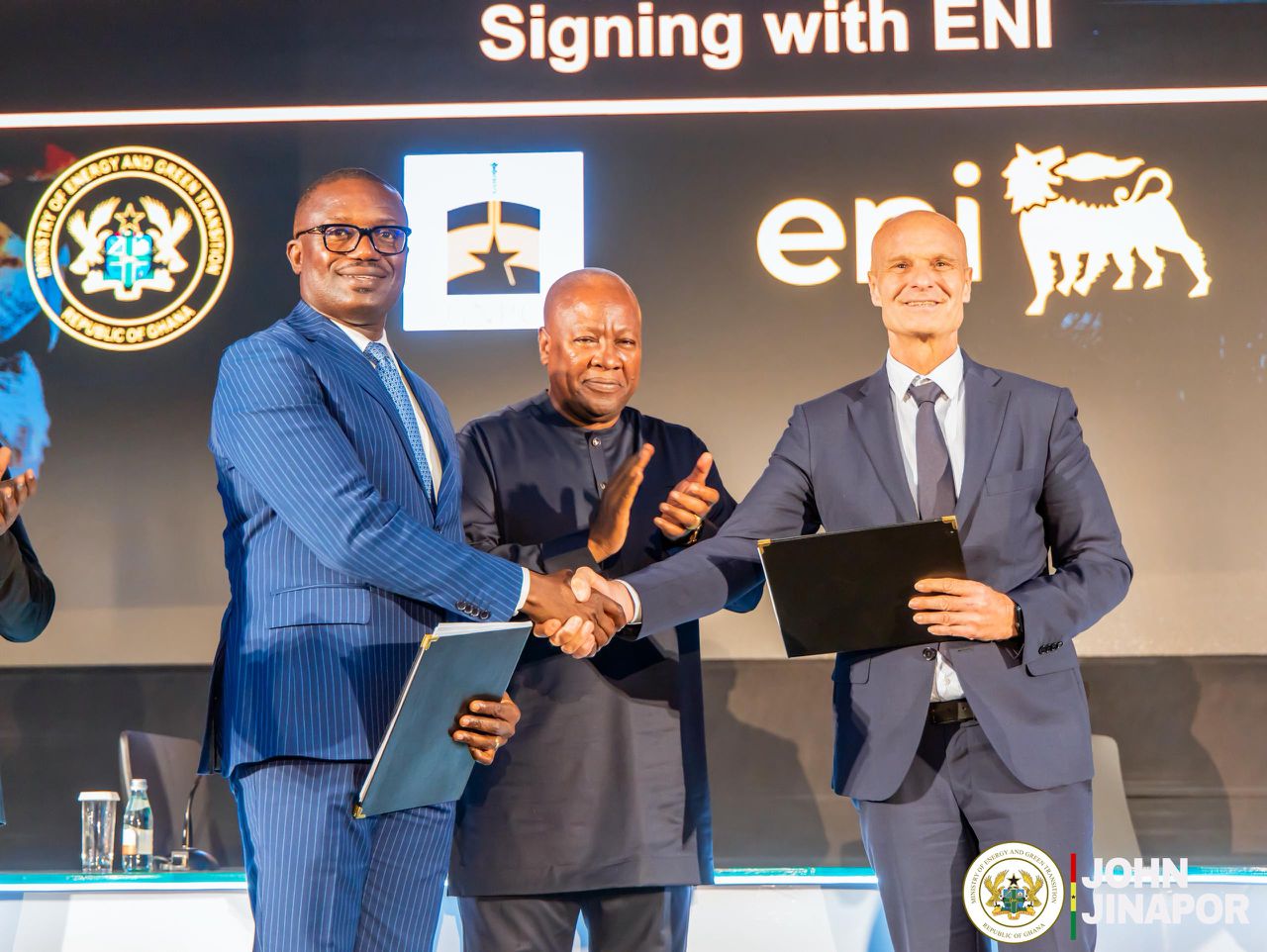
Ghana is intensifying efforts to strengthen its energy security and industrial capacity through a strategic partnership with Eni, Vitol and the Ghana National Petroleum Corporation, aiming to significantly increase domestic gas production by 2028.
The agreement marks a critical step in Ghana’s long-term plan to reduce reliance on imported fuels, stabilise electricity generation, and support economic growth through a more reliable and cost-effective energy mix. Natural gas has become central to the country’s energy strategy, particularly as demand for power continues to rise across industries and urban centres.
At the heart of the partnership is the optimisation and expansion of existing offshore gas infrastructure, especially within the Offshore Cape Three Points block, where Eni has already been a major operator. The Italian energy giant, working alongside Vitol and GNPC, is expected to ramp up production capacity through enhanced field development, improved processing facilities, and more efficient distribution systems.

This collaboration builds on Ghana’s previous successes in leveraging its offshore resources, particularly from projects such as the Sankofa Gye Nyame field, which has played a key role in supplying gas for domestic power generation. By scaling up output, the government aims to ensure a steady and sustainable supply of gas to thermal power plants, reducing the risk of energy shortfalls that have historically affected the economy.
Officials believe that increasing domestic gas production will not only stabilise electricity supply but also lower energy costs over time. Imported liquid fuels used for power generation are significantly more expensive, and reducing dependence on them could ease financial pressure on the energy sector while improving overall efficiency.
The involvement of Vitol, one of the world’s largest independent energy traders, adds a commercial dimension to the project, bringing expertise in global energy markets and financing structures. Meanwhile, GNPC’s role ensures that Ghana maintains strategic control and oversight of its natural resources, aligning the project with national development priorities.
Industry analysts see the partnership as a pragmatic move in a global energy landscape that is increasingly volatile. With geopolitical tensions affecting supply chains and pricing, countries are prioritising domestic resource development to shield their economies from external shocks. For Ghana, expanding gas production offers a buffer against such uncertainties while supporting its transition to a more resilient energy system.
The timeline set for 2028 reflects both ambition and urgency. Achieving the targeted increase will require coordinated investment, regulatory support, and technical execution. Infrastructure upgrades, including pipelines and processing plants, will be essential to ensure that increased production translates into usable supply for the domestic market.

Beyond energy security, the initiative is expected to have broader economic implications. Reliable power supply is a key driver of industrial growth, and improved access to gas could support sectors such as manufacturing, mining, and services. It also has the potential to attract foreign investment, as businesses often prioritise markets with stable energy systems.
However, the plan is not without challenges. Financing large-scale energy projects remains complex, particularly in an environment of fluctuating global energy prices. Environmental considerations will also play a role, as stakeholders increasingly demand sustainable and responsible resource development. While natural gas is often seen as a cleaner alternative to other fossil fuels, it still requires careful management to align with climate commitments.
There is also the question of execution. Ghana’s energy sector has previously faced issues related to debt, infrastructure bottlenecks, and governance. Ensuring transparency, efficiency, and accountability will be crucial to delivering the promised outcomes of this partnership.
Despite these challenges, the collaboration signals a clear direction for Ghana’s energy future. By leveraging the combined expertise of international partners and state institutions, the country is positioning itself to maximise the value of its natural resources while addressing critical energy needs.

As 2028 approaches, the success of this initiative will likely be measured not just by increased production figures, but by its impact on everyday life, from more stable electricity supply to lower energy costs and stronger economic performance.
GHEITI calls on government to reassess Ghana gas’s role as National Gas Aggregator