


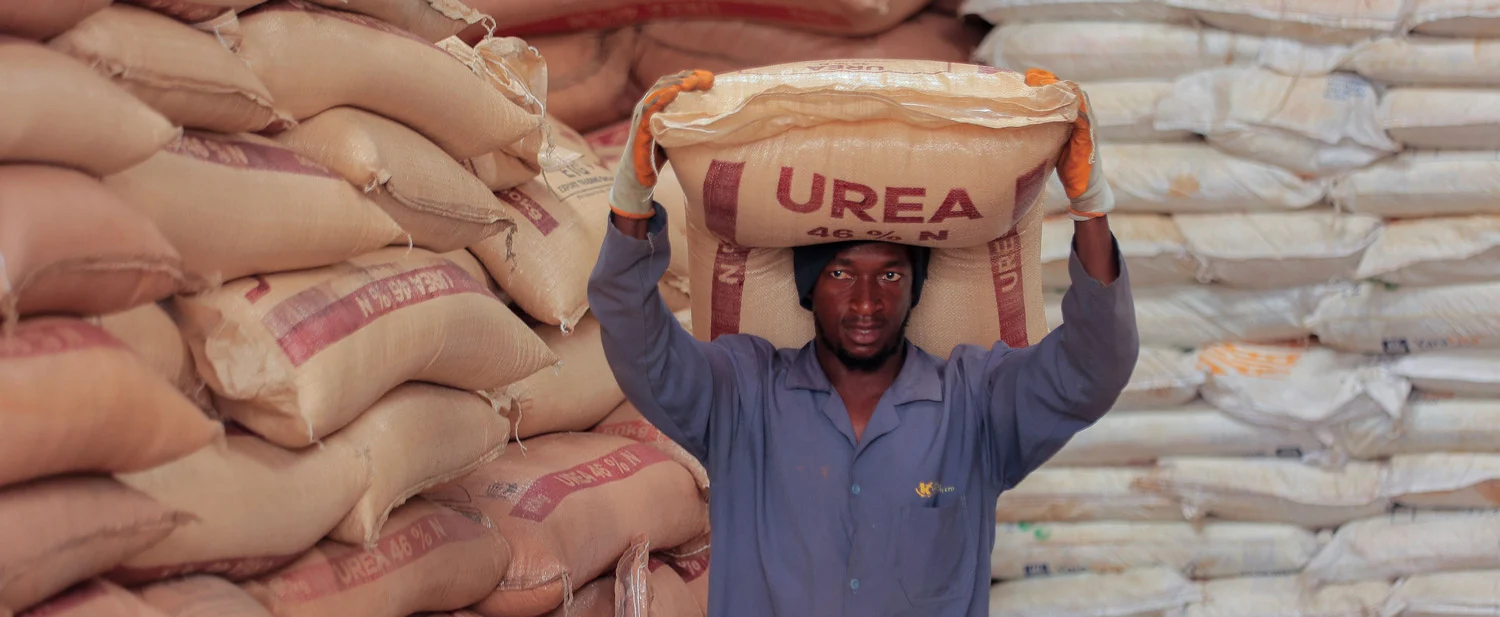
The World Bank has warned that global fertiliser prices are expected to rise sharply in 2026, a development that could significantly increase food production costs and intensify food inflation pressures in Ghana and across Sub-Saharan Africa.
The warning is contained in the World Bank’s latest Commodity Markets Outlook, which projects that fertiliser prices will increase by about 30.7 percent in 2026 before easing in 2027 as global supply conditions stabilise. The surge is expected to be driven largely by geopolitical tensions and disruptions in global energy markets, which directly affect fertiliser production costs.
At the centre of the issue is the heavy dependence of fertiliser manufacturing on natural gas, a key input in nitrogen-based fertilisers. Any increase in global energy prices, or disruption in supply chains, therefore translates directly into higher fertiliser costs. The World Bank notes that fertiliser markets remain highly sensitive to geopolitical developments and energy market volatility.
Beyond price volatility, supply chain concentration is also worsening the risk profile for importing countries like Ghana. A significant share of global fertiliser production is controlled by a limited number of exporting regions and firms, meaning that any disruption,whether geopolitical, logistical, or policy-driven can quickly tighten global supply. For Ghanaian farmers, this structural dependency reduces bargaining power and limits the country’s ability to cushion domestic markets from external shocks, especially in periods where foreign exchange pressures already constrain import capacity.
The implications for Ghana are significant. As a largely import-dependent fertiliser market, Ghana is exposed to global price shocks, which can quickly filter into domestic agricultural costs. Higher fertiliser prices typically raise the cost of food production, particularly for staple crops, and ultimately contribute to food inflation and increased household spending pressures.

According to the report, the expected price surge could reduce farmers’ access to affordable inputs, especially in developing regions where subsidies and financing options are limited. This could lead to lower yields, reduced agricultural output, and tighter food supply conditions across the country.
The World Bank’s projection comes at a time when food security concerns are already elevated globally. Recent disruptions linked to geopolitical tensions have affected energy supply routes and agricultural input markets, further tightening fertiliser availability and pushing prices upward. In some cases, fertiliser costs have already reached levels not seen since previous global supply shocks.
For Ghana, the risk is twofold. On one hand, higher fertiliser prices increase production costs for farmers. On the other, any resulting decline in output could contribute to rising food prices, putting additional pressure on household incomes and inflation management efforts.
The broader regional context also underscores the vulnerability of African economies. Many countries in Sub-Saharan Africa import a significant portion of their fertiliser needs, making them particularly exposed to global price fluctuations. As a result, external shocks often translate quickly into domestic food price instability.

The World Bank notes that while fertiliser prices are expected to decline in 2027, the near-term outlook remains challenging. The anticipated surge in 2026 could therefore have lasting effects on agricultural planning cycles, especially if farmers scale back input usage in response to higher costs.
Economically, the situation highlights the structural link between global commodity markets and domestic food systems. Fertiliser price movements not only affect agricultural productivity but also influence inflation, trade balances, and fiscal pressures in importing countries like Ghana.
Policy responses will therefore be critical. Strengthening local fertiliser distribution systems, improving efficiency in agricultural input subsidies, and supporting farmers with targeted interventions could help cushion the impact. However, these measures require fiscal space and effective implementation to be successful.
Ultimately, the World Bank’s warning underscores a recurring vulnerability in Ghana’s food system: exposure to external shocks in key agricultural inputs. Without stronger resilience measures, global fertiliser price fluctuations will continue to translate into domestic food cost pressures, with direct implications for households, farmers, and broader economic stability.
Energy Minister Reaffirms Investment Drive Across Ghana’s Power and Petroleum Value Chain