


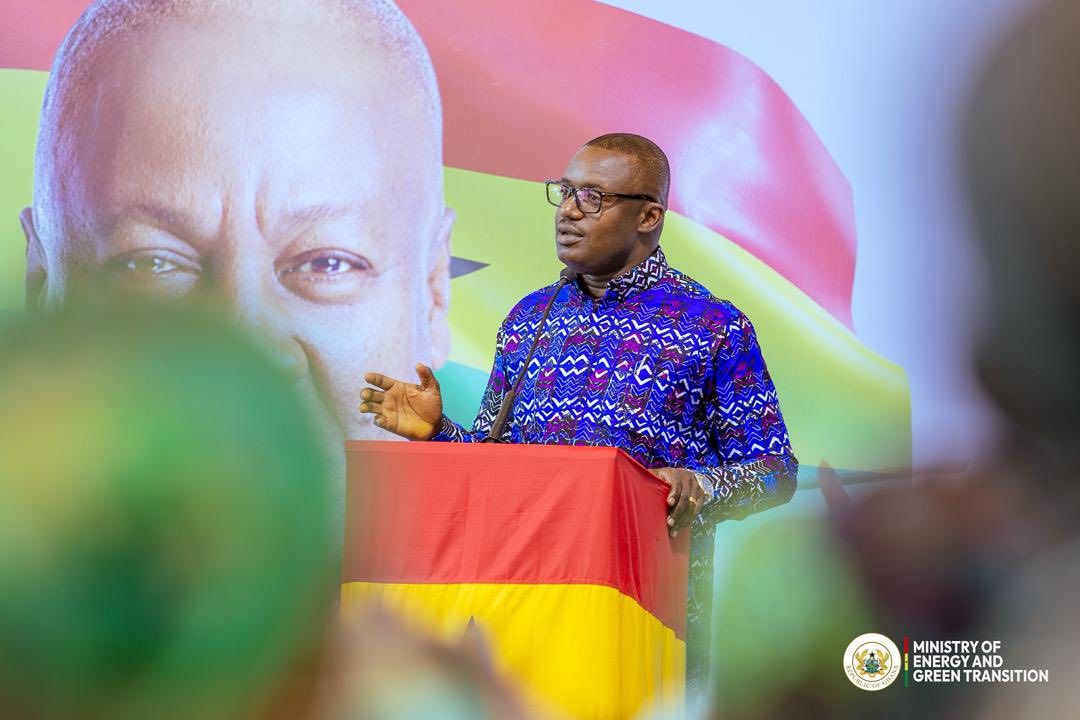
Ghana’s Energy Minister Dr John Jinapor has reiterated the government’s commitment to sustained investment across the entire energy supply chain, underscoring the need for coordinated development from generation to distribution as the country seeks to stabilize power delivery and support economic growth.
The statement comes at a time when Ghana’s energy sector faces increasing pressure to balance rising demand, infrastructure constraints, and financial sustainability. With electricity consumption expanding alongside industrial and urban growth, the government is signalling that piecemeal interventions will no longer be sufficient. Instead, a full value chain approach is being prioritised to ensure reliability and long term resilience.
At the centre of the minister’s position is the recognition that energy systems operate as interconnected networks. Weaknesses in one segment, whether generation, transmission, or distribution, can disrupt the entire system. Sustained investment across all stages is therefore being framed as essential to preventing recurring outages, improving efficiency, and reducing losses within the system.
The government’s approach also reflects the broader mandate of the Ministry responsible for energy and green transition, which oversees key institutions in the sector, including power generation companies, transmission operators, and distribution agencies. Coordinating these entities remains a central challenge, particularly as the sector becomes more complex and demand continues to rise.

In practical terms, the investment push is expected to focus on expanding generation capacity, upgrading transmission infrastructure, and modernising distribution networks. These areas have historically faced funding gaps and operational inefficiencies, contributing to inconsistent power supply and technical losses.
The economic implications are significant. Reliable energy remains a foundational requirement for industrial growth, private sector expansion, and overall economic stability. Interruptions in power supply increase production costs, reduce competitiveness, and discourage investment. For a country positioning itself as a regional business hub, energy reliability is not optional but essential.
However, the emphasis on investment also brings into focus a persistent constraint within Ghana’s energy sector: financing. The sector has long grappled with debt accumulation, tariff imbalances, and inefficiencies in revenue collection. Without addressing these structural issues, increased investment alone may not translate into improved outcomes. Instead, it risks adding further financial strain to an already stressed system.
There is also a governance dimension. Sustained investment requires not only capital but disciplined execution and oversight. Past infrastructure programmes in the energy sector have at times been undermined by delays, cost overruns, and coordination gaps between agencies. Ensuring that new investments deliver measurable improvements will depend on stronger project management and accountability mechanisms.

The minister’s remarks also align with a broader shift toward energy transition. While Ghana continues to rely on a mix of thermal and hydro sources, there is growing emphasis on integrating renewable energy into the national grid. This adds another layer of complexity to the investment agenda, as the system must adapt to new technologies while maintaining stability.
Regionally, Ghana’s position reflects a wider trend across Africa, where governments are increasingly prioritising energy security as a driver of economic transformation. Countries that succeed in building resilient, integrated energy systems are better positioned to attract investment and sustain growth.
Ultimately, the commitment to invest across the energy supply chain signals recognition of a long standing reality: isolated fixes will not resolve systemic challenges. Ghana’s energy future depends on coordinated, sustained investment backed by effective governance and financial discipline.The test, however, will not be in the policy declaration but in execution. Without consistent delivery, the gap between investment plans and actual system performance will remain, and the pressures facing the energy sector will persist.
Ghana’s roads minister issues ultimatum to ‘Big Push’ contractors over project delays