


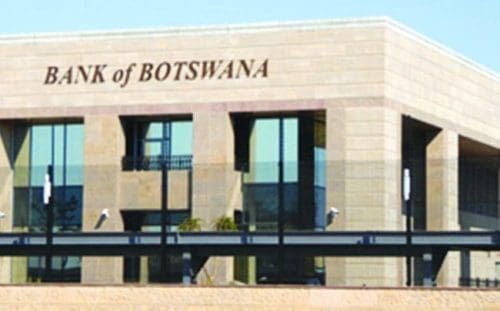
Bank of Botswana has taken an aggressive step that is already rippling across African economies, raising its benchmark interest rate by 200 basis points to 5.5 percent in response to surging inflation triggered by global energy disruptions linked to the U.S.-Israel-Iran conflict. The move positions Botswana as the first African country to tighten monetary policy in this latest global economic shock, signaling the seriousness of inflation risks now facing the continent.
The decision reflects mounting pressure on policymakers as fuel prices spike globally, largely due to disruptions in oil supply routes such as the Strait of Hormuz, a critical corridor for global energy trade. Since the escalation of tensions earlier this year, supply chain bottlenecks have intensified, pushing up the cost of oil and, by extension, transport, electricity, and food prices across import-dependent economies.
Governor Lesego Moseki made it clear that the rate hike is a defensive move to contain inflation before it spirals further out of control. Authorities expect inflation to surge to around 8.9 percent in the short term, significantly above the central bank’s target range of 3 to 6 percent. For the full year 2026, inflation is projected to average 8.7 percent before easing slightly in 2027 if conditions stabilize.
That projection alone tells you everything: this is not a temporary spike. It is a structural shock feeding into the broader economy.

Higher fuel costs are already cascading into transport fares, production costs, and consumer goods, meaning households are feeling the pressure almost immediately. Botswana’s economic structure makes it particularly vulnerable. Transport carries a heavy weight in its inflation basket, so any jump in fuel prices hits harder and faster than in more diversified economies.
The rate increase is also intended to strengthen monetary policy transmission, essentially making borrowing more expensive to cool demand and reduce inflationary pressure. But here is the trade-off: tighter monetary policy risks slowing down an economy that is already under strain.
Botswana is simultaneously dealing with a downturn in its diamond sector, which accounts for roughly 80 percent of export earnings and a significant share of government revenue. Weak global demand for diamonds has reduced inflows, tightening fiscal space just as the country faces rising import costs. In simple terms, Botswana is getting squeezed from both ends, declining revenues and rising expenses.
This puts policymakers in a difficult position. Do nothing, and inflation erodes purchasing power and destabilizes the economy. Act aggressively, and you risk choking growth and increasing borrowing costs for businesses and consumers.
Economists are already warning that the effects of this decision will extend beyond Botswana. Other African central banks are watching closely, especially in economies where inflation is similarly driven by imported fuel and food costs. Countries like Ghana, Kenya, and Nigeria could face similar pressure to tighten monetary policy if global conditions do not improve.

There is also a broader geopolitical layer to this story. The current energy shock is not driven by market fundamentals alone but by conflict dynamics that remain unpredictable. As long as tensions persist in key oil-producing regions, price volatility will likely continue, making it harder for central banks to plan or stabilize expectations.
For ordinary citizens, the implications are straightforward and immediate. Higher interest rates mean more expensive loans, from mortgages to business financing. At the same time, inflation reduces the real value of income, creating a double squeeze on living standards.
The Bank of Botswana’s move is essentially a warning shot. It signals that the era of relatively stable inflation may be over, at least for now, and that African economies must prepare for a period of tighter financial conditions and increased external vulnerability.
What happens next depends largely on factors outside Botswana’s control. If global oil prices stabilize, inflation could gradually ease, allowing central banks to relax policy. But if disruptions persist or escalate, more rate hikes across Africa are almost inevitable.
Right now, Botswana has made the first move. Others may soon have no choice but to follow.
Women’s development bank to be launched soon – VEEP